
Catalogue Search | MBRL


Are you sure you want to remove the book from the shelf?

{{itemTitle}}
50,923
result(s) for
"Fairy tales."
Sort by:

Cinders : a chicken Cinderella
Cinders, the most picked upon hen in the flock, becomes the most loved by Prince Cockerel when she arrives at his ball looking so beautiful that even her bossy sisters do not recognize her.
Book
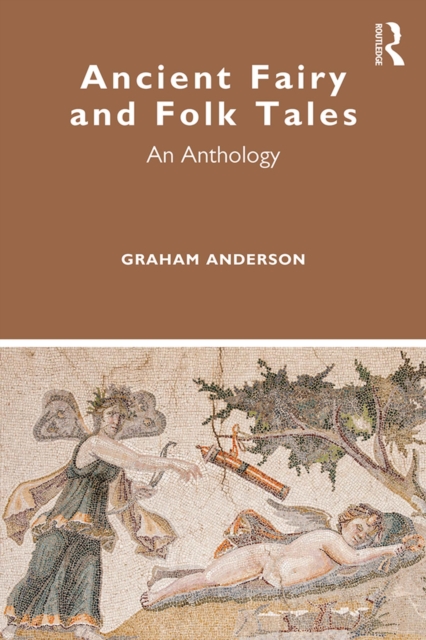
Ancient Fairy and Folk Tales
This anthology explores the multitude of evidence for recognisable fairy tales drawn from sources in the much older cultures of the ancient world, appearing much earlier than the 17th century where awareness of most fairy tales tends to begin.
It presents versions of Cinderella, The Emperor's New Clothes, Snow White, The Frog Prince and a host of others where the similarities to familiar 'modern' versions far outweigh the differences. Here we find Cinderella as a courtesan, Snow White coming to a tragic end, or an innocent heroine murdering her sisters. We find an emperor's new clothes where the flatterers compare him to Alexander the Great, or a pair of adulterers caught in a magic trap. Tantalising fragments suggest that there is more to be discovered: we can point to a Sleeping Beauty where the girl takes on the green colouring of the surrounding wood, or we encounter a Rumpelstiltskin connected to a mystery cult. The overall picture suggests a much richer texture of popular tale as a fascinating new legacy of antiquity.
This volume breaks down the traditional barriers between Classical Mythology and the fairy tale, and will be an invaluable resource for anyone working on the history of fairy tales and folklore.
eBook

Margaret Hillert's Pinocchio
\"An easy format retelling of the classic fairytale, Pinocchio; a puppet that becomes a real boy. Original edition revised with new illustrations. Includes reading activities and a word list\"-- Provided by publisher.
Book

Contemporary Fairy-Tale Magic
Contemporary Fairy-Tale Magic studies the impact of fairy tales on contemporary cultures from an interdisciplinary perspective, with special emphasis on how literature and film are retelling classic fairy tales for modern audiences.
eBook

Fairy tales
Four tales include \"The Old Man Who Said 'Why',\" \"The Elephant & The Butterfly,\" \"The House That Ate Mosquito Pie,\" and \"The Little Girl Named I.\"
Book

Bad Fathers, Wicked Stepmothers, Cannibalistic Witches, and Amorous Princes
Psychoanalysis has been interested in fairy tales and myths from the very beginning. In the interpretation of dreams, Freud felt he had found the royal road to the unconscious, and that he could find in myths and fairy tales the same eternal truths about the unconscious. The myth of Oedipus could be considered the founding myth of psychoanalysis. Freud soon turned to the study of fairy tales, which he thought, in conjunction with German romanticism, could be equated with primary process and the unconscious. The fairy tale was equated with the dream. This was a golden age of interest in fairy tales among the earlier Freudians. In addition, Freud formed an alliance with Jung, who had an independent interest in myth. Jung maintained the centrality of inherited psychic structures, which he called archetypes. Consequently, the Jungians have remained much more interested in myth and fairy tale than the Freudians. While fairy tales have remained popular in current culture in fictional retellings, movies, cartoons and opera, there has been no modern extended psychoanalytic interpretation of fairy tales. Psychoanalytic theory has broadened considerably in the last decades to include ideas about gender, sexuality, race, social conflict, and disorganized personality than the traditional Freudian focus on Oedipal development. This new book aims to add meaning that captures the deeper traumatic nature of human life. The author examines the multiple variations of myths and tales, both within a nationality, and across nationalities. The literary version that has become canon was the one version of the tale that was written down. By looking at the variations, we can get a better sense of the multiple meanings possible. The other road to meaning is modern rewriting of the tales, which, when well done, adds to new layers to the tales. The book also looks at
examples of fantasy; a more modern novelistic treatment of fairy tale themes.
eBook

Cinderella (as if you didn't already know the story)
In this updated version of the Cinderella story, Cinderella writes letters to her dead mother apologizing for not being more assertive, which she remedies soon after marrying the prince. Follows Cinderella through all the usual happenings, presented in an unusual way--including finally revealing what becomes of her after she marries the prince.
BOOK

International
Other than the most widely-recognised Beauty and the Beast tales of de Beaumont and Disney, a number of writers from all over the world have recreated the tale. These writers originate from a number of social contexts, and each has recreated the tale according to the expectations of these societies. Alexander Afanasyev’s Russian tale The Enchanted Tsarévich, Consiglieri Pedroso’s Portuguese tale The Maiden and the Beast, Evald Tang Kristensen’s Danish tale Beauty and the Horse, the Italian tale Zelinda and the Monster and Chinese folk tale The Fairy Serpent are analysed in this article. These international remakes will be analysed using the New Historicist and Feminist frameworks. The article aims to understand the extent to which these less-recognised tales share patriarchal ideas. Moreover, the analysis draws connections between the ideas presented in the tales and their historical backdrop, emphasising that a literary work cannot be separated from its social context. The tales tell the story of gender inequality. They perpetuate patriarchal behaviours and expectations through the behaviours of and relationships between the beauties, Beasts, fathers and sisters depicted. The male characters are empowered decision-makers, who for the most part have control over their lives; however, the female characters are submissive and passive, given little to no control. Moreover, the tales relate closely to their social contexts, and this article analyses each tale in parallel with a discussion of its social context. The patriarchal nature of each tale suggests that the 19th century encouraged gendered inequality and differences as well.
Journal Article

The emperor's new clothes : a tale set in China
Two rascals sell a vain Chinese emperor an invisible suit of clothes.
Book
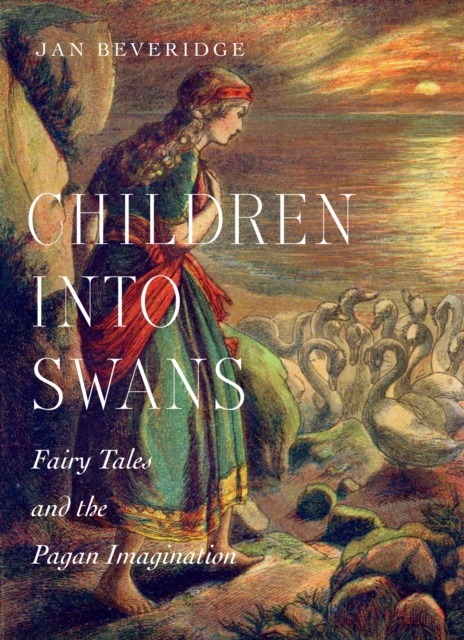
Children into Swans
Fairy tales are alive with the supernatural - elves, dwarfs, fairies, giants, and trolls, as well as witches with magic wands and sorcerers who cast spells and enchantments. Children into Swans examines these motifs in a range of ancient stories. Moving from the rich period of nineteenth-century fairy tales back as far as the earliest folk literature of northern Europe, Jan Beveridge shows how long these supernatural features have been a part of storytelling, with ancient tales, many from Celtic and Norse mythology, that offer glimpses into a remote era and a pre-Christian sensibility. The earliest stories often show significant differences from what we might expect. Elves mingle with Norse gods, dwarfs belong to a proud clan of magician-smiths, and fairies are shape-shifters emerging from the hills and the sea mist. In story traditions with roots in a pre-Christian imagination, an invisible other world exists alongside our own. From the lost cultures of a thousand years ago, Children into Swans opens the door on some of the most extraordinary worlds ever portrayed in literature - worlds that are both starkly beautiful and full of horrors.
eBook