
Catalogue Search | MBRL


Are you sure you want to remove the book from the shelf?

{{itemTitle}}
258
result(s) for
"Faith Drama."
Sort by:

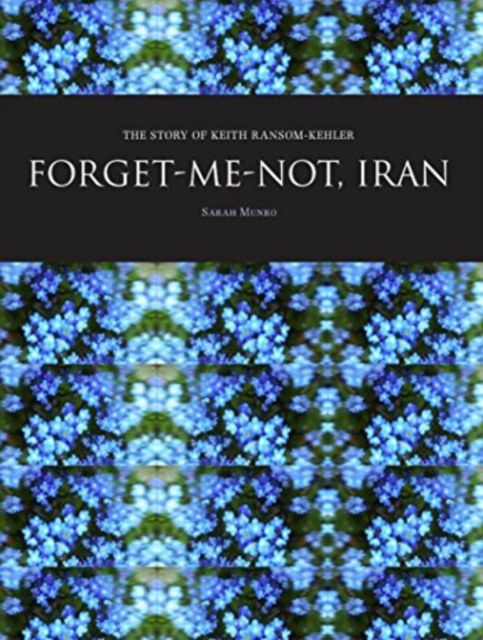
Forget-me-not, iran
Facing hardship, enduring pain, losing all – such things are a bitter pill to swallow for anyone. For those devoted to the life of the spirit, cruel misfortune – even violent opposition – are familiar stages of the journey of life. Walking a spiritual path in a material world is rarely an easy expedition. But, obedience to the object of her devotion certainly provided Keith Ransom-Kehler with her greatest human challenge and spiritual victory.
Keith was an early American believer in the Bahá'í Faith, the latest of the world's global religions. She was elevated posthumously to the high rank of 'Hand of the Cause of God', and became North America's first martyr for the Faith. Her courageous, albeit largely unknown, contribution to history is the subject of Forget-Me-Not, Iran.
eBook
Clara sola
In a remote village in Costa Rica, Clara, a withdrawn 40-year-old woman, experiences a sexual and mystical awakening as she begins a journey to free herself from the repressive religious and social conventions which have dominated her life.
Streaming Video

The Melting-Pot and Its Legacies
Abstract This article examines Israel Zangwill's 1908 play The Melting-Pot as a document in American immigration history, and the role of its most contested tropes – interfaith marriage and the melting-pot itself – in his efforts to rescue suffering Jews of Europe. Through close readings of the play and with reference to other works by Zangwill in the early twentieth century, the article looks at the play as a pragmatic work in a time of international upheaval and American nativism. A discussion of the play's reception by critics and audiences indicates that what was most controversial at the time of its production was not necessarily what Zangwill was most desirous to convey. But a look at its varied meanings over time reveals the persistence of the melting-pot metaphor in discussions of immigration, identity, ethnicity and nationhood, especially in the American imaginary.
Journal Article

Slaves, Masters, and the Art of Authority in Plautine Comedy
What pleasures did Plautus’ heroic tricksters provide their original audience? How should we understand the compelling mix of rebellion and social conservatism that Plautus offers? Through a close reading of four plays representing the full range of his work (Menaechmi, Casina, Persa, and Captivi), Kathleen McCarthy develops an innovative model of Plautine comedy and its social effects. She concentrates on how the plays are shaped by the interaction of two comic modes: the socially conservative mode of naturalism and the potentially subversive mode of farce. It is precisely this balance of the naturalistic and the farcical that allows everyone in the audience--especially those well placed in the social hierarchy--to identify both with and against the rebel, to feel both the thrill of being a clever underdog and the complacency of being a securely ensconced authority figure.
eBook

Music, Songs, and Dances in Friel’s Plays: A Cultural Perspective
The study aims to highlight Brian Friel's employment of non-verbal communication methods to present the major themes in his plays. Friel applied music, song, and dances as nonverbal language. Unlike other dramatists who applied these elements as a way for entertainment, or as marginal theatrical aids. However, this study attempted to reveal how these nonverbal elements played a very important function in expressing the inexpressible. They function at moments when language breaks, and are unable to express the characters’ motives, inner feelings, or even repressed wishes and desires. The plays that are selected for this study are Dancing at Lughnasa (1990), and The Faith Healer (1979). The study will use cultural materialism as a critical approach that helps in shedding light on the historic events that shaped Friel's vision. The study concluded that music, song, and dance were employed as a language that revealed repressed desires, and hidden secrets.
Journal Article

Half-Persuaded Converts and Partial Turns in Fletcher's The Island Princess
In the final act of John Fletcher's The Island Princess (c. 1619–21), the heroine Quisara takes on a familiar role: the non-Christian, foreign woman converted by her love of a Christian man. Critics, including Ania Loomba, Dennis Austin Britton, and Lieke Stelling, describe Quisara's turn as part of early modern theater's pattern of presenting desirable, successful converts to Christianity as fair-skinned, virtuous women, more integrable because of these supposedly Christian qualities and because their identities can be subsumed by their Christian husbands. However, although The Island Princess draws on many of the conversion paradigms of medieval and early modern romance and drama, which offer paths for converts to become confirmed members of their new religious communities, it ultimately fulfills none of them, letting Quisara linger mid-conversion. Diverging from recent scholarship that has emphasized ways that early modern drama invests in ideologies of religious stability or ironizes conversion as false or doubtful, this essay argues that in the context of emerging Western European colonial evangelism, protracted reformations, and doctrinal debates within Protestantism, The Island Princess invites audiences to imagine religious identity as something that might be compromised and evolving, yet still apparently genuine.
Journal Article

I am not against your faith yet I continue mine
The potential similitude between the matriarchal society of the Amazons and the convent was recurrently exploited throughout these periods. Both Emilia's obstinate virginity and the Jailer's Daughter's unbridled sexuality reflect alternate strands of early modern polemic concerning Catholic sexuality and embody what Gillian Woods has described as \"the flat polarity of the nun's alternatively virginal or whorish meaning\" on the early modern English stage.8 These polarized stereotypes motivate The Two Noble Kinsmens insistence on marriage as a means of sexual and political reform. While virginity was understood as \"an anatomical state that preceded sexual activity; chastity was a state, both spiritual and physiological, of sexual integrity that could be observed through all stages of a person's adult life. \"15 A chaste woman was expected to eventually marry and procreate so, as Jessica C. Murphy observes, \"chastity especially lends itself to contradictions, because it is both a prohibition of and encouragement for sexual activity.
Journal Article
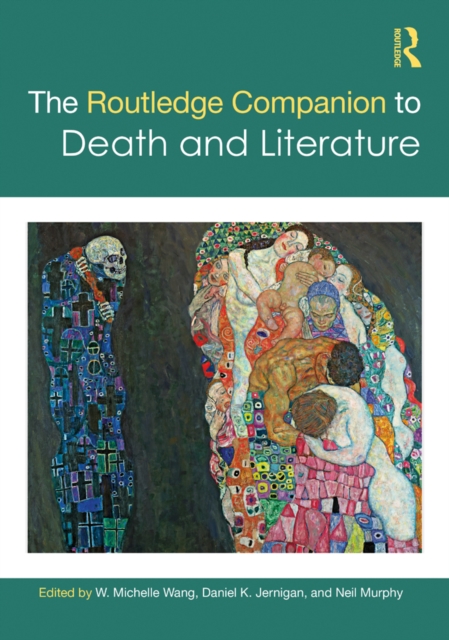
The Routledge Companion to Death and Literature
The Routledge Companion to Death and Literature seeks to understand the ways in which literature has engaged deeply with the ever-evolving relationship humanity has with its ultimate demise. It is the most comprehensive collection in this growing field of study and includes essays by Brian McHale, Catherine Belling, Ronald Schleifer, Helen Swift, and Ira Nadel, as well as the work of a generation of younger scholars from around the globe, who bring valuable transnational insights.
Encompassing a diverse range of mediums and genres - including biography and autobiography, documentary, drama, elegy, film, the novel and graphic novel, opera, picturebooks, poetry, television, and more - the contributors offer a dynamic mix of approaches that range from expansive perspectives on particular periods and genres to extended analyses of select case studies. Essays are included from every major Western period, including Classical, Middle Ages, Renaissance, and so on, right up to the contemporary.
This collection provides a telling demonstration of the myriad ways that humanity has learned to live with the inevitability of death, where \"live with\" itself might mean any number of things: from consoling, to memorializing, to rationalizing, to fending off, to evading, and, perhaps most compellingly of all, to escaping. Engagingly written and drawing on examples from around the world, this volume is indispensable to both students and scholars working in the fields of medical humanities, thanatography (death studies), life writing, Victorian studies, modernist studies, narrative, contemporary fiction, popular culture, and more.
eBook

Evangelicals in the Power Elite: Elite Cohesion Advancing a Movement
Social scientists typically examine social movements as grassroots phenomena, yet public leaders and elite actors also play important roles. This article examines their role in one contemporary social movement, American evangelicalism. Through semistructured interviews with 360 elite informants, as well as archival and ethnographic research, I explore the mechanisms through which leaders have sought to advance evangelicalism between 1976 and 2006. These public leaders founded organizations, formed networks, exercised convening power, and drew on formal and informal positions of authority to achieve movement goals. Results suggest that salient religious identity and cohesive networks have played important roles in shaping the goals and ambitions of leaders within the evangelical movement. Structural coincidence provided by governance structures at evangelical organizations, as well as evangelical programs directed toward elite constituents, have facilitated the formation of overlapping networks across social sectors. Institutional inertia and internal factions, however, have been countervailing forces. This empirical study demonstrates the persistence of institutional differentiation among America's leadership cohort, but it also points to a religious identity that can provide vital, cross-domain cohesion within the structure of elite power.
Journal Article