
Catalogue Search | MBRL


Are you sure you want to remove the book from the shelf?

{{itemTitle}}
27
result(s) for
"Falconry History"
Sort by:
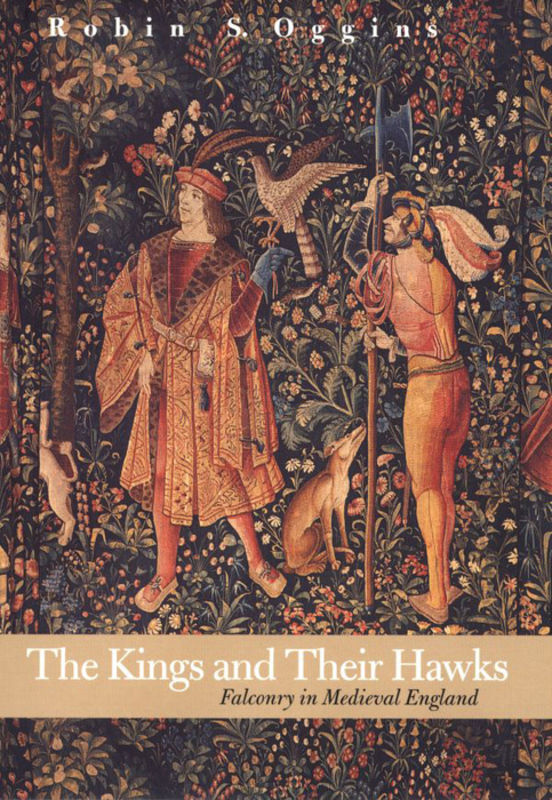
The Kings and Their Hawks
In medieval Europe, falconry was perhaps the most popular form of hunting among the aristocracy. Owning a falcon, and the necessary falconer to go with it, was a status symbol throughout the middle ages. This book is the first broad history of English royal falconry in medieval times, a book that draws on forty years of research to provide a full description of the actual practice and conditions of the sport and of the role of falconers in the English royal household.
Robin S. Oggins begins with a description of the birds of prey, their training, and the sport of falconry. He provides a short history of early falconry in western Europe and England, then explores in unprecedented detail royal falconry from the reign of William I to the death of Edward I in 1307. The author concludes with an overview of the place and importance of falconry in medieval life.
eBook

CULTURAL TRANSLATION IN JESUIT MISSIONARIES’ CHINESE SCIENTIFIC TEXTS
This article analyses from a cross-cultural view a Chinese book of the seventeenth century, Jincheng yinglun 進呈鷹論 (Treatise on Falcons), written by Ludovico Buglio, an Italian Jesuit who did a partial translation of liber sextus of Ulisse Aldrovandi’s Ornithologiae (De Falconibus in Genere), published in Bologna in various editions from 1596 to 1598. The article begins with a short introduction focused on cross-cultural theories and cultural translation, and then, after a synoptic historical and biographical section, tries to dig inside this translation in order to observe some phenomena of cultural translation, taking into consideration all possible agents: the Jesuits, their Chinese collaborators, the original Western books and their Chinese versions. The theoretical framework applied partially comes from the historical linguistics approach, trying to follow the path of a more cross-cultural perspective.
Journal Article

The falcon's eyes : a novel
\"Illuminating the end of the twelfth century and the notorious queen--Eleanor of Aquitaine--who dominated it, this sweeping, suspenseful tale follows Isabelle, a spirited, questing young woman, who defies convention--and her controlling, falconry-obsessed husband--to lead an extraordinary life\"-- Provided by publisher
BOOK

A Special Relationship—Aspects of Human–Animal Interaction in Birds of Prey, Brown Bears, Beavers, and Elk in Prehistoric Europe
Humans have developed a special relationship with some animal species throughout history, even though these animals were never domesticated. Based on raptors, bears, beavers, and elks, the question of whether there are similarities between the perception of these animals that triggered a special kind of fascination in humans and how the relationship between humans and these animals changed between Mesolithic age and medieval times is addressed. As we demonstrate, the categorical antagonism between ‘animal’ and ‘human’ is a concept that saw different kinds of influence, from the advent of sedentarism and husbandry to Christianity and from philosophical thinking in Classical Antiquity and the Period of Enlightenment. In prehistory and early history, we find different, opposing world views across time, cultures, and periods. Differences between animals and humans have been considered as fluid, and humans have had to engage with animals and their needs. The well-known and famous ‘bear ceremonies’ attested to different peoples and times were not unique, but were a part of belief systems that also included other animal species. Among the considered animals, certain raptor species attracted the attention of humans who tried to establish contact with them, as companions, whereas bears were almost ‘disguised humans’ due to all their similarities with humans, but they were also tabooed beings whose real names had to be avoided.
Journal Article

On the tail of two species: The changing place of the peregrine falcon in society
Wildlife conservation can become contentious when human interests are impinged. For peregrine falcons (Falco peregrinus) in the United Kingdom, their iconic status as a protected species is contested by pigeon racers and falconers restrained by strict wildlife policies. However, even entrenched conservation policies can shift, sparking controversy. This paper seeks to understand the conditions leading to recent conservation policy shifts and conflicts. Through archival research and discourse analysis of falconry and pigeon racers' rhetoric, I review the development of 150 years of UK wildlife legislation and politics surrounding peregrines, situating present‐day conflict within long‐standing tensions between competing interests. In doing so, I demonstrate how contrasting ideologies of the raptors existed simultaneously between groups. Each vied for dominance and influenced policies over time, with the ideologies of ‘winners’ suppressing that of the ‘losers’ to become the norm. This historical approach highlights the key role global events like war played in overpowering the dominance of protective ideologies towards peregrines domestically, allowing peregrine culls and capture to become socially permissible. Conversely, post‐War environmental movements originating in the United States suppressed falconry's extractive relationships with peregrines in the United Kingdom, entrenching ecological priorities as a norm still conventional today. I argue that wildlife protection is contested because cultural extinction of falconry and pigeon racing were imminent, brought on by policymakers' focus on preventing the biological extinction of peregrines. However, recent policy shifts highlight the acceptance of anthropocentric interests within conservation practices. Policy implications: Animals can play multiple roles in society, but the public may not be accustomed to anthropocentric interests overtly displayed within contemporary conservation practices. Policy needs to be more sensitive towards accommodating or communicating human interests, but to also reflect on the social and ecological implications of their own ideologies towards conservation. Read the free Plain Language Summary for this article on the Journal blog. Read the free Plain Language Summary for this article on the Journal blog.
Journal Article
Obraz historii sokolnictwa w kontekście badań nad dziejami grodu Spycimierz
The presentation of falconry as intangible cultural heritage that has significantly influenced the development of culture in modern Europe can help in understanding the process of formation of social structures and the beginnings of statehood. The history of one of the most ancient forms of hunting, which entertained princes and kings, goes as far back as the times of the first civilizations. The phenomenon of falconry is still a subject of research by historians and archaeologists, who explore this topic also in the context of Spycimierz and its eventful history connected with the first rulers of the Piast dynasty.
Journal Article

Grand Princess Olga of Rus' Shows the Bird: Her 'Christian Falcon' Emblem
This study attempts to interpret the symbols (a falcon \"crowned\" with a cross, a key, and a Riurikid bident) found on a newly discovered tenth-century trapezoidal pendant from Pskov. Aside from a handful of imitation dirham coins that carry identical images of the falcon, no other parallels of these symbols or their combination have yet been discovered. Based on various sources, it is argued that the pendant was jointly issued to a Rus' administrator-revenue collector by Grand Princess Olga and her son Sviatoslav at the time of his minority but not prior to Olga's administrative reforms in the late 940s, i.e., ca. 950. While the bident was Sviatoslav's dynastic emblem (reserved for reigning male Riurikids), Olga's authority over the realm and her minor son was represented by way of a key (latchlifter) and a falcon. The key carried legal and possibly religious symbolism of right over the domain, while the falcon represented religious as well as royal authority. But, both emblems can be connected with the goddess Freyja - the chief female divinity in the Nordic pantheon - and Olga adopted them as her symbols in ca. 950. Based on her choice of these symbols and other circumstantial evidence, it is contended that Olga was a devotee of the goddess and practiced her cult prior to her conversion to Christianity (i.e., she was a vǫlva). Indeed, it is possible that Olga was the supreme priestess of Freyja, or her close equivalent Slavic goddess Mokosh, for the Rus' state prior to her stepping down from the position as regent and her official conversion to Christianity.
Journal Article

Representations of Falconry in Eastern Han China (A.D. 25-220)
Falconry has been practiced in China for nearly two thousand years, but its early history is obscured by a lack of visual, textual, and archaeological materials. Falconry first appears in visual and textual records dating to the Eastern Han dynasty (A.D. 25-220). Although the standard histories offer few details about the practice of falconry at this time, a growing number of excavated tomb reliefs provide information regarding the possible genesis of the sport. I first discovered this imagery when looking for representations of activities associated with foreigners in hunting scenes depicted in Eastern Han tombs from Shaanxi and Shanxi. In scenes of the hunt from this region, mounted falconers are depicted alongside mounted archers, figures that are connected in Han visual and textual sources with Northern nomadic pastoralists. This imagery immediately prompted a number of questions: when the practice began, who practiced falconry, and whether or not it was associated with foreigners at this time. This article is an outgrowth of research based on these initial questions. Focusing on Eastern Han depictions of falconry, I first examine where and how falconry was practiced in ancient China and what types of birds were used. I will then argue that the sport was originally learned by the Chinese from nomadic pastoralists living to the north of Han China. Finally, I will examine Han attitudes towards the sport, suggesting that although it may have originally been associated with nomadic pastoralists, in Eastern Han texts, falconry was connected with activities characteristic of a misspent youth.
Journal Article