
Catalogue Search | MBRL


Are you sure you want to remove the book from the shelf?

{{itemTitle}}
3,265
result(s) for
"False imprisonment."
Sort by:

Miscarriages of justice in Canada : causes, responses, remedies
\"Innocent people are regularly convicted of crimes they did not commit. A number of systemic factors have been found to contribute to wrongful convictions, including eyewitness misidentification, false confessions, informant testimony, official misconduct, and faulty forensic evidence. In Miscarriages of Justice in Canada, Kathryn M. Campbell offers an extensive overview of wrongful convictions, bringing together current sociological, criminological, and legal research, as well as current case-law examples. For the first time, information on all known and suspected cases of wrongful conviction in Canada is included and interspersed with discussions of how wrongful convictions happen, how existing remedies to rectify them are inadequate, and how those who have been victimized by these errors are rarely compensated. Campbell reveals that the causes of wrongful convictions are, in fact, avoidable, and that those in the criminal justice system must exercise greater vigilance and openness to the possibility of error if the problem of wrongful conviction is to be resolved.\"-- Provided by publisher.
Book

Life after Death Row
Life after Death Rowexamines the post-incarceration struggles of individuals who have been wrongly convicted of capital crimes, sentenced to death, and subsequently exonerated.Saundra D. Westervelt and Kimberly J. Cook present eighteen exonerees' stories, focusing on three central areas: the invisibility of the innocent after release, the complicity of the justice system in that invisibility, and personal trauma management. Contrary to popular belief, exonerees are not automatically compensated by the state or provided adequate assistance in the transition to post-prison life. With no time and little support, many struggle to find homes, financial security, and community. They have limited or obsolete employment skills and difficulty managing such daily tasks as grocery shopping or banking. They struggle to regain independence, self-sufficiency, and identity.
Drawing upon research on trauma, recovery, coping, and stigma, the authors weave a nuanced fabric of grief, loss, resilience, hope, and meaning to provide the richest account to date of the struggles faced by people striving to reclaim their lives after years of wrongful incarceration.
eBook


Exonerated
The fascinating story behind the innocence movement's quest for justice.Documentaries likeMaking a Murderer, the first season ofSerial, and the cause célèbre that was the West Memphis Three captured the attention of millions and focused the national discussion on wrongful convictions. This interest is warranted: more than 1,800 people have been set free in recent decades after being convicted of crimes they did not commit.In response to these exonerations, federal and state governments have passed laws to prevent such injustices; lawyers and police have changed their practices; and advocacy organizations have multiplied across the country. Together, these activities are often referred to as the \"innocence movement.\"Exoneratedprovides the first in-depth look at the history of this movement through interviews with key leaders such as Barry Scheck and Rob Warden as well as archival and field research into the major cases that brought awareness to wrongful convictions in the United States.Robert Norris also examines how and why the innocence movement took hold. He argues that while the innocence movement did not begin as an organized campaign, scientific, legal, and cultural developments led to a widespread understanding that new technology and renewed investigative diligence could both catch the guilty and free the innocent.Exoneratedreveals the rich background story to this complex movement.
eBook
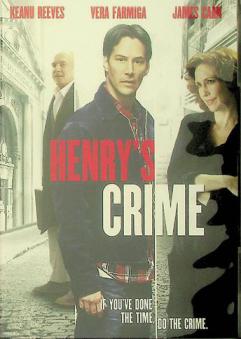
Henry's crime
Released from prison for a crime he didn't commit, an ex-con targets the same bank he was sent away for robbing.
DVD
I am Gitmo
A Muslim schoolteacher is taken to a CIA black site and then Guantanamo Bay Cuba, where he is interrogated and tortured, despite professing his innocence.
Streaming Video

Freedom, only freedom : the prison writings of Behrouz Boochani
Over six years of imprisonment on Australia's offshore migrant detention centre, the Kurdish Iranian journalist and writer Behrouz Boochani bore personal witness to the suffering and degradation inflicted on him and his fellow refugees, culminating eventually in his prize-winning book, No Friend but the Mountains, which was painstakingly typed out in text messages while he was incarcerated. In the articles, essays, and poems he wrote while detained, he emerged as both a tenacious campaigner and activist, as well as a deeply humane voice which speaks for the indignity and plight of the many thousands of detained migrants across the world. In this book, his collected writings are combined with essays from experts on migration, refugee rights, politics, and literature. Together, they provide a moving, creative, and challenging account of not only one writer's harrowing experience and inspiring resilience, but the wider structures of violence which hold thousands of human beings in a state of misery in migrant camps throughout the western hemisphere and beyond.
BOOK
Holy man
Holy Man: The USA vs. Douglas White is the story of Douglas White, an 89 year old Lakota Sioux medicine man from Pine Ridge Indian Reservation in South Dakota, who spent 17 years in federal prison for a crime he did not commit. During the making of this film, filmmakers uncovered new evidence of White’s “actual innocence” and brought the case back to federal court. Holy Man offers a rare glimpse into the mysterious world of Lakota religion, their intimate connection to the land, and a provocative expose of the systemic injustice that Native Americans face in the criminal justice system. Holy Man is narrated by Martin Sheen and features Floyd Red Crow Westerman, Russell Means, Arvol Looking Horse, Dr. Fred Alan Wolf, Leonard Crow Dog, and many other Lakota elders and leaders.
Streaming Video

My favorite brunette
Shortly before his execution on the death row in San Quentin, amateur sleuth and baby photographer Ronnie Jackson tells reporters how he got there.
Streaming Video