
Catalogue Search | MBRL


Are you sure you want to remove the book from the shelf?

{{itemTitle}}
10
result(s) for
"Families Russia Fiction."
Sort by:

In memory of memory : a romance
\"With the death of her aunt, the narrator is left to sift through an apartment full of faded photographs, old postcards, letters, diaries, and heaps of souvenirs: a withered repository of an entire century of life in Russia. Carefully reassembled with calm, steady hands, these shards tell the story of an ordinary family that somehow managed to survive the myriad persecutions and repressions of the last century. The family's pursuit of a quiet, civilized, ordinary life-during such atrocious times-is itself a strange odyssey. In dialogue with thinkers like Roland Barthes, W. G. Sebald, Susan Sontag, and Osip Mandelstam, In Memory of Memory is imbued with rare intellectual curiosity and a wonderfully soft-spoken, poetic voice. Dipping into various genres-essay, fiction, memoir, travelogue, and history-Stepanova assembles a vast panorama of ideas and personalities and offers a bold exploration of cultural and personal memory.\"-- Provided by publisher.
BOOK

The Zelmenyaners
This is the first complete English-language translation of a classic of Yiddish literature, one of the great comic novels of the twentieth century. The Zelmenyaners describes the travails of a Jewish family in Minsk that is torn asunder by the new Soviet reality. Four generations are depicted in riveting and often uproarious detail as they face the profound changes brought on by the demands of the Soviet regime and its collectivist, radical secularism. The resultant intergenerational showdowns-including disputes over the introduction of electricity, radio, or electric trolley-are rendered with humor, pathos, and a finely controlled satiric pen. Moyshe Kulbak, a contemporary of the Soviet Jewish writer Isaac Babel, picks up where Sholem Aleichem left off a generation before, exploring in this book the transformation of Jewish life.
eBook

The patriots : a novel
\"When the Great Depression hits, Florence Fein leaves Brooklyn College for what appears to be a plum job in Moscow--and the promise of love and independence. But once in Russia, she quickly becomes entangled in a country she can't escape. Many years later, Florence's son Julian will make the opposite journey, immigrating back to the United States. His work in the oil industry takes him on frequent visits to Moscow, and when he learns that Florence's KGB file has been opened, he arranges a business trip to uncover the truth about his mother, and to convince his son Lenny, who is trying to make his fortune in the new Russia, to return home\"--Amazon.com
Book

Familiengeschichten als Gegengeschichten
In Russland erlebt der Familienroman ein Comeback. In diesem Genre werden auch Fragen jüdischer Identität verhandelt. Prägnante Beispiele sind Ljudmila Ulickajas Jakobsleiter, Marija Stepanovas Nach dem Gedächtnis und Elena Čižovas Eine Stadt, geschrieben nach der Erinnerung. Die Autorinnen wenden sich dem Verhältnis zwischen Familienerinnerung und offizieller Erinnerungskultur zu und zeigen, wie sich in Russland heute jüdisches Selbstverständnis im Spannungsfeld von familiärer Herkunft, Antisemitismus und Erinnerungskultur entfaltet. Gerade in den Ambivalenzen, Brüchen und Leerstellen ihrer autofiktionalen Texte liegt auch ein realistischer Kern. Sie verweisen auf irreparable Verletzungen aus der Vergangenheit und das Verblassen der jüdischen Kultur in der Gegenwart.
Russian literature is currently experiencing a comeback of the family novel. In this genre, questions surrounding Jewish identity are also discussed. Particularly good examples are Ludmila Ulitskaya’s Jacob’s Ladder, Maria Stepanova’s Post-Memory and Elena Chizhova’s A City, written from Memory. The authors consider the relationship between family memory and the official culture of memory and show how Jewish self-identity in Russia is now unfolding in the field of tension between family origins, anti-Semitism and the culture of remembrance. It is precisely in the ambivalences, breaks and gaps in their autofictional texts that there lies a realistic core. They refer to the irreparable injuries of the past and the decline of Jewish culture in the present.
Journal Article

Odessa, Odessa : a novel
\"As two brothers emigrate out of Russia to escape anti-Semitism, one chooses America and the other Israel/Palestine. The generations move forward in the twentieth century, from New York to Brighton Beach and Los Angeles, as children and grandchildren assimilate into a new culture. A sweeping tale of love, faith and tradition, Odessa, Odessa reveals how the mysterious ties that hold a family together can help them survive the heartache of separation and loss, and how secrets about heritage can finally be uncovered\"-- Provided by publisher.
Book

Siblings in The Brothers Karamazov
Berman examines the conception of sibling bonds in Fyodor Dostoevsky's novel, The Brothers Karamazov. In this novel, Dostoevsky depicted the breakdown of the family as connected to overall societal degeneration. Moreover, it is noted that the Kamazarov family relationships are invested with a symbolism designed to imply a breakdown in the transmission of values and mutual responsibility between the generations. As the vertical relations between fathers and sons fail, lateral, nonhierarchical sibling bonds offer an alternative model of love, support, and understanding. With their focus on the hierarchical relations, critics have tended to overlook this second, horizontal layer in Dostoevsky's scheme, but in fact from the title to the last lines of the book, siblings are present in The Brothers Karamazov, offering a positive alternative to the failure of fathers. Furthermore, Berman concludes that the novel's lateral sibling bonds not only provide an answer to failed father-son relations, they are also intimately connected to at the ideological heart of the novel--Ivan's rebellion and \"The Grand Inquisitor.\"
Journal Article

There once lived a mother who loved her children, until they moved back in : three novellas about family
\"After her work was suppressed for many years, Ludmilla Petrushevskaya won wide recognition for capturing the experiences of everyday Russians with profound pathos and mordant wit. Among her most famous and controversial works, these three novellas ... are modern classics that breathe new life into Tolstoy's famous dictum, 'All happy families are alike; every unhappy family is unhappy in its own way'\"-- Provided by publisher.
Book
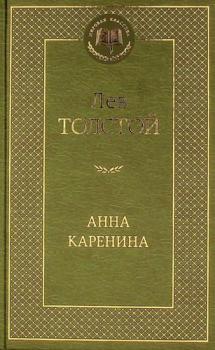
Love and Slavery: Serfdom, Emancipation, and Family in Tolstoy's Fiction
Hruska explores questions of family and serfdom in Tolstoy four major works, namely Childhood, Family Happiness, War and Peace, and Anna Karenina. She argues that these works taken together establish serfdom as a model for a happy family, in which structures are stable and maternal love is all-powerful. The most secure families are the ones that existed long before the institution of serfdom was seriously challenged--thus, War and Peace offers Tolstoy's least conflicted portraits of family happiness and family enslavement.
Journal Article

A boy is not a bird
\"A young boy named Natt finds his world overturned when his family is uprooted and exiled to Siberia during the occupation of the Soviet Ukraine by Nazi Germany. In 1941, life in Natt's small town of Zastavna is comfortable and familiar, even if the grownups are acting strange, and his parents treat him like a baby. Natt knows there's a war on, of course, but he's glad their family didn't emigrate to Canada when they had a chance. His mother didn't want to leave their home, and neither did he. He especially wouldn't want to leave his best friend, Max. Max is the ideas guy, and he hears what's going on in the world from his older sisters. Together the boys are two brave musketeers. Then one day Natt goes home and finds his family huddled around the radio. The Russians are taking over. The churches and synagogues will close, Hebrew school will be held in secret, and there are tanks and soldiers in the street. But it's exciting, too. Natt wants to become a Young Pioneer, to show outstanding revolutionary spirit and make their new leader, Comrade Stalin, proud. But life under the Russians is hard. The soldiers are poor. They eat up all the food and they even take over Natt's house. Then Natt's father is arrested, and even Natt is detained and questioned. He feels like a nomad, sleeping at other people's houses while his mother works to free his father. As the adults try to protect him from the reality of their situation, and local authorities begin to round up deportees bound for Siberia, Natt is filled with a sense of guilt and grief. Why wasn't he brave enough to look up at the prison window when his mother took him to see his father for what might be the last time? Or can just getting through war be a heroic act in itself?\"-- Provided by publisher.
Book