
Catalogue Search | MBRL


Are you sure you want to remove the book from the shelf?

{{itemTitle}}
282
result(s) for
"Family violence -- Africa -- History"
Sort by:
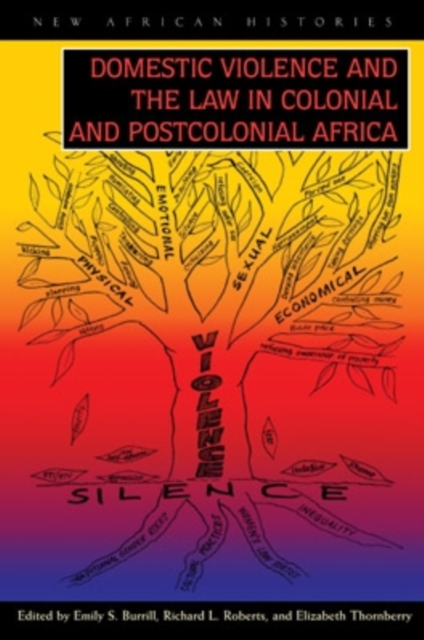
Domestic violence and the law in colonial and postcolonial Africa
Domestic Violence and the Law in Colonial and Postcolonial Africa reveals the ways in which domestic space and domestic relationships take on different meanings in African contexts that extend the boundaries of family obligation, kinship, and dependency. The term domestic violence encompasses kin-based violence, marriage-based violence, gender-based violence, as well as violence between patrons and clients who shared the same domestic space. As a lived experience and as a social and historical unit of analysis, domestic violence in colonial and postcolonial Africa is complex.
Using evidence drawn from Sub-saharan Africa, the chapters explore the range of domestic violence in Africa's colonial past and its present, including taxation and the insertion of the household into the broader structure of colonial domination.
African histories of domestic violence demand that scholars and activists refine the terms and analyses and pay attention to the historical legacies of contemporary problems. This collection brings into conversation historical, anthropological, legal, and activist perspectives on domestic violence in Africa and fosters a deeper understanding of the problem of domestic violence, the limits of international human rights conventions, and local and regional efforts to address the issue.
eBook


Melancholia of freedom
The end of apartheid in 1994 signaled a moment of freedom and a promise of a nonracial future. With this promise came an injunction: define yourself as you truly are, as an individual, and as a community. Almost two decades later it is clear that it was less the prospect of that future than the habits and horizons of anxious life in racially defined enclaves that determined postapartheid freedom. In this book, Thomas Blom Hansen offers an in-depth analysis of the uncertainties, dreams, and anxieties that have accompanied postapartheid freedoms in Chatsworth, a formerly Indian township in Durban. Exploring five decades of township life, Hansen tells the stories of ordinary Indians whose lives were racialized and framed by the township, and how these residents domesticated and inhabited this urban space and its institutions, during apartheid and after.
Hansen demonstrates the complex and ambivalent nature of ordinary township life. While the ideology of apartheid was widely rejected, its practical institutions, from urban planning to houses, schools, and religious spaces, were embraced in order to remake the community. Hansen describes how the racial segmentation of South African society still informs daily life, notions of race, personhood, morality, and religious ethics. He also demonstrates the force of global religious imaginings that promise a universal and inclusive community amid uncertain lives and futures in the postapartheid nation-state.
eBook

Ordinary Violence and Social Change in Africa
Ordinary social violence, - recurrent mental or physical aggression occurring between closely related people - structures social relationships. This book presents anthropological case studies from different parts of Africa to show how this 'hidden' violence is essential to understand social change.
eBook

Bioarchaeology and evidence of violence from a precolonial later stone age communal burial in South Africa
This study reports on the bioarchaeology and evidence of interpersonal violence in a group of archaeological skeletons found near Ladismith, Western Cape, South Africa. The co-mingled skeletal remains derive from at least ten individuals of varying ages and both sexes. Overlapping radiocarbon dates on three individuals place them in the first half of the 15 th century CE, pre-dating first European contact at the end of that century. Three juvenile crania have perimortem perforations, the locations of which indicate violent deaths. The sizes and shapes of the lesions suggest impact by a blade at least 110mm long and 50mm wide but with edges only 2mm thick. Based on these dimensions, we hypothesise that this was a metal-tipped spear. The nearest metal-working communities at this time lived approximately 500 km away, implying long-distance trade or exchange. δ 13 C, δ 15 N and 87 Sr/ 86 Sr values indicate that this was a heterogenous group of individuals who had spent their early lives in different locations and consumed varied diets, who had come together and were living in or travelling through the Ladismith area at the time of their deaths. This finding extends the timeframe and location for the practice of communal burial in the Holocene of southern Africa and provides additional support for the hypothesis that communal burials in this region tend to be associated with violence.
Journal Article

Rainfall shocks and intimate partner violence in sub-Saharan Africa
Global climate change makes extreme precipitation events likely to become more frequent and intense in large parts of Africa. We study the effect of rainfall shocks on intimate partner violence in sub-Saharan Africa. The analysis shows the presence of spatial autocorrelation in rainfall shocks, which compromises the exogeneity of rainfall shocks in many applications. We correct for the autocorrelation using spatial polynomials. In particular, we use three different estimation strategies. We first use the complete cross-sectional sample to analyze whether recent droughts are correlated with respondents’ experience with intimate partner violence during the last year. We then use the nine countries with repeated surveys to construct a repeated cross-section analysis at the grid level. Finally, we use event history analysis on a time series constructed from the information provided by the abused women about when the violence first took place. We find no robust evidence that droughts increase intimate partner violence. Potential explanations are that the rainfall shocks do not affect spouses’ power, or that the slow onset of the droughts allows for a calmer response to the crisis. We contribute to the wider literature on climate and conflict as many of the mechanisms, economic and psychological, that link climate to violence apply to both intimate partner violence and organized violence.
Journal Article

Gender and Violence in the Middle East
This book explores the relationship between Islamism, secularism and violence against women in the Middle East and North Africa. Drawing on case studies from across the region, the authors examine the historical, cultural, religious, social, legal and political factors affecting this key issue.
Chapters by established scholars from within and outside the region highlight:
the interconnections of violence and various sources of power in the Middle East: the state, society, and the family
conceptions of violence as family and social practice and dominant discourse
the role of violence as pattern for social structuring in the nation state.
By centring the chapters around these key areas, the volume provides an innovative theoretical and systematic research model for gender and violence in the Middle East and North Africa. Dealing with issues that are not easily accessible in the West, this book underlines the importance of understanding realities and problems relevant to Muslim and Arab societies and discusses possible ways of promoting reforms in the MENA region. As such it will be of great interest to students and scholars of gender studies, sociology, political science and criminal justice.
eBook

Training medical students: victim’s perceptions of selectively screening women for intimate partner violence in health care settings
Background
Routine IPV screening is a controversial topic and there is no evidence to suggest that it improves the health outcomes of women. Consequently, understanding the socio-cultural dimensions, becomes essential to ensure that victims receive appropriate and local support. This study was conducted to gather the perceptions of victims of IPV on the relevance of raising the topic at health care facilities and to determine specific categories of women to target for screening by medical personnel. It also explored how the information gathered could support victims and whether medical students should be trained on issues relating to IPV.
Methods
Thirty-three key informant interviews were conducted among women attending clinics from three teaching hospitals in the Lagos, Oyo and Osun States of South West Nigeria. The hospitals offer antenatal, emergency, primary care and community outreach clinics which are well-attended by women. A six-item questionnaire assessed eligibility for participation in the study and participants were then purposively sampled. Interviews were conducted using a semi-structured guide. Ethical approval and gatekeepers’ permissions were obtained, and each participant signed informed consent. Data was collected between June and November 2017. The data was entered into Excel and analysed deductively to answer each objective.
Results
Most (
n
= 24) participants stated that medical practitioners should ask all women who present to health care facilities, about their experiences of IPV. Physically, medically and socially vulnerable women, including those in relationships with men in risky occupations, were identified as needing special attention and possible follow-up. They supported the use of the information within and outside of the health care facility, depending on the need of the woman. The majority (
n
= 24) indicated a need to train medical students about IPV and 19 participants suggested for the topic to be curriculated. Most victims favoured the inclusion of a multidisciplinary team in teaching medical students about IPV.
Conclusions
Victims of IPV were in support of initiatives to discuss the topic among some groups of female patients in health care settings. They thought it would enhance the quality of care (medical, psychological, legal and social) to victims. They identified an inter-professional team of stakeholders to include when training medical students about IPV.
Journal Article

Domestic Violence and the Law in Colonial and Postcolonial
Domestic Violence and the Law in Colonial and Postcolonial Africa reveals the ways in which domestic space and domestic relationships take on different meanings in African contexts that extend the boundaries of family obligation, kinship, and dependency. The term domestic violence encompasses kin-based violence, marriage-based violence, gender-based violence, as well as violence between patrons and clients who shared the same domestic space. As a lived experience and as a social and historical unit of analysis, domestic violence in colonial and postcolonial Africa is complex. Using evidence drawn from Subsaharan Africa, the chapters explore the range of domestic violence in Africa’s colonial past and its present, including taxation and the insertion of the household into the broader structure of colonial domination. African histories of domestic violence demand that scholars and activists refine the terms and analyses and pay attention to the historical legacies of contemporary problems. This collection brings into conversation historical, anthropological, legal, and activist perspectives on domestic violence in Africa and fosters a deeper understanding of the problem of domestic violence, the limits of international human rights conventions, and local and regional efforts to address the issue.
eBook

Clan Cleansing in Somalia
In 1991, certain political and military leaders in Somalia, wishing to gain exclusive control over the state, mobilized their followers to use terror-wounding, raping, and killing-to expel a vast number of Somalis from the capital city of Mogadishu and south-central and southern Somalia. Manipulating clan sentiment, they succeeded in turning ordinary civilians against neighbors, friends, and coworkers. Although this episode of organized communal violence is common knowledge among Somalis, its real nature has not been publicly acknowledged and has been ignored, concealed, or misrepresented in scholarly works and political memoirs-until now. Marshaling a vast amount of source material, including Somali poetry and survivor accounts,Clan Cleansing in Somaliaanalyzes this campaign of clan cleansing against the historical background of a violent and divisive military dictatorship, in the contemporary context of regime collapse, and in relationship to the rampant militia warfare that followed in its wake.Clan Cleansing in Somaliaalso reflects on the relationship between history, truth, and postconflict reconstruction in Somalia. Documenting the organization and intent behind the campaign of clan cleansing, Lidwien Kapteijns traces the emergence of the hate narratives and code words that came to serve as rationales and triggers for the violence. However, it was not clans that killed, she insists, but people who killed in the name of clan. Kapteijns argues that the mutual forgiveness for which politicians often so lightly call is not a feasible proposition as long as the violent acts for which Somalis should forgive each other remain suppressed and undiscussed.Clan Cleansing in Somaliaestablishes that public acknowledgment of the ruinous turn to communal violence is indispensable to social and moral repair, and can provide a gateway for the critical memory work required from Somalis on all sides of this multifaceted conflict.
eBook