
Catalogue Search | MBRL


Are you sure you want to remove the book from the shelf?

{{itemTitle}}
2,270
result(s) for
"Family violence in literature"
Sort by:

Bleak Houses
The Offenses Against the Person Act of 1828 opened magistrates' courts to abused working-class wives. Newspapers in turn reported on these proceedings, and in this way the Victorian scrutiny of domestic conduct began. But how did popular fiction treat \"private\" family violence?Bleak Houses: Marital Violence in Victorian Fictiontraces novelists' engagement with the wife-assault debates in the public press between 1828 and the turn of the century.Lisa Surridge examines the early works of Charles Dickens and readsDombey and Sonand Anne Brontë'sThe Tenant of Wildfell Hallin the context of the intense debates on wife assault and manliness in the late 1840s and early 1850s. Surridge explores George Eliot'sJanet's Repentancein light of the parliamentary debates on the 1857 Divorce Act. Marital cruelty trials provide the structure for both Wilkie Collins'sThe Woman in Whiteand Anthony Trollope'sHe Knew He Was Right.Locating the New Woman fiction of Mona Caird and the reassuring detective investigations of Sherlock Holmes in the context of late-Victorian feminism and the great marriage debate in theDaily Telegraph, Surridge illustrates how fin-de-siècle fiction brought male sexual violence and the viability of marriage itself under public scrutiny.Bleak Housesthus demonstrates how Victorian fiction was concerned about the wife-assault debates of the nineteenth century, debates which both constructed and invaded the privacy of the middle-class home.
eBook

A Critical Interpretive Synthesis of the Ways Children's Needs and Capacities are Represented in the Homelessness and Family Violence Literature
This paper describes a critical interpretive synthesis (critical review of the literature) exploring the ways children are described and represented in the homelessness and family violence literature regarding programmes. Authors' descriptions of children and their perceived needs are considered from individual, interpersonal and systemic positions, with an inherent focus on the influence of academic language and power in representing children. The articles reviewed here contained an abundance of negative descriptions of children's poor health, educational and developmental outcomes, but very little acknowledgement of children's personal resources and capacities in times of adversity. The programme goals and strengths- based therapeutic intentions described by the authors of these articles were not always congruent with the ways children were being represented in the early stages of the articles. We argue for a better balance in representing children's strengths alongside their challenges when describing their presentation and participation in programmes and research.
Journal Article

Domestic Murder in Nineteenth-Century England
Why did certain domestic murders fire the Victorian imagination? In her analysis of literary and cultural representations of this phenomenon across genres, Bridget Walsh traces how the perception of the domestic murderer changed across the nineteenth century and suggests ways in which the public appetite for such crimes was representative of wider social concerns. She argues that the portrayal of domestic murder did not signal a consensus of opinion regarding the domestic space, but rather reflected significant discontent with the cultural and social codes of behaviour circulating in society, particularly around issues of gender and class. Examining novels, trial transcripts, medico-legal documents, broadsides, criminal and scientific writing, illustration and, notably, Victorian melodrama, Walsh focuses on the relationship between the domestic sphere, so central to Victorian values, and the desecration of that space by the act of murder. Her book encompasses the gendered representation of domestic murder for both men and women as it tackles crucial questions related to Victorian ideas of nationhood, national health, political and social inequality, newspaper coverage of murder, unstable and contested models of masculinity and the ambivalent portrayal of the female domestic murderer at the fin de siècle.
eBook

Marriage, Violence and the Nation in the American Literary West
In Marriage, Violence and the Nation in the American Literary West, William R. Handley examines literary interpretations of the Western American past. Handley argues that although scholarship provides a narrative of western history that counters optimistic story of frontier individualism by focusing on the victims of conquest, twentieth-century American fiction tells a different story of intra-ethnic violence surrounding marriages and families. He examines works of historiography,as well as writing by Zane Grey, Willa Cather, Wallace Stegner and Joan Didion among others, to argue that these works highlight white Americans' anxiety about what happens to American 'character' when domestic enemies such as Indians and Mormon polygamists, against whom the nation had defined itself in the nineteenth century, no longer threaten its homes. Handley explains that once its enemies are gone, imperialism brings violence home in retrospective narratives that allegorise national pasts and futures through intimate relationships.
eBook

Marriage, Violence and the Nation in the American Literary West
In Marriage, Violence and the Nation in the American Literary West, William R. Handley examines literary interpretations of the Western American past. Handley argues that although scholarship provides a narrative of western history that counters optimistic story of frontier individualism by focusing on the victims of conquest, twentieth-century American fiction tells a different story of intra-ethnic violence surrounding marriages and families. He examines works of historiography,as well as writing by Zane Grey, Willa Cather, Wallace Stegner and Joan Didion among others, to argue that these works highlight white Americans' anxiety about what happens to American 'character' when domestic enemies such as Indians and Mormon polygamists, against whom the nation had defined itself in the nineteenth century, no longer threaten its homes. Handley explains that once its enemies are gone, imperialism brings violence home in retrospective narratives that allegorise national pasts and futures through intimate relationships.
eBook

The Marked Body
The ambiguities and paradoxes of domestic violence were amplified in Victorian culture, which emphasized the home as a woman's place of security. In The Marked Body, Kate Lawson and Lynn Shakinovsky examine the discarded and violated bodies of middle-class women in selected texts of mid-nineteenth-century fiction and poetry. Guided by observations from feminism, psychoanalysis, and trauma theory, they argue that, in these works, domestic violence is a crucible in which the female body is placed, where it becomes marked by scars and disfigurement. Yet, they contend, these wounds go beyond violence to bring these women to a broader state of female subjectivity, sexuality, and consciousness. The female body, already the site of alterity, is inscribed with something that cannot be expressed; it thus becomes that which is culturally and physically denied, the place which is not.
eBook


Sexual violence and return in indigenous Francophone and Anglophone Pacific literatures : the case of Dewe Gorode's L'Epave
Focuses on the topic of conjugal violence, currently emerging as a central theme in literatures across the Pacific. Concentrates on the treatment of the issue in the Kanak novel 'L'Epave' (The Wreck) by poet and writer Dewe Gorode, who is also an independence activist and Vice-President of the present 'collegial' Government of New Caledonia. Refers to other literature by Māori and Pacific writers on the subject of conjugal violence. Source: National Library of New Zealand Te Puna Matauranga o Aotearoa, licensed by the Department of Internal Affairs for re-use under the Creative Commons Attribution 3.0 New Zealand Licence.
Journal Article

The marked body : domestic violence in mid-nineteenth-century literature
The ambiguities and paradoxes of domestic violence were amplified in Victorian culture, which emphasized the home as a woman’s place of security. In The Marked Body, Kate Lawson and Lynn Shakinovsky examine the discarded and violated bodies of middle-class women in selected texts of mid-nineteenth-century fiction and poetry. Guided by observations from feminism, psychoanalysis, and trauma theory, they argue that, in these works, domestic violence is a crucible in which the female body is placed, where it becomes marked by scars and disfigurement. Yet, they contend, these wounds go beyond violence to bring these women to a broader state of female subjectivity, sexuality, and consciousness. The female body, already the site of alterity, is inscribed with something that cannot be expressed; it thus becomes that which is culturally and physically denied, the place which is not.
eBook
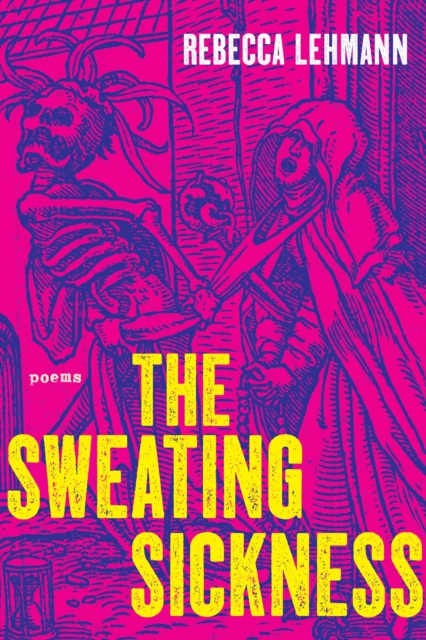
The Sweating Sickness
Rebecca Lehmann’s
The Sweating Sickness contains wide-ranging
topics—the suicide of an abusive ex, parenting young
children, fairy tales, reproductive rights, domestic violence,
ghost stories, ancient myth—all set to the backdrop of the
COVID-19 pandemic. Both personal and political, these poems
interrogate how we grieve, what it means to be a woman in post-
Roe America, and how private and public ghosts can come
back to haunt us. Surrealist, maximalist, formal, and with an ear
to the underworld,
The Sweating Sickness spins the reader into an
eco-fabulist wonderland, where anything can happen, and
does.
eBook