
Catalogue Search | MBRL


Are you sure you want to remove the book from the shelf?

{{itemTitle}}
252,394
result(s) for
"Fans"
Sort by:

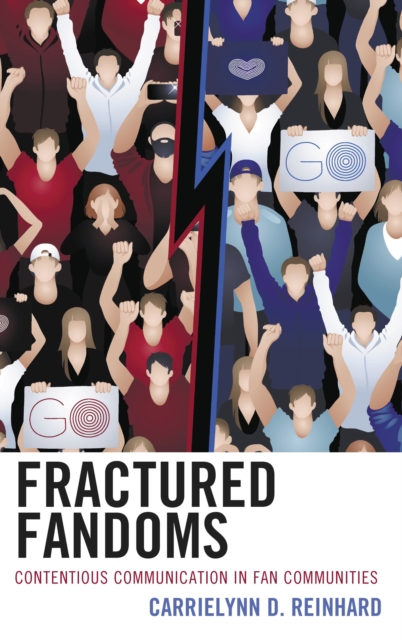
Fractured fandoms : contentious communication in fan communities
Being a fan helps people to discover their identities, find friends, develop a sense of belonging, express themselves creatively, and act as powerful creators and participants in a capitalistic system.
eBook

Fans : a journey into the psychology of belonging
From the acclaimed science writer and author of 'Wayfinding,' a journey into the world of superfans and an exploration of the psychology of fandom.
BOOK

Gambling-like Features in fan Tokens
Fan tokens are a form of cryptocurrency that allow owners to participate in various fan-related experiences such as voting on the music to be played during half-time breaks in sporting events. Since 2020, many elite sport teams have issued fan tokens, allegedly as a way to engage with fans and hear their voice. However, fan tokens also raise some concerns. They are largely gamified digital items that intend to keep fans within the providers’ app. Also, they can be traded in exchange platforms, which arguably transform them into collectibles, whose value can vary over time. Here, we explore fan tokens through a case study from a football (soccer) club (i.e., an F.C. Barcelona fan token). Drawing on literature from situational and structural characteristics of gambling, we analyse the gambling-like features that fan tokens include in their product design. Such features are discussed from a public health perspective, comparing what they mean in gambling contexts and how potentially harmful they could be for fan token holders.
Journal Article


Virtual presence, real connections: Exploring the role of parasocial relationships in virtual idol fan community participation
The reconstruction of idol worship culture is evident with the rise of virtual personas, especially within the realm of AI-powered entities. It is important to consider cultural specificities, particularly in regions like China, where unique fan culture practices intersect with the proliferation of AI technology. Virtual idols, born from digital media technologies, authentically emulate real idols in performances and human interactions. While existing research primarily focuses on real-life idols in the interaction between celebrities and fans, limited attention has been given to understanding why fans gravitate toward virtual idols. Adopting the perspective of parasocial relationships (PSRs) and employing the survey method, this study explores the factors that drive fan community participation in virtual idol fandom within the context of Chinese society. The findings reveal that both interpersonal attractiveness and feelings of loneliness significantly influence the development of parasocial relationships between virtual idols and fans, and these PSRs positively impact fan community participation. Furthermore, this study elucidates that both the perceived interpersonal attractiveness of virtual idols and the loneliness experienced by fans directly contribute to increased fan community participation through the mediating effect of PSRs. This investigation scrutinizes the pivotal factors sustaining the relationship between virtual idols and fans, particularly in an era where AI-powered entities increasingly mirror human-like qualities and adeptly engage with audiences. This study highlights the characteristics of Chinese subculture and provides evidence for the “de-stigmatization” of subcultures in the era of AI, which contributes to a broader discourse on the impact of AI on diverse cultural practices. It underscores the necessity for global and contextual approaches in comprehending the evolving dynamics between virtual idols and their fan communities, enriching our understanding of AI’s influence on cultural phenomena.
Journal Article

Misery : a novel
Novelist Paul Sheldon wakes up in a secluded farmhouse in Colorado with broken legs and Annie Wilkes, a disappointed fan, hovering over him with drugs, ax, and blowtorch and demanding that he bring his heroine back to life.
Book

Fan Cultures
Emphasising the contradictions of fandom, Matt Hills outlines how media fans have been conceptualised in cultural theory. Drawing on case studies of specific fan groups, from Elvis impersonators to X-Philes and Trekkers, Hills discusses a range of approaches to fandom, from the Frankfurt School to psychoanalytic readings, and asks whether the development of new media creates the possibility of new forms of fandom. Fan Cultures also explores the notion of &dquotefan cults&dquote or followings, considering how media fans perform the distinctions of 'cult' status.
eBook


That futebol feeling : sport and play in Brazil's heartland
Futebol, or soccer for Americans, is the planet's spectator sport of choice. In the Brazilian state of Minas Gerais, nestled in the country's southeastern heartland, futebol generates powerful, lifelong emotions. That Futebol Feeling captures the region's enthrallment with \"the beautiful game,\" and shows us how and why play is central to the human condition. David Faflik profiles members of the most celebrated local team, Clube Atlético Mineiro (CAM), as well as its passionate, never-say-die fans, to show how futebol and fandom shape their everyday lives and perspectives. He discovers bonds of work and play, as well as pride, identity, and community. Additionally, Faflik's analysis of Brazil's futebol culture reflects sports fandom worldwide. CAM stands as a symbol for a way of life in Minas Gerais, the birthplace of Pelé. Faflik interrogates what playing the game means to those who dedicate their lives to the sport. He writes, \"The feelings that football inspires are the best of me.\" That Futebol Feeling shares that special feeling with the rest of us.
eBook