
Catalogue Search | MBRL


Are you sure you want to remove the book from the shelf?

{{itemTitle}}
1,296
result(s) for
"Fantasy fiction, English"
Sort by:


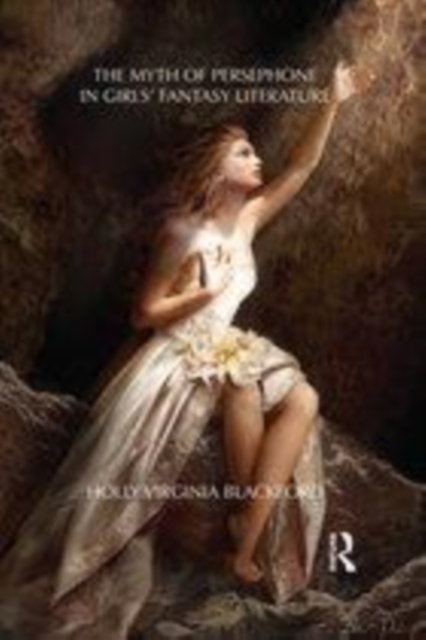
The Myth of Persephone in Girls' Fantasy Literature
In this book, Blackford historicizes the appeal of the Persephone myth in the nineteenth century and traces figurations of Persephone, Demeter, and Hades throughout girls' literature of the nineteenth and twentieth centuries. She illuminates developmental patterns and anxieties in E. T. A. Hoffmann's Nutcracker and Mouse King, Louisa May Alcott's Little Women, Emily Brontë's Wuthering Heights, J. M. Barrie's Peter and Wendy, Frances Hodgson Burnett's The Secret Garden, E. B. White's Charlotte's Web, J. K. Rowling's Harry Potter and the Chamber of Secrets, Stephenie Meyer's Twilight, and Neil Gaiman's Coraline. The story of the young goddess's separation from her mother and abduction into the underworld is, at root, an expression of ambivalence about female development, expressed in the various Neverlands through which female protagonists cycle and negotiate a partial return to earth. The myth conveys the role of female development in the perpetuation and renewal of humankind, coordinating natural and cultural orders through a hieros gamos (fertility coupling) rite. Meanwhile, popular novels such as Twilight and Coraline are paradoxically fresh because they recycle goddesses from myths as old as the seasons. With this book, Blackford offers a consideration of how literature for the young squares with broader canons, how classics flexibly and uniquely speak through novels that enjoy broad appeal, and how female traditions are embedded in novels by both men and women.
eBook

The great god Pan and other horror stories
Something pushed out from the body there on the floor, and stretched forth a slimy, wavering tentacle... Perhaps no figure better embodies the transition from the Gothic tradition to modern horror than Arthur Machen. In the final decade of the nineteenth century, the Welsh writer produced a seminal body of tales of occult horror, spiritual and physical corruption, and malignant survivals from the primeval past which horrified and scandalised-late-Victorian readers. Machen's 'weird fiction' has influenced generations of storytellers, from H. P. Lovecraft to Guillermo Del Toro-and it remains no less unsettling today. This new collection, which includes the complete novel The Three Impostors as well as such celebrated tales as The Great God Pan and The White People, constitutes the most comprehensive critical edition of Machen yet to appear. In addition to the core late-Victorian horror classics, a selection of lesser-known prose poems and later tales helps to present a fuller picture of the development of Machen's weird vision. The edition's introduction and notes contextualise the life and work of this foundational figure in the history of horror.
Book

Scottish Women's Gothic and Fantastic Writing
This book provides a critical survey of the gothic texts of late twentieth-century and contemporary Scottish women writers including Kate Atkinson, Ellen Galford, A.L. Kennedy, Ali Smith and Emma Tennant focusing on four themes: quests and other worlds, witches, doubles and ghosts.
eBook


Transforming Harry : the adaptation of Harry Potter in the transmedia age
Transforming Harry: The Adaptation of Harry Potter in the Transmedia Ageis an edited volume of eight essays that look at how the cinematic versions of the seven Harry Potter novels represent an unprecedented cultural event in the history of cinematic adaptation. The movie version of the first Harry Potter book, Harry Potter and the Sorcerer's Stone, premiered in 2001, in between publication of the fourth and fifth books of this global literary phenomenon. As a result, the production and reception of both novel and movie series became intertwined with one another, creating a fanbase who accessed the series first through the books, first through the movies, and in various other combinations. John Alberti and P. Andrew Miller have gathered scholars to explore and examine the cultural, political, aesthetic, and pedagogical dimensions of this pop culture phenomenon and how it has changed the reception of both the films and books. Divided into two sections, the volume addresses both the fidelity of adaptation and the transmedia adaptations that have evolved around the creation of the books and movies. In her essay, Vera Cuntz-Leng draws on feminist film theory to explore the gaze politics and male objectification operating in the Harry Potter movies. Cassandra Bausman contends that screenwriter Steve Klove's revision of the end of the film version of Deathly Hallows, Part II offers a more politically and ethically satisfying conclusion to the Harry Potter saga than the ending of the Rowling novel. Michelle Markey Butler's \"Harry Potter and the Surprising Venue of Literary Critiques\" argues that the fan-generated memes work as a kind of popular literary analysis in three particular areas: the roles of female characters, the comparative analysis of books and films, and the comparative analysis of the Harry Potter series with other works of fantasy. While the primary focus of the collection is an academic audience, it will appeal to a broad range of readers. Within the academic community, Transforming Harry will be of interest to scholars and teachers in a number of disciplines, including film and media studies and English. Beyond the classroom, the Harry Potter series clearly enjoys a large and devoted global fan community, and this collection will be of interest to serious fans.
eBook

There would always be a fairy tale : more essays on Tolkien
Devoted to Tolkien, the teller of tales and co-creator of the myths they brush against, these essays focus on his lifelong interest in and engagement with fairy stories, the special world that he called faërie, a world they both create and inhabit, and with the elements that make that world the special place it is. They cover a range of subjects, from The Hobbit to The Lord of the Rings and their place within the legendarium he called the Silmarillion to shorter works like \"The Story of Kullervo\" and \"Smith of Wootton Major.\" From the pen of eminent Tolkien scholar Verlyn Flieger, the individual essays in this collection were written over a span of twenty years, each written to fit the parameters of a conference, an anthology, or both. They are revised slightly from their original versions to eliminate repetition and bring them up to date. Grouped loosely by theme, they present an unpatterned mosaic, depicting topics from myth to truth, from social manners to moral behavior, from textual history to the micro particles of Middle-earth. Together these essays present a complete picture of a man as complicated as the books that bear his name—an independent and unorthodox thinker who was both a believer and a doubter able to maintain conflicting ideas in tension, a teller of tales both romantic and bitter, hopeful and pessimistic, in equal parts tragic and comedic. A man whose work does not seek for right or wrong answers so much as a way to accommodate both; a man of antitheses. Scholars of fantasy literature generally and of Tolkien particularly will find much of value in this insightful collection by a seasoned explorer of Tolkien's world of faërie.
eBook