
Catalogue Search | MBRL


Are you sure you want to remove the book from the shelf?

{{itemTitle}}
1,119
result(s) for
"Faraday, Michael"
Sort by:

Burn : Michael Faraday's candle
Adaptation of Michael Faraday's lecture explaining why a candle burns.
Book

Michael Faraday the educator - an essay to commemorate the 150th anniversary of Faraday’s Death
Michael Faraday (1791-1867) is renowned for his outstanding contribution to science and technology during the first half of the nineteenth century. However, he is less well known for his contribution to education. In the present paper, an outline of Faraday’s own education is presented, and how this experience inspired him to pass on his knowledge to others. This was mainly achieved through his popular science lectures - Chemical History of a Candle, delivered at the Royal Institution of Great Britain, in London on 19 occasions between 1825 and 1860, and through his popular textbook for students: Chemical Manipulation (London, 1828). The author examines Faraday’s methodology of teaching chemistry by analysing a fragment of one of his lectures, and also by summarizing the content of Chemical Manipulation, and commenting on some excerpts from it. Using Faraday’s approach to chemistry education as a model, the author challenges today’s chemistry teaching programme for schools, and makes a suggestion for its improvement.
Journal Article


Why science?
This book aims to describe, for readers uneducated in science, the development of humanity's desire to know and understand the world around us through the various stages of its development to the present, when science is almost universally recognized — at least in the Western world — as the most reliable way of knowing. The book describes the history of the large-scale exploration of the surface of the earth by sea, beginning with the Vikings and the Chinese, and of the unknown interiors of the American and African continents by foot and horseback. After the invention of the telescope, visual exploration of the surfaces of the Moon and Mars were made possible, and finally a visit to the Moon. The book then turns to our legacy from the ancient Greeks of wanting to understand rather than just know, and why the scientific way of understanding is valued. For concreteness, it relates the lives and accomplishments of six great scientists, four from the nineteenth century and two from the twentieth. Finally, the book explains how chemistry came to be seen as the most basic of the sciences, and then how physics became the most fundamental.
eBook


Introduction
The behavior of soft magnets on small length and short time scales will ultimately govern their performance in electromagnetic devices, while analytical and numerical modeling will serve as tools for analyzing and optimizing device design. ON THE COVER The cover of this Focus Issue shows key technologies where advanced soft magnetic materials can impact our society: a wind turbine (electric generator), an electric motor, and power electronics. Additionally, the importance of modeling to soft magnet research is highlighted by the distribution of magnetic flux density in a wound toroidal inductor calculated using finite element analysis (FEA).
Journal Article
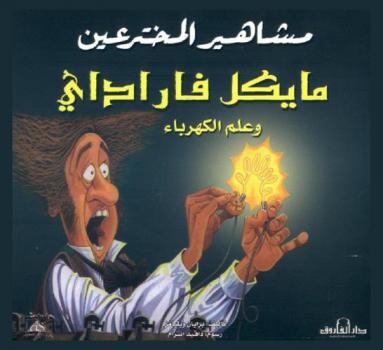
DK - 100 scientists that made history. Episode 62, Michael Faraday
English self-taught scientist Michael Faraday revolutionized the world with his discoveries in electromagnetism. He invented the first electric motor, transformer, and generator, laying the foundation for modern electricity.
Streaming Video

Review of Wireless Charging System: Magnetic Materials, Coil Configurations, Challenges, and Future Perspectives
Electric transportation will assist in lowering emissions of greenhouse gases and mitigating the impact of rising petrol prices. To promote the widespread adoption of electric transportation, a diverse range of charging stations must be established in an atmosphere that is friendly to users. Wireless electric vehicle charging systems are a viable alternative technology that can charge electric vehicles (EVs) without any plug-in issues. Wireless power transfer (WPT), which involves the transmission of electricity via an electromagnetic field despite the presence of an intervening area, holds out the possibility of new prospects for EVs to increase environmentally responsible mobility. This review article examines the WPT technology and how it might be applied to electric vehicles from both a technical and safety standpoint. The prime aim of this review is (1) to illustrate the current state of the art in terms of technological advances as well as research limitations in the field of WPT development and use within the field of transportation; (2) to organise the experimental the deployment of WPT EV systems in the actual world; and (3) to analyse the results over a sustainable period and to identify limitations as well as chances for growth. From a technical point of view, the progress that has been made on the selection of material for designing coils, different types of coils with a specific focus on the overall performance of the system. As a result, this study aims to provide an extensive overview focusing on the magnetic materials and the architectures of the transmitter and receiver pads.
Journal Article

Yoke-Type Elasto-Magnetic Sensor-Based Tension Force Monitoring Method for Enhancement of Field Applicability
Tension members are key members that maintain stability and improve the strength of structures such as cable-stayed bridges, PSC structures, and slopes. Their application has recently been expanded to new fields such as mooring lines in subsea structures and aerospace fields. However, the tensile strength of the tension members can be abnormal owing to various risk factors that may lead to the collapse of the entire structure. Therefore, continuous tension monitoring is necessary to ensure structural safety. In this study, an improved elasto-magnetic (E/M) sensor was used to monitor tension force using a nondestructive method. General E/M sensors have limitations that make it difficult to apply them to operating tension members owing to their solenoid structure, which requires field winding. To overcome this problem, the magnetization part of the E/M sensor was improved to a yoke-type sensor, which was used in this study. For the development of the sensors, the numerical design and magnetization performance verification of the sensor were performed through eddy current solution-type simulations using ANSYS Maxwell. Using the manufactured yoke-type E/M sensor, the induced voltage signals according to the tension force of the specimen increasing from 0 to 10 tons at 1-ton intervals were repeatedly measured using DAQ with wireless communication. The measured signals were indexed using peak-to-peak value of induced voltages and used to analyze the signal change patterns as the tension increased. Finally, the analyzed results were compared with those of a solenoid-type E/M sensor to confirm the same pattern. Therefore, it was confirmed that the tension force of a tension member can be estimated using the proposed yoke-type E/M sensor. This is expected to become an effective tension monitoring technology through performance optimization and usability verification studies for each target tension member in the future.
Journal Article