
Catalogue Search | MBRL


Are you sure you want to remove the book from the shelf?

{{itemTitle}}
687
result(s) for
"Farm produce Marketing."
Sort by:

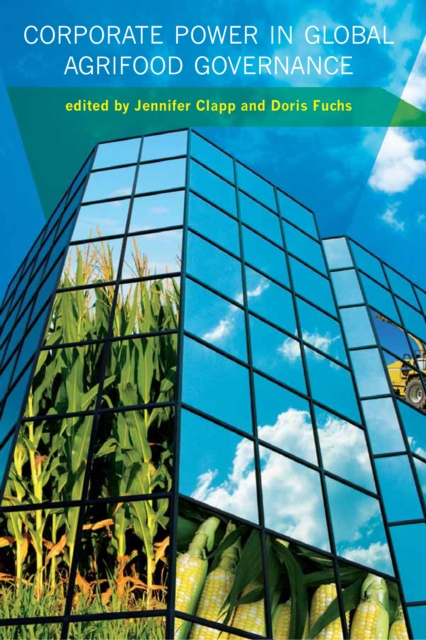
Corporate power in global agrifood governance
Experts examine the ways transnational corporations exercise power over governance of the global food system and the implications this has for sustainability
In today's globally integrated food system, events in one part of the world can have multiple and wide-ranging effects, as has been shown by the recent and rapid global rise in food prices. Transnational corporations (TNCs) have been central to the development of this global food system, dominating production, international trade, processing, distribution, and retail sectors. Moreover, these global corporations play a key role in the establishment of rules and regulations by which they themselves are governed. This book examines how TNCs exercise power over global food and agriculture governance and what the consequences are for the sustainability of the global food system. The book defines three aspects of this corporate power: instrumental power, or direct influence; structural power, or the broader influence corporations have over setting agendas and rules; and discursive, or communicative and persuasive, power. The book begins by examining the nature of corporate power in cases ranging from “green” food certification in Southeast Asia and corporate influence on U.S. food aid policy to governance in the seed industry and international food safety standards. Chapters examine such issues as promotion of corporate-defined “environmental sustainability” and “food security,” biotechnology firms and intellectual property rights, and consumer resistance to GMOs and other cases of contestation in agrobiology. In a final chapter, the editors raise the crucial question of how to achieve participation, transparency, and accountability in food governance.
Contributors
Maarten Arentsen, Jennifer Clapp, Robert Falkner, Doris Fuchs, Agni Kalfagianni, Peter Newell, Steffanie Scott, Susan Sell, Elizabeth Smythe, Peter Vandergeest, Marc Williams, Mary Young
eBook

Assembling export markets : the making and unmaking of global food connections in West Africa
\"Assembling Export Markets explores the origins of global agrifood chains through an examination of the new frontier regions of the global fresh produce market that has emerged in the West African Republic of Ghana over the past decade\"-- Provided by publisher.
Book

Assembling export markets
Assembling Export Markets explores the new ‘frontier regions’ of the global fresh produce market that has emerged in Ghana over the past decade. -Represents a major and empirically rich contribution to the emerging field of the social studies of economization and marketization -Offers one of the first ethnographic accounts on the making of global commodity chains ‘from below’ -Denaturalizes global markets by unpacking their local engagement, materially entangled construction, need for maintenance, and fragile character -Offers a trans-disciplinary engagement with the construction and extension of market relations in two frontier regions of global capitalism -Critically examines the opportunities and risks for firms and farms in Ghana entering global fresh produce markets
eBook
Agricultural and food biotechnologies of Olea Europaea and stone fruit
The reference presents detailed research on the olive (Olea europaea) and the stone fruit. Readers will learn about the biotechnology, plant nutrition, plant breeding, pomology, postharvest physiology, plant pathology of these two plant species. In a practical sense, the book also presents applicable agricultural knowledge about these plants for crop improvement, production, nutrients, pest management, disease, genetic, genomic and the food industry. The contributions by the authors of this book include descriptions about the manipulation of variables and genetic resources of inheritance of quantitative genes, crop rotation, soil water, and the effect of temperature on crop production. Aspects such as protecting crops against pests and diseases whilst ensuring the protection of human health are also taken into account. This is a valuable reference for students, scientists, horticulturists and, in general, for anyone wishing to obtain knowledge and experience with olives and drupes to increase productivity.
eBook
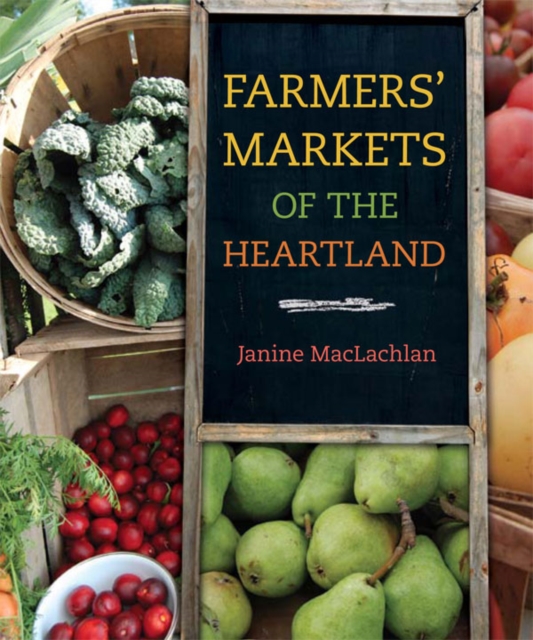
Farmers' markets of the heartland
Farmers' Markets of the Heartland celebrates the growers, producers, and artisans who bring fresh, nourishing food to their local communities every week. In this splendidly illustrated book, food writer and self-described farm groupie Janine MacLachlan embarks on an extensive tour of seasonal markets and farmstands throughout the Midwest, sampling local flavors and colors from Michigan, Ohio, Indiana, Illinois, Missouri, Iowa, Minnesota, and Wisconsin._x000B__x000B_MacLachlan conducts delicious research as she travels across the Heartland to meet farmers, taste their food, and explore how their businesses thrive in the face of an industrial food supply. Finding farmers' markets in leafy parks and edgy neighborhoods, and even one nestled into a national park, MacLachlan tells the stories of a pair of farmers growing specialty crops on a few acres of northern Michigan for just a few months out of the year, an Ohio cattle farm that has raised heritage beef in the same family since 1820, and a Minnesota farmer who has made it her mission to get folks growing the Jimmy Nardello sweet Italian frying pepper. Along the way, she savors vibrant red carrots, slurpy peaches, vast quantities of specialty cheeses, and some of the tastiest pie to cross anyone's lips. _x000B__x000B_Informed by debates about eating local, seasonal crops, organic farming, and biodiversity, Farmers' Markets of the Heartland tantalizes with special recipes from farm-friendly chefs and dozens of luscious color photographs that will inspire you to harvest the homegrown flavors in your own neighborhood._x000B__x000B_
eBook
Agricultural Marketing
The price of food has become very volatile in recent years for a variety of reasons, including a strengthened connection between the prices of agricultural commodities and other commodities such as oil and metals, more volatile production due to more frequent droughts and floods, and a rising demand for biofuels. Understanding the determinants of agricultural commodity prices and the connections between prices has become a high priority for academics and applied economists who are interested in agricultural marketing and trade, policy analysis and international rural development.
This book builds on the various theories of commodity price relationships in competitive markets over space, time and form. It also builds on the various theories of commodity price relationships in markets that are non-competitive because processing firms exploit market power, private information distorts commodity bidding, and bargaining is required to establish prices when the marketing transaction involves a single seller and buyer. Each chapter features a spreadsheet model to analyze a particular real-world case study or plausible scenario, and issues considered include:
the reasons for commodity price differences across regions
the connection between the release of information and the rapid adjustment in a network of commodity prices
the specific linkage between energy and food prices
bidding strategies by large exporters who compete in import tenders
The simulation results that are obtained from the spreadsheet models reveal many important features of commodity prices. The models are also well suited for additional \"what if\" analysis such as examining how the pattern of trade in agricultural commodities may change if shipping becomes more expensive because of substantial increase in the world price of oil.
Model bui
eBook
Food supply chain management
Food Supply Chain Management Edited by Michael A. Bourlakis and Paul W. H. Weightman The food supply chain is a series of links and inter-dependencies, from farms to food consumers’ plates, embracing a wide range of disciplines. Food Supply Chain Management brings together the most important of these disciplines and aims to provide an understanding of the chain, to support those who manage parts of the chain and to enhance the development of research activities in the discipline. Food Supply Chain Management follows a ‘farm to fork’ structure. Each chapter starts with aims and an introduction and concludes with study questions that students in particular will find useful. Topics covered include the food consumer, perceived risk and product safety, procurement, livestock systems and crop production, food manufacture, retailing, wholesaling and catering. Special consideration is also given to supermarket supply networks, third party logistics, temperature controlled supply chains, organic foods and the U. S. food supply chain. A final chapter looks at the future for food supply chain management. Michael Bourlakis and Paul Weightman, the editors and contributors to this timely and fascinating book, have drawn together chapters from leading authorities in this important area, to provide a book that is an essential purchase for all those involved in the supply of food and its study. Those involved in the food supply chain within food companies and in academic establishments, including agricultural scientists, food scientists, food technologists, and students studying these subjects, will find much of great use and interest within its covers. Libraries in all universities and research stations where these subjects are studied and taught should have several copies.
eBook
Food and the mid-level farm
Practitioners and scholars from a range of disciplines discuss how midsize farms can better connect with consumers, organize collectively to develop markets for their products, and promote public policies that address agriculture-of-the-middle issues.
eBook
handbook of organic and fair trade food marketing
The markets for organic and fair trade food are growing rapidly. Although there are some important differences, both seek to address the consumer desire for “better” food: fair trade because it offers economically disadvantaged producers a better financial return; organic because it is perceived to be a more sustainable system delivering better-tasting, healthier and safer food than that produced by non-organic methods. The Handbook of Organic and Fair Trade Food Marketing provides a practical guide to successful marketing in these two dynamic sectors, underpinned by case-histories and lessons from companies that have been successful in these areas, including Green & Black's, Yeo Valley and Duchy Originals. It includes a review of the international markets for organic and fair trade food and drink; an analysis of organic and fair trade consumers; a review of successful retailing practice and a section on organic and fair trade divergence and convergence. Chapters are also included on perspectives from the USA, Germany and Italy. The book is written by industry experts, augmented by academic contributions where appropriate, offering for the first time the practical marketing advice required by companies in this sector.
eBook