
Catalogue Search | MBRL


Are you sure you want to remove the book from the shelf?

{{itemTitle}}
8
result(s) for
"Fashion merchandising-United States"
Sort by:

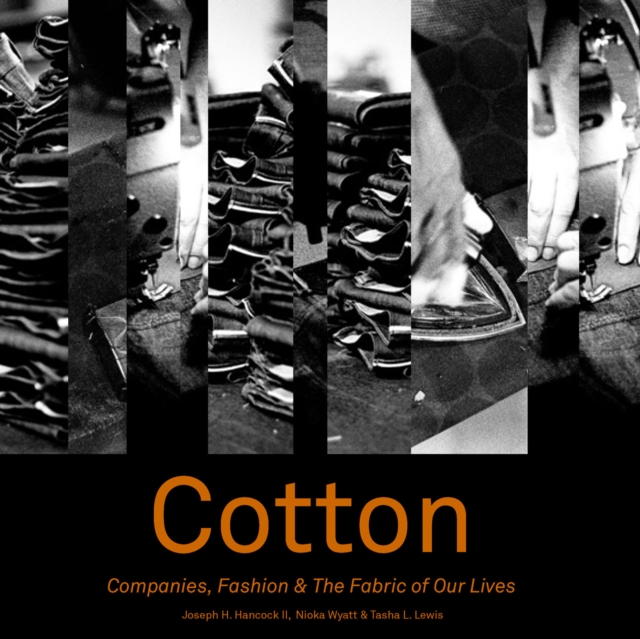
Cotton
This book explores the importance of cotton as a major resource for US fashion businesses. It is rooted in an investigative research project that deployed undergraduate and graduate students and faculty researchers to US fashion businesses that rely on cotton to understand how the resource is sourced, priced, transported, manipulated and sold.
eBook


Producing Fashion
How has Paris, the world's fashion capital, influenced Milan, New York, and Tokyo? When did the Marlboro Man become a symbol of American masculinity? Why do Americans love to dress down in high-tech Lycra fabrics, while they wax nostalgic for quaint, old-fashioned Victorian cottages? Fashion icons and failures have long captivated the general public, but few scholars have examined the historical role of business and commerce in creating the international market for style goods.Producing Fashionis a groundbreaking collection of original essays that shows how economic institutions in Europe and North America laid the foundation for the global fashion system and sustained it commercially through the mechanisms of advertising, licensing, marketing, publishing, and retailing. The collection reveals how public and private institutions-from government censors in imperial Russia to large corporations in the United States-worked to shape fashion, style, and taste with varying degrees of success. Fourteen contributors draw on original research and fresh insight into the producers of fashion-advertising agents, architects, corporate executives, department stores, designers, editors, government officials, hairdressers, haute couturiers, and Web retailers-in their bid for influence, acclaim, and shoppers' dollars.Producing Fashionlooks to the past, revealing the rationale behind style choices, while explaining how the interplay of custom, invented traditions, and sales imperatives continue to drive innovation in the fashion industries.
eBook

Young Originals : Emily Wilkens and the teen sophisticate
\"In the early 1940s, American designer Emily Wilkens went beyond her previous experience in children's wear to create costumes for two teenage characters in a Broadway play. Recognizing the growing importance of the teenager in American culture, she soon launched Emily Wilkens Young Originals, the first designer label specializing in upscale, fashionable clothing for teenage girls. Within the space of a few years, Wilkens skyrocketed from obscurity to national recognition, yet even today many fashion insiders would not recognize her name. Fashion historian Rebecca Jumper Matheson explores intertwining stories of female agency through the history of Wilkens and her teenage clientele. Wilkens retained both artistic and business control over her label in an era when most American ready-to-wear designers were anonymous employees of manufacturers. Wilkens parleyed her relative youth into a big-sister image which, like her dresses themselves, allowed her to mediate between the concerns of her teenage clients and their parents. Contrary to popular wisdom, Wilkens's designs declared that even a teenager could be fashionable. In doing so, Wilkens laid the foundation for the seismic shift that would occur later in the twentieth century, when youth became the fashionable ideal. Young Originals traces Wilkens's career from fashion illustrator in the 1930s to spa and beauty expert in the 1980s, emphasizing her consistent ideal of healthy, youthful beauty\"-- Provided by publisher.
Book


