
Catalogue Search | MBRL


Are you sure you want to remove the book from the shelf?

{{itemTitle}}
4,489
result(s) for
"Fast, the General"
Sort by:

Aspects of Grammaticalization
The series publishes state-of-the-art work on core areas of linguistics across theoretical frameworks as well as studies that provide new insights by building bridges to neighbouring fields such as neuroscience and cognitive science. The series considers itself a forum for cutting-edge research based on solid empirical data on language in its various manifestations, including sign languages. It regards linguistic variation in its synchronic and diachronic dimensions as well as in its social contexts as important sources of insight for a better understanding of the design of linguistic systems and the ecology and evolution of language.
eBook

Before Boas
The history of anthropology has been written from multiple viewpoints, often from perspectives of gender, nationality, theory, or politics.Before Boasdelves deeper into issues concerning anthropology's academic origins to present a groundbreaking study that reveals how ethnology and ethnography originated during the eighteenth rather than the nineteenth century, developing parallel to anthropology, or the \"natural history of man.\"
Han F. Vermeulen explores primary and secondary sources from Russia, Germany, Austria, the United States, the Netherlands, Hungary, the Czech Republic, Slovakia, France, and Great Britain in tracing how \"ethnography\" was begun as field research by German-speaking historians and naturalists in Siberia (Russia) during the 1730s and 1740s, was generalized as \"ethnology\" by scholars in Göttingen (Germany) and Vienna (Austria) during the 1770s and 1780s, and was subsequently adopted by researchers in other countries.
Before Boasargues that anthropology and ethnology were separate sciences during the Age of Reason, studying racial and ethnic diversity, respectively. Ethnography and ethnology focused not on \"other\" cultures but on all peoples of all eras. Following G. W. Leibniz, researchers in these fields categorized peoples primarily according to their languages. Franz Boas professionalized the holistic study of anthropology from the 1880s into the twentieth century.
eBook

Association between consumption of ultra-processed foods and all cause mortality: SUN prospective cohort study
AbstractObjectiveTo evaluate the association between consumption of ultra-processed foods and all cause mortality.DesignProspective cohort study.SettingSeguimiento Universidad de Navarra (SUN) cohort of university graduates, Spain 1999-2018.Participants19 899 participants (12 113 women and 7786 men) aged 20-91 years followed-up every two years between December 1999 and February 2014 for food and drink consumption, classified according to the degree of processing by the NOVA classification, and evaluated through a validated 136 item food frequency questionnaire.Main outcome measureAssociation between consumption of energy adjusted ultra-processed foods categorised into quarters (low, low-medium, medium-high, and high consumption) and all cause mortality, using multivariable Cox proportional hazard models.Results335 deaths occurred during 200 432 persons years of follow-up. Participants in the highest quarter (high consumption) of ultra-processed foods consumption had a higher hazard for all cause mortality compared with those in the lowest quarter (multivariable adjusted hazard ratio 1.62, 95% confidence interval 1.13 to 2.33) with a significant dose-response relation (P for linear trend=0.005). For each additional serving of ultra-processed foods, all cause mortality relatively increased by 18% (adjusted hazard ratio 1.18, 95% confidence interval 1.05 to 1.33).ConclusionsA higher consumption of ultra-processed foods (>4 servings daily) was independently associated with a 62% relatively increased hazard for all cause mortality. For each additional serving of ultra-processed food, all cause mortality increased by 18%.Study registrationClinicalTrials.gov NCT02669602.
Journal Article

The road
This book is an ethnographic and historical study of the main Albania-Greece highway. But more than an ethnography on the road, it is an anthropology of the road. Highways are part of an explicit cultural-material nexus that includes houses, urban architecture and vehicles. Complex socio-political phenomena such as EU border security, nationalist politics, post-Cold War capitalism and financial crises all leave their mark in the concrete. This book explores anew classical anthropological and sociological categories of analysis in direct reference to infrastructure, providing unique insights into the political and cultural processes that took place across Europe after the Cold War. More specifically, it sheds light on political and economic relationships in the Balkans during the socialist post-Cold War period, focusing especially on Albania, one of the most under-researched countries in the region.
eBook

Burning the Big House
The gripping story of the tumultuous destruction of the Irish country house, spanning the revolutionary years of 1912 to 1923 During the Irish Revolution nearly three hundred country houses were burned to the ground. These \"Big Houses\" were powerful symbols of conquest, plantation, and colonial oppression, and were caught up in the struggle for independence and the conflict between the aristocracy and those demanding access to more land. Stripped of their most important artifacts, most of the houses were never rebuilt and ruins such as Summerhill stood like ghostly figures for generations to come. Terence Dooley offers a unique perspective on the Irish Revolution, exploring the struggles over land, the impact of the Great War, and why the country mansions of the landed class became such a symbolic target for republicans throughout period. Dooley details the shockingly sudden acts of occupation and destruction-including soldiers using a Rembrandt as a dart board-and evokes the exhilaration felt by the revolutionaries at seizing these grand houses and visibly overturning the established order.
eBook
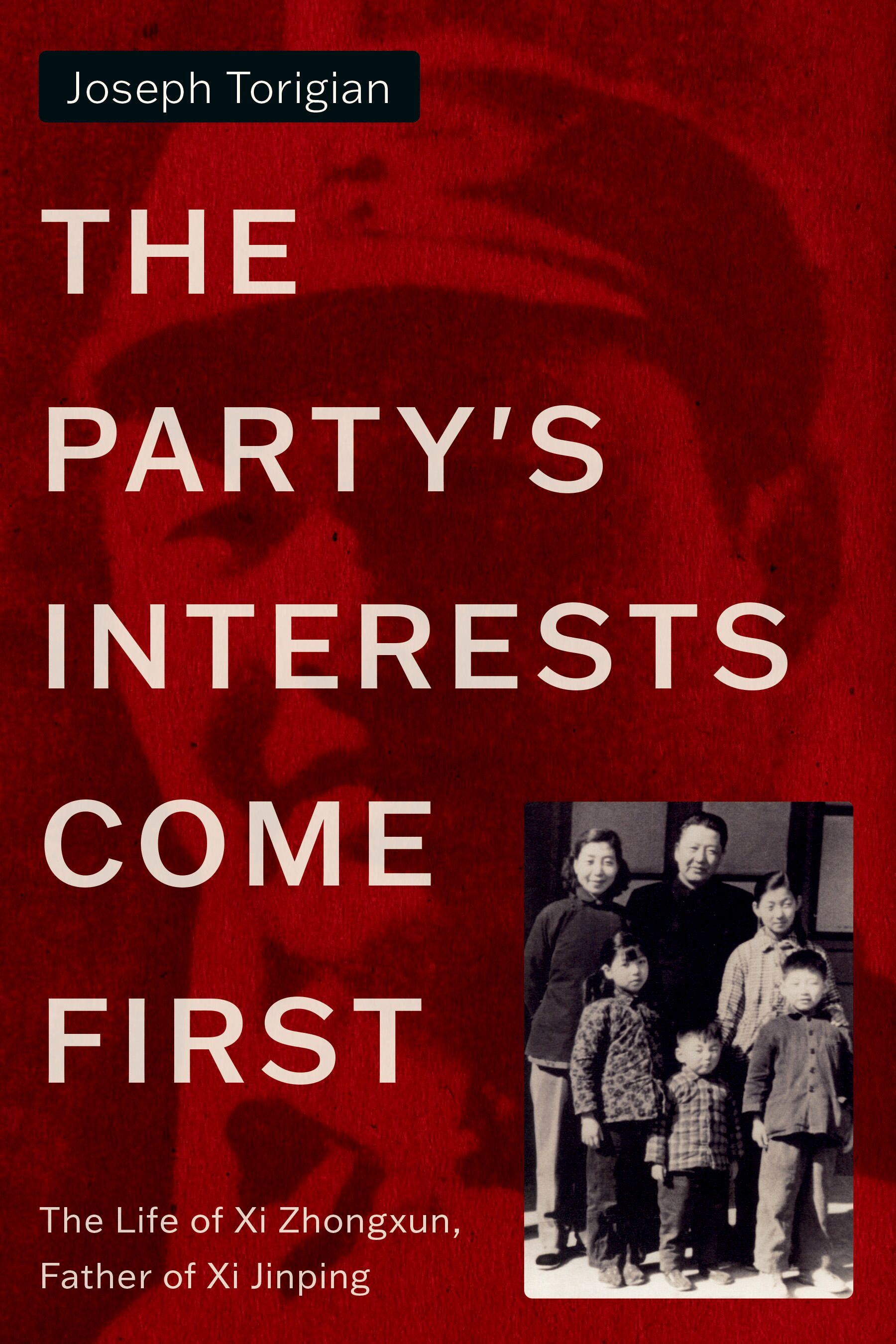
The party's interests come first : the life of Xi Zhongxun, father of Xi Jinping
Selected as a Best Book of 2025 by The Economist, Foreign Affairs, BBC History Magazine, New Indian Express, and Marginal Revolution \"[A] masterly biography of Xi Zhongxun, the father of China's present-day president, Xi Jinping... [A] scrupulously researched and keenly perceptive account of an important but, in the West, little-known historical figure.\"—Robert B. Zoellick, The Wall Street Journal China's leader, Xi Jinping, is one of the most powerful individuals in the world—and one of the least understood. Much can be learned, however, about both Xi Jinping and the nature of the party he leads from the memory and legacy of his father, the revolutionary Xi Zhongxun (1913–2002). The elder Xi served the Chinese Communist Party (CCP) for more than seven decades. He worked at the right hand of prominent leaders Zhou Enlai and Hu Yaobang. He helped build the Communist base area that saved Mao Zedong in 1935, and he initiated the Special Economic Zones that launched China into the reform era after Mao's death. He led the party's United Front efforts toward Tibetans, Uyghurs, and Taiwanese. And though in 1989 he initially sought to avoid violence, he ultimately supported the party's crackdown on the Tiananmen protesters. The Party's Interests Come First is the first biography of Xi Zhongxun written in English. This biography is at once a sweeping story of the Chinese revolution and the first several decades of the People's Republic of China and a deeply personal story about making sense of one's own identity within a larger political context. Drawing on an array of new documents, interviews, diaries, and periodicals, Joseph Torigian vividly tells the life story of Xi Zhongxun, a man who spent his entire life struggling to balance his own feelings with the party's demands. Through the eyes of Xi Jinping's father, Torigian reveals the extraordinary organizational, ideological, and coercive power of the CCP—and the terrible cost in human suffering that comes with it.
eBook
Changes in energy content of lunchtime purchases from fast food restaurants after introduction of calorie labelling: cross sectional customer surveys
Objective To assess the impact of fast food restaurants adding calorie labelling to menu items on the energy content of individual purchases.Design Cross sectional surveys in spring 2007 and spring 2009 (one year before and nine months after full implementation of regulation requiring chain restaurants’ menus to contain details of the energy content of all menu items). Setting 168 randomly selected locations of the top 11 fast food chains in New York City during lunchtime hours.Participants 7309 adult customers interviewed in 2007 and 8489 in 2009.Main outcome measures Energy content of individual purchases, based on customers’ register receipts and on calorie information provided for all items in menus.Results For the full sample, mean calories purchased did not change from before to after regulation (828 v 846 kcal, P=0.22), though a modest decrease was shown in a regression model adjusted for restaurant chain, poverty level for the store location, sex of customers, type of purchase, and inflation adjusted cost (847 v 827 kcal, P=0.01). Three major chains, which accounted for 42% of customers surveyed, showed significant reductions in mean energy per purchase (McDonald’s 829 v 785 kcal, P=0.02; Au Bon Pain 555 v 475 kcal, P<0.001; KFC 927 v 868 kcal, P<0.01), while mean energy content increased for one chain (Subway 749 v 882 kcal, P<0.001). In the 2009 survey, 15% (1288/8489) of customers reported using the calorie information, and these customers purchased 106 fewer kilocalories than customers who did not see or use the calorie information (757 v 863 kcal, P<0.001).Conclusion Although no overall decline in calories purchased was observed for the full sample, several major chains saw significant reductions. After regulation, one in six lunchtime customers used the calorie information provided, and these customers made lower calorie choices.
Journal Article

Animal vigilance : monitoring predators and competitors
Animal Vigilance builds on the author's previous publication with Academic Press (Social Predation: How Group Living Benefits Predators and Prey) by developing several other themes including the development and mechanisms underlying vigilance, as well as developing more fully the evolution and function of vigilance.Animal vigilance has been.
eBook