
Catalogue Search | MBRL


Are you sure you want to remove the book from the shelf?

{{itemTitle}}
209
result(s) for
"Fathers Death Fiction."
Sort by:

Death by water
\"[Kogito Choko] returns to his hometown village in search of a red suitcase rumored to hold documents revealing the details of his father's death during World War II, details that will serve as the foundation for his new, and final, novel. Since his youth, renowned novelist Kogito Choko planned to fictionalize his father's fatal drowning in order to fully process the loss. Stricken with guilt and regret over his failure to rescue his father, Choko has long been driven to discover why his father was boating on the river in a torrential storm. Though he remembers overhearing his father and a group of soldiers discussing an insurgent scheme to stage a suicide attack on Emperor Mikado, Choko cannot separate his memories from imagination and his family is hesitant to reveal the entire story. When the contents of the trunk turn out to offer little clarity, Choko abandons the novel in creative despair. Floundering as an artist, he's haunted by fear that he may never write his tour de force. But when he collaborates with an avant-garde theater troupe dramatizing his early novels, Choko is revitalized by revisiting his formative work and he finds the will to continue investigating his father's demise\" -- provided by publisher.
Book

Metamorphosis From Innocence Into Experience: Jamaica Kincaid’s Annie John From a Postcolonial Feminist Perspective
A passionate and outspoken advocate of female assertiveness, Antiguan-American author Jamaica Kincaid writes from her personal observations of the injustices of colonial subjugation and patriarchy. An overall reading of her fiction shows that most of her books defend oppressed and devalued women against the historical atrocities enforced by both colonial and androcentric communities. Most significantly, Kincaid’s oeuvre holds colonization liable for entrenching patriarchy in Caribbean culture. Annie John is no exception since its eponymous character, rebellious and defiant Annie, vehemently rejects the passivity and victimization assigned to Caribbean women by both white colonialists and the patriarchal society where she lives. Since its publication in a book form in the New Yorker in 1985, Annie John is often analyzed from a postcolonial perspective. However, an in-depth reading of the text shows that it intertwines gender relations, women's sustainability, and unfettered sexuality, along with colonial and postcolonial realities for non-white, non-Western women.
Journal Article

The girl who wanted to dance
Clara loves to dance, but her father has had too much sadness in his life to abide dancing. When Clara sees a troupe of dancers performing in the village one June day, she is enchanted enough to follow their wagons deep into the forest--and what she finds there changes her life forever.
Book

Sentiment and specters: The posthumous influence of animals and women in Marie Espérance von Schwartz's Gemma, oder Tugend und Laster (1877) and the late nineteenth‐century anti‐vivisection debate
Animals enjoyed an active afterlife in late‐nineteenth‐century pro‐animal texts in Germany. Drawing on a number of primary texts and recent scholarship on the anti‐vivisection movement, this article argues that remembering, mourning, and haunting by animals is part of a gendered discourse on animal rights that is associated in particular with sentiment and with maternity. This is illustrated with reference to Marie Espérance von Schwartz's Gemma, oder Tugend und Laster (1877), a sentimental anti‐vivisection novella in which deceased animals and women return to punish their abusers or shore up the resistant stance of the living. Viewing Schwartz's fictional novella in the context of non‐fictional pro‐animal works, including Ernst Grysanowski's Die Vivisection, ihr wissenschaftlicher Werth und ihre ethische Berechtigung (1877) and Ignaz Bregenzer's Thier‐Ethik: Darstellung der sittlichen und rechtlichen Beziehungen zwischen Mensch und Thier (1894), allows me, by means of contrast, to highlight its gendered dimension.
Journal Article


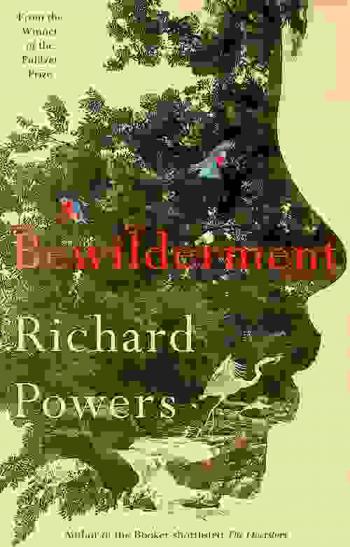
Bewilderment
\"A heartrending new novel from the Pulitzer Prize-winning and #1 New York Times best-selling author of The Overstory. \"Richard Powers, whose novels combine the wonders of science with the marvels of art, astonishes us in different ways with each new book.\" -Heller McAlpin, NPR Books. The astrobiologist Theo Byrne searches for life throughout the cosmos while single-handedly raising his unusual nine-year-old, Robin, following the death of his wife. Robin is a warm, kind boy who spends hours painting elaborate pictures of endangered animals. He's also about to be expelled from third grade for smashing his friend in the face. As his son grows more troubled, Theo hopes to keep him off psychoactive drugs. He learns of an experimental neurofeedback treatment to bolster Robin's emotional control, one that involves training the boy on the recorded patterns of his mother's brain. . . . With its soaring descriptions of the natural world, its tantalizing vision of life beyond, and its account of a father and son's ferocious love, Bewilderment marks Richard Powers's most intimate and moving novel. At its heart lies the question: How can we tell our children the truth about this beautiful, imperiled planet?\"-- Provided by publisher.

2018 Contemporary Adult Canadian Titles with Appeal for Strong Teen Readers
978-1988286-05-1 This wonderful assortment of short stories from acclaimed YA author, Don Aker, is sure to engage younger readers, even though the book was originally targeted to an adult audience. Three story lines are adeptly woven together to give you the view from various positions in the refugee process in Canada: Mahindan and his six-year-old son, Sellian are Tamil refugees from Sri Lanka who are escaping to what they believe will be a welcoming Canada from a deadly civil war; Priya, a second generation Sri Lankan-Canadian articling student representing Mahindan in the legal process of his refugee application; and Grace, a third generation Japanese-Canadian civil servant who is newly appointed as an adjudicator to the Immigration and Refugee Board who hears, amongst others, Mahindan's case for refugee status. Disembodied voices are the individual tellers of the tale: a woman who cannot let go of her three daughters, a miser who floats horizontally, a young gay man who committed suicide after rejection by his lover, an elderly reverend, a middle-aged printer killed in an accident just prior to consummating his marriage to his wife. The collection ends aptly with \"Size Matters: A Commencement Address\" which though never actually or publicly delivered, delivers wonderful advice to young women and young men, those same who are the future of our country and planet.
Journal Article

Jasmine and Maddie
To grieving Jasmine, Maddie's a rich kid with no problems. To lonely Maddie, Jasmine is all cavalier cool in their tame Connecticut town. True friends they are not. Yet each hopes the other might save her. Can Maddie give Jasmine what she needs? Could Jasmine rescue Maddie from the outskirts of the crowd? When Jasmine steals Maddie's heirloom ring, just how far will she go to keep it? In alternating chapters, Maddie and Jasmine take turns weaving their story about friendship and coming of age.
Book
Opus zero
Opus Zero tells the story of a destructive composer, Paul, played by Willem Dafoe, who's looking for the meaning of isolation and silence after the loss of his dad.
Streaming Video