
Catalogue Search | MBRL


Are you sure you want to remove the book from the shelf?

{{itemTitle}}
15
result(s) for
"Faysal I, King of Iraq"
Sort by:
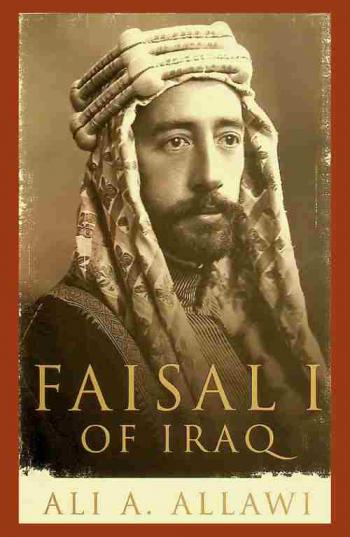
Faisal I of Iraq
\"Born in 1885, King Faisal I of Iraq was a seminal figure not only in the founding of the state of Iraq but also in the making of the modern Middle East. In all the tumult leading to the dissolution of the Ottoman Empire and the establishment of new Arab states, Faisal was a central player. His life traversed each of the important political, military, and intellectual developments of his times. This comprehensive biography is the first to provide a fully rounded picture of Faisal the man and Faisal the monarch. Ali A. Allawi recounts the dramatic events of his subject's life and provides a reassessment of his crucial role in developments in the pre- and post-World War I Middle East and of his lasting but underappreciated influence in the region even 80 years after his death. A battle-hardened military leader who, with the help of Lawrence of Arabia, organized the Arab Revolt against the Ottoman Empire; a leading representative of the Arab cause, alongside Gertrude Bell, at the Paris Peace Conference of 1919; a founding father and king of the first independent state of Syria; the first king of Iraq-in his many roles Faisal overcame innumerable crises and opposing currents while striving to build the structures of a modern state. This book is the first to afford his contributions to Middle East history the attention they deserve\"-- Provided by publisher.
Book

THE IRAQI IDENTITY: FAISAL'S UNSOLVED LEGACY
The problem of creating a sustainable national identity has been one of the major conflict sources, which Iraq has suffered from its early days onwards. This study examines the rationalistic roots of Iraq's identity problem, and how King Faisal's era (1921-1933), which encompassed the British mandate period, both contributed to this problem and tried to evade it. The aim of this study is to gain a basic understanding of Iraq's identity problem, which has been set in motion under King Faisal I, whose legacy is yet to be solved regarding the Iraqi peoples' feeling of belonging. Starting off with the problematique of a national identity framework in Iraq's case, this study elaborates on problems of defining the Iraqi identity, and sheds light on the major sources of which it is fed off; pan-Arab nationalism, tribalism, religion and language. The central argument of this study is that identity is a major indicator for power politics including other aspects of society.Keywords: Iraq, national identity, Arabness, King Faisal I, power politics
Journal Article

Making the Modern Middle East
A century ago, as World War I got underway, the Middle East was dominated, as it had been for centuries, by the Ottoman Empire. But by 1923, its political shape had changed beyond recognition, as the collapse of the Ottoman Empire and the insistent claims of Arab and Turkish nationalism and Zionism led to a redrawing of borders and shuffling of alliances—a transformation whose consequences are still felt today.
This fully revised and updated second edition of The Makers of the Modern Middle East traces those changes and the ensuing history of the region through the rest of the twentieth century and on to the present. Focusing in particular on three leaders—Emir Feisal, Mustafa Kemal, and Chaim Weizmann—the book offers a clear, authoritative account of the region seen from a transnational perspective, one that enables readers to understand its complex history and the way it affects present-day events.
eBook

The makers of the modern Middle East
This work presents a comprehensive analysis of how the decisions taken at the end of the First World War forged a new Middle East, setting in place a pattern which formed the political shape of the region as we know it today.
eBook


Queen of the sands
Outlines the remarkable career of Gertrude Bell, traveller, archaeologist, scholar and anti-suffragist, emphasising her political influence on imperial policy in the Middle East, particularly her role in helping to establish a pro-British monarchy in Iraq.
Magazine Article

Iraq
With each day that passed after the 2003 invasion, the United States seemed to sink deeper in the treacherous quicksand of Iraq's social discord, floundering in the face of deep ethno-sectarian divisions that have impeded the creation of a viable state and the molding of a unified Iraqi identity. Yet as Adeed Dawisha shows in this superb political history, the story of a fragile and socially fractured Iraq did not begin with the American-led invasion--it is as old as Iraq itself.
Dawisha traces the history of the Iraqi state from its inception in 1921 following the collapse of the Ottoman Empire and up to the present day. He demonstrates how from the very beginning Iraq's ruling elites sought to unify this ethnically diverse and politically explosive society by developing state governance, fostering democratic institutions, and forging a national identity. Dawisha, who was born and raised in Iraq, gives rare insight into this culturally rich but chronically divided nation, drawing on a wealth of Arabic and Western sources to describe the fortunes and calamities of a state that was assembled by the British in the wake of World War I and which today faces what may be the most serious threat to survival that it has ever known.
Featuring Dawisha's insightful new afterword on recent political developments,Iraqis required reading for anyone seeking to make sense of what's going on in Iraq today, and why it has been so difficult to create a viable government there.
eBook