
Catalogue Search | MBRL


Are you sure you want to remove the book from the shelf?

{{itemTitle}}
237
result(s) for
"Federal Indian Relationship"
Sort by:


Planning the American Indian Reservation
American Indian reservation planning is one of the most challenging and poorly understood specializations within the American planning profession. Charged with developing a strategy to protect irreplaceable tribal homelands that have been repeatedly diminished over the ages through unjust public policy actions, it is also one of the most imperative. For centuries tribes have faced historical bigotry, political violence, and an unrelenting resistance to self-governance.Aided by a comprehensive reservation planning strategy, tribes can create the community they envisioned for themselves, independent of outside forces. InPlanning the American Indian Reservation, Zaferatos presents a holistic and practical approach to explaining the practice of Native American planning.The book unveils the complex conditions that tribes face by examining the historic, political, legal, and theoretical dimensions of the tribal planning situation in order to elucidate the context within which reservation planning occurs. Drawing on more than thirty years of professional practice, Zaferatos presents several case studies demonstrating how effective tribal planning can alter thenature of the political landscape and help to rebalance the uneven relationships that have been formed between tribal governments and their nontribal political counterparts. Tribal planning's overarching objective is to assist tribes as they transition from passive objects of historical circumstances to principal actors in shaping their future reservation communities.
eBook

Entangled Pasts
Land-grant colleges were created in the mid-nineteenth century when the federal government sold off public lands and allowed states to use that money to create colleges. The land that was sold to support colleges was available because of a deliberate project to dispossess American Indians of land they inhabited. By encouraging westward migration, touting the “civilizing” influence of education, emphasizing agricultural and scientific education to establish international strength, and erasing Native rights and history, the land-grant colleges can be seen as an element of settler colonialism. Native American dispossession was not merely an unfortunate by-product of the establishment of land-grant colleges; rather, the colleges exist only because of a state-sponsored system of Native dispossession.
Journal Article

Indigenous Data Collection: Addressing Limitations in Native American Samples
This article outlines Indigenous data collection as a methodology that expands a sampling frame by using tribal Indigenous cultural knowledge, such as creation stories like those of the Cocopah and Quechan nations, to address limitations found in the methodological quality of Native American survey data in currently available datasets. Indigenous quantitative methodology and methodological limitations in existing government and institutional datasets are outlined (Walter & Andersen, 2013), and validities described by Shadish, Cook, and Campbell (2002) and the Standards for Educational and Psychological Testing (AERA et al., 2014) are explored. The conclusion presents the advantages of using Indigenous data collection to provide a sampling frame that highlights the use of Indigenous quantitative methodology.
Journal Article

Toward a Tribal Critical Race Theory in Education
In this article, I outline the central tenets of an emerging theory that I call Tribal Critical Race Theory (TribalCrit) to more completely address the issues of Indigenous Peoples in the United States. TribalCrit has it roots in Critical Race Theory, Anthropology, Political/Legal Theory, Political Science, American Indian Literatures, Education, and American Indian Studies. This theoretical framework provides a way to address the complicated relationship between American Indians and the United States federal government and begin to make sense of American Indians' liminality as both racial and legal/political groups and individuals.
Journal Article
Reconceiving Schooling: Centering Indigenous Experimentation in Indian Education History
Federal agents, church officials, and education reformers have long used schooling as a weapon to eliminate Indigenous people; at the same time, Indigenous individuals and communities have long repurposed schooling to protect tribal sovereignty, reconstitute their communities, and shape Indigenous futures. Joining scholarship that speaks to Indigenous perspectives on schooling, this paper offers seven touchpoints from Native nations since the 1830s in which Indigenous educators repurposed “schooling” as a technology to advance Indigenous interests. Together, these stories illustrate the broad diversity of Native educators’ multifaceted engagements with schooling and challenge settler colonialism's exclusive claim on schools. Though the outcomes of their efforts varied, these experiments with schooling represent Indigenous educators’ underappreciated innovations in the history of education in the United States.
Journal Article

Opportunity for Whom?: Political Opportunity and Critical Events in Canadian Aboriginal Mobilization, 1951–2000
Many social movement researchers question the usefulness of political opportunity as a concept. However, others argue that it can be refined by disaggregating different opportunities for actors and outcomes to understand the underlying mechanisms that influence each. This research extends this analysis by asking \"political opportunity for whom?\" Looking at Canadian Aboriginal mobilization, it assesses how different opportunities influence a broad range of movement actors and organizations. Using data from a 50-year period it assesses how contemporaneous, lagged and change regression modeling of opportunities affect results. The article finds that structural opportunities around resources robustly influence a wide range of mobilization.
Journal Article

Deficit Crisis Simulation: Using Monopoly to Teach About the Deficit Debate
The U.S. has a deficit problem. Both political parties agree that the debt and the deficit must be addressed, but are at odds about how to do so. Worse still, there are members of both parties who make finding solutions difficult because of entrenched ideology. As we approach the second year of Congressional impasse, it appears that this crisis is far from over. It is little wonder that teaching students about this issue is difficult. There are myriad nuances and complexities that are challenging to get across to students through traditional means. Simulations are one way to introduce students to complex phenomena by allowing them to experience them. Simulations have proven to be effective teaching tools for addressing subjective experiences and fostering inquiry. Shifts in student dispositions also may occur with simulations. This paper walks the reader through an adaptation of the board game Monopoly to demonstrate how this simulation game can be used to teach students about the deficit crisis and debate from multiple perspectives across the socioeconomic spectrum.
Journal Article
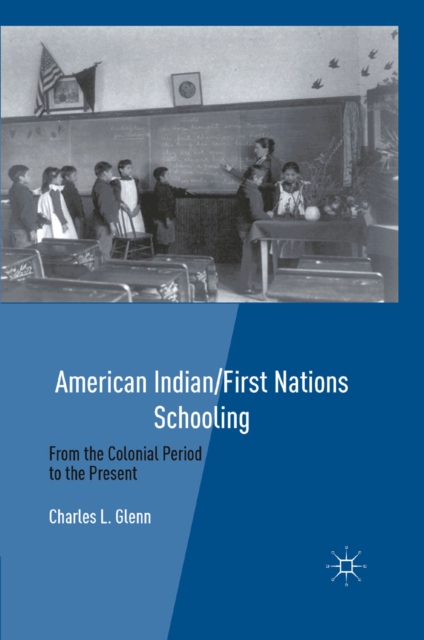
American Indian/First Nations Schooling
Tracing the history of Native American schooling in North America, this book emphasizes factors in society at large--and sometimes within indigenous communities--which led to Native American children being separate from the white majority. Charles Glenn examines the evolving assumptions about race and culture as applied to schooling, the reactions of parents and tribal leadership in the United States and Canada, and the symbolic as well as practical role of indigenous languages and of efforts to maintain them.
eBook

Documents of United States Indian Policy. Third Edition
The 238 documents printed in this volume illustrate the history of the United States government and the American Indians from the founding of the nation to the end of the 20th century. They are a collection of official and quasi-official records that marked significant formulations of public policy. The documents, presented in full text or extracts, include federal legislation, court decisions, treaties, and administrative actions. Documents related to education include the Civilization Fund Act, 1819; Indian Commissioner statements on civilizing the Indians and on cooperating with Religious Societies, 1881-82; Use of English in Indian Schools, 1887; Supplemental Report on Indian Education, 1889; Inculcation of Patriotism in Indian Schools, 1889; Indian School Superintendents as Indian Agents, 1893; Indian Commissioner Leupp on Reservation Schools, 1907; Meriam Report, 1928; Report on Indian Education, 1969; Indian Education Act, 1972; Comprehensive Employment and Training Act, 1973; Student Rights and Due Process Procedures, 1974; Indian Self-Determination and Education Assistance Act, 1975; Tribally Controlled Community College Assistance Act, 1978; Education Amendments Act of 1978, Title XI: Indian Education; Indian Child Welfare Act, 1978; Report on BIA Education, 1988; Tribally Controlled Schools Act of 1988; National Museum of the American Indian Act, 1989; American Indian and Alaska Native Education, Executive Order 13096, 1998; and various treaties. (Contains an index, a selected bibliography, and a list of federally recognized Indian tribes as of March 2000.) (SV)
Book