
Catalogue Search | MBRL


Are you sure you want to remove the book from the shelf?

{{itemTitle}}
1,102
result(s) for
"Feeding Methods - veterinary"
Sort by:
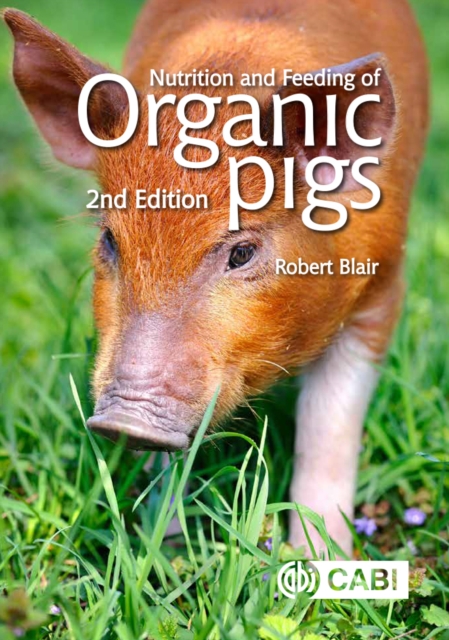
Nutrition and feeding of organic pigs
Organic animal production has increased rapidly in recent years to keep up with the increasing consumer demand for organic meats. There are many guidelines and restrictions on what should go into the feedstuffs of organically farmed animals, from which difficulties arise when trying to ensure a well-balanced, nutritious diet without the use of any supplements. This second edition of Robert Blair's classic and bestselling book on the nutrition and feeding of organic pigs presents comprehensive advice that includes:- formulating appropriate diets and integrating them into organic pig production systems;- international standards of organic feeding;- feed-related disease incidence in organic herds.The book has been completely updated and revised to address how to formulate organic diets in situations where there is a declining supply of organic feed, as well as the feasibility of utilizing novel feedstuffs and their acceptability by consumers of organic meat products. Including the experiences of producers in relation to appropriate breeds and production systems for forage-based organic production, this book is an important read for researchers and students of organic food animal production, veterinary sciences and food; as well as food industry personnel and organic farmers.
eBook

Effects of heat stress and plane of nutrition on lactating Holstein cows: I. Production, metabolism, and aspects of circulating somatotropin
Heat stress is detrimental to dairy production and affects numerous variables including feed intake and milk production. It is unclear, however, whether decreased milk yield is primarily due to the associated reduction in feed intake or the cumulative effects of heat stress on feed intake, metabolism, and physiology of dairy cattle. To distinguish between direct (not mediated by feed intake) and indirect (mediated by feed intake) effects of heat stress on physiological and metabolic indices, Holstein cows (n = 6) housed in thermal neutral conditions were pair-fed (PF) to match the nutrient intake of heat-stressed cows (HS; n = 6). All cows were subjected to 2 experimental periods: 1) thermal neutral and ad libitum intake for 9 d (P1) and 2) HS or PF for 9 d (P2). Heat-stress conditions were cyclical with daily temperatures ranging from 29.7 to 39.2°C. During P1 and P2 all cows received i.v. challenges of epinephrine (d 6 of each period), and growth hormone releasing factor (GRF; d 7 of each period), and had circulating somatotropin (ST) profiles characterized (every 15 min for 6 h on d 8 of each period). During P2, HS cows were hyperthermic for the entire day and peak differences in rectal temperatures and respiration rates occurred in the afternoon (38.7 to 40.2°C and 46 to 82 breaths/min, respectively). Heat stress decreased dry matter intake by greater than 35% and, by design, PF cows had similar reduced intakes. Heat stress and PF decreased milk yield, although the pattern and magnitude (40 and 21%, respectively) differed between treatments. The reduction in dry matter intake caused by HS accounted for only approximately 35% of the decrease in milk production. Both HS and PF cows entered into negative energy balance, but only PF cows had increased (approximately 120%) basal nonesterified fatty acid (NEFA) concentrations. Both PF and HS cows had decreased (7%) plasma glucose levels. The NEFA response to epinephrine did not differ between treatments but was increased (greater than 50%) in all cows during P2. During P2, HS (but not PF) cows had a modest reduction (16%) in plasma insulin-like growth factor-I. Neither treatment nor period had an effect on the ST response to GRF and there was little or no treatment effect on mean ST levels or pulsatility characteristics, but both HS and PF cows had reduced mean ST concentrations during P2. In summary, reduced nutrient intake accounted for just 35% of the HS-induced decrease in milk yield, and modest changes in the somatotropic axis may have contributed to a portion of the remainder. Differences in basal NEFA between PF and HS cows suggest a shift in postabsorptive metabolism and nutrient partitioning that may explain the additional reduction in milk yield in cows experiencing a thermal load.
Journal Article

Supplementary feeding restructures urban bird communities
Food availability is a primary driver of avian population regulation. However, few studies have considered the effects of what is essentially a massive supplementary feeding experiment: the practice of wild bird feeding. Bird feeding has been posited as an important factor influencing the structure of bird communities, especially in urban areas, although experimental evidence to support this is almost entirely lacking. We carried out an 18-mo experimental feeding study at 23 residential properties to investigate the effects of bird feeding on local urban avian assemblages. Our feeding regime was based on predominant urban feeding practices in our region. We used monthly bird surveys to compare avian community composition, species richness, and the densities of local species at feeding and nonfeeding properties. Avian community structure diverged at feeding properties and five of the commonest garden bird species were affected by the experimental feeding regime. Introduced birds particularly benefitted, with dramatic increases observed in the abundances of house sparrow (Passer domesticus) and spotted dove (Streptopelia chinensis) in particular. We also found evidence of a negative effect on the abundance of a native insectivore, the grey warbler (Gerygone igata). Almost all of the observed changes did not persist once feeding had ceased. Our study directly demonstrates that the human pastime of bird feeding substantially contributes to the structure of avian community in urban areas, potentially altering the balance between native and introduced species.
Journal Article

Effects of group housing on sow welfare: a review
Factors that have been shown to impact the welfare of group-housed sows are discussed in this review. Floor space allowance markedly affects sow welfare. In addition to quantity of floor space, the quality of space is important: spatial separation between sows can be provided with visual or physical barriers and stalls. Whereas 1.4 m/sow is insufficient, further research is required to examine space effects in the range of 1.8 to 2.4 m/sow in more detail. The period immediately after mixing has the most pronounced effects on aggression and stress, and therefore, well-designed mixing pens offer the opportunity to reduce aggression, injury, and stress while allowing the social hierarchy to quickly form. Because hunger is likely to lead to competition for feed or access to feeding areas, strategies to reduce hunger between meals through higher feeding levels, dietary fiber, or foraging substrate should be examined. However, feeding systems, such as full-body feeding stalls, can also affect aggression and stress by providing protection at feeding, but deriving conclusions on this topic is difficult because research directly comparing floor feeding, feeding stalls, and electronic sow feeder systems has not been conducted. Familiar sows engage in less aggression, so mixing sows that have been housed together in the previous gestation may reduce aggression. Although there is evidence in other species that early experience may affect social skills later in life, there are few studies on the effects of early \"socialization\" on aggressive behavior of adult sows. Genetic selection has the potential to reduce aggression, and therefore, continued research on the opportunity to genetically select against aggressiveness and its broader implications is required. Most research to date has examined mixing sows after insemination and knowledge on grouping after weaning is limited.
Journal Article

Impact of feeding and housing systems on disease incidence in dairy calves
Contentious issues in calf rearing include milk feeding level and single versus group housing. The current study was performed on a high-producing 170 Holstein cow dairy farm to investigate the impact of nutrition and housing on disease incidence. Calves (n=100) were allocated in birth order to one of two commonly used feeding strategies. Group A calves were group housed from birth and fed ad libitum milk replacer (MR) via a computerised machine using a single teat, with weaning commencing at 63 days. Group R calves were initially housed in individual pens receiving 2.5 litres of MR twice daily via a bucket until three weeks of age when they were group housed and fed 3 litres of MR twice daily via a group trough with weaning commencing at 56 days. In total, 80 (80 per cent) calves suffered from at least one incident of disease during the period from birth to 12 weeks. Group A calves had a greater risk of disease than group R calves (diarrhoea: OR 3.86 (95 per cent CI 1.67 to 8.9); pneumonia: OR 5.80 (95 per cent CI 2.33 to 14.44)). There was a 5.1 per cent incidence of failure of passive transfer of Ig assessed via measurement of plasma total protein concentrations at 48 hours of age. It is hypothesised that the increased diarrhoea risk in group A calves was most likely associated with group housing, while the increased pneumonia risk was associated with the use of a single teat allowing increased transmission of pathogens from calf to calf.
Journal Article
The impact of feeding growing-finishing pigs with daily tailored diets using precision feeding techniques on animal performance, nutrient utilization, and body and carcass composition
The impact of moving from conventional to precision feeding systems in growing-finishing pig operations on animal performance, nutrient utilization, and body and carcass composition was studied. Fifteen animals per treatment for a total of 60 pigs of 41.2 (SE = 0.5) kg of BW were used in a performance trial (84 d) with 4 treatments: a 3-phase (3P) feeding program obtained by blending fixed proportions of feeds A (high nutrient density) and B (low nutrient density); a 3-phase commercial (COM) feeding program; and 2 daily-phase feeding programs in which the blended proportions of feeds A and B were adjusted daily to meet the estimated nutritional requirements of the group (multiphase-group feeding, MPG) or of each pig individually (multiphase-individual feeding, MPI). Daily feed intake was recorded each day and pigs were weighed weekly during the trial. Body composition was assessed at the beginning of the trial and every 28 d by dual-energy X-ray densitometry. Nitrogen and phosphorus excretion was estimated as the difference between retention and intake. Organ, carcass, and primal cut measurements were taken after slaughter. The COM feeding program reduced (P < 0.05) ADFI and improved G:F rate in relation to other treatments. The MPG and MPI programs showed values for ADFI, ADG, G:F, final BW, and nitrogen and phosphorus retention that were similar to those obtained for the 3P feeding program. However, compared with the 3P treatment, the MPI feeding program reduced the standardized ileal digestible lysine intake by 27%, the estimated nitrogen excretion by 22%, and the estimated phosphorus excretion by 27% (P < 0.05). Organs, carcass, and primal cut weights did not differ among treatments. Feeding growing-finishing pigs with daily tailored diets using precision feeding techniques is an effective approach to reduce nutrient excretion without compromising pig performance or carcass composition.
Journal Article

Rumen development process in goats as affected by supplemental feeding v. grazing: age-related anatomic development, functional achievement and microbial colonisation
The aim of the present study was to describe age-related changes in anatomic, functional and microbial variables during the rumen development process, as affected by the feeding system (supplemental feeding v. grazing), in goats. Goats were slaughtered at seven time points that were selected to reflect the non-rumination (0, 7 and 14 d), transition (28 and 42 d) and rumination (56 and 70 d) phases of rumen development. Total volatile fatty acid (TVFA) concentration (P= 0·002), liquid-associated bacterial and archaeal copy numbers (P< 0·01) were greater for supplemental feeding v. grazing, while rumen pH (P< 0·001), acetate molar proportion (P= 0·003) and solid-associated microbial copy numbers (P< 0·05) were less. Rumen papillae length (P= 0·097) and extracellular (P= 0·093) and total (P= 0·073) protease activity potentials in supplemented goats tended to be greater than those in grazing goats. Furthermore, from 0 to 70 d, irrespective of the feeding system, rumen weight, rumen wall thickness, rumen papillae length and area, TVFA concentration, xylanase, carboxymethylcellulase activity potentials, and microbial copy numbers increased (P< 0·01) with age, while the greatest amylase and protease activity potentials occurred at 28 d. Most anatomic and functional variables evolved progressively from 14 to 42 d, while microbial colonisation was fastest from birth to 28 d. These outcomes suggest that the supplemental feeding system is more effective in promoting rumen development than the grazing system; in addition, for both the feeding systems, microbial colonisation in the rumen is achieved at 1 month, functional achievement at 2 months, and anatomic development after 2 months.
Journal Article
Competition at the feed bunk changes the feeding, standing, and social behavior of transition dairy cows
Transition dairy cows are vulnerable to the negative consequences of depressed feed intake around calving. Competition can decrease feeding activity in midlactation cows, but the effects of competition on the transition cow are not well understood. The objective was to test the effect of competition on the behavior and feed intake of transition cows. Standing behavior, feeding behavior, and dry matter intake were monitored from 1 wk before to 2 wk after calving for 36 Holstein dairy cows. Displacements at the feed bins were recorded the week before calving. Cows were assigned to either competitive (2:1 cows:feed bin) or noncompetitive (1:1 cow:feed bin) treatments. Treatment groups were balanced for parity and baseline feeding measures, resulting in 8 primiparous and 10 multiparous cows per treatment. Competition increased the number of displacements at the feed bins for both primiparous and multiparous cows. Primiparous cows had no change in feed intake or standing time when fed in a competitive environment, but did increase the time spent for each meal during the week before calving (28 ± 1.5 vs. 24 ± 1.5 min/meal). In the week before and after calving, competitively fed multiparous cows had a lower feeding time per visit than noncompetitively fed cows (4.2 ± 0.5 vs. 5.8 ± 0.5 kg/visit and 5.3 ± 0.7 vs. 7.0 ± 0.7 kg/visit, respectively). Multiparous cows ate at a faster rate 2 wk after calving (142 ± 11 vs. 105 ± 11 g/min). Multiparous cows in the competitive treatment increased the time they spent standing (without eating) during the week after calving compared with cows in the noncompetitive treatment (820 ± 44 vs. 649 ± 44 min/d). Feeding rate was correlated with a displacement index in multiparous cows, whereby cows with lower displacement indices ate more rapidly. Results indicate that restricting access to feed increases displacements regardless of parity, and alters the feeding and standing behavior of primiparous and multiparous cows differently.
Journal Article

The comparative effect of creep and conventional feeding methods on growth performance and oxidative stress markers in Akkaraman lambs
This study aimed to determine the effect of conventional and creep-feeding methods on growth performance and oxidative stress in Akkaraman (AKK) lambs. For this purpose, the AKK lambs (n = 60) used in this study were divided into four groups (15 n × 2 sex × 2 feeding methods), and all of them were fed the same ration. In the conventional feeding method, the lambs were taken to their dams for suckling twice a day and then kept in a separate compartment for further feeding. In contrast, in the creep-feeding method, the lambs always stayed with their mothers and had free access to supplementary feed by passing through the creep-feeding area. The data for body weights, body measurements, and saliva samples were collected five times, 14 days apart, to evaluate lambs’ growth performance and oxidative stress markers. The results showed a higher (P < 0.05) body weight gain in the creep-fed group than in the conventional-fed group. The difference between creep and conventional feeding was significant (P = 0.033), but the difference between the groups in terms of gender was nonsignificant (P = 0.438). The males fed with the creep-feeding (CR-M) group had the largest body length (BL), pectoral chest width (PCW), chest depth (CD), chest circumference (CC), head length (HL), and head width (HW) measurements. The males fed with the conventional feeding (CO-M) group had the largest wither height (WH) measurement, and females fed with the conventional feeding (CO-F) group had the largest back length (BAL) body size. When the overall improvement in body measurements was considered, it was determined that the body sizes of many males in creep-feeding increased more than those of other feeding groups. The oxidative stress marker malondialdehyde (MDA) was higher (P < 0.001) in the conventional feeding group. Other oxidative stress markers, superoxide dismutase (SOD), catalase (CAT), and glutathione s-transferase (GSH-ST), were higher in the creep-feeding group (P < 0.001). Considering these findings, it is possible to conclude that creep-feeding is superior to conventional feeding to get a higher growth rate and reduce oxidative stress in AKK lambs.
Journal Article

Winter grazing system and supplementation during late gestation influence performance of beef cows and steer progeny
A 2 x 2 factorial study evaluated effects of cow wintering system and last trimester CP supplementation on performance of beef cows and steer progeny over a 3-yr period. Pregnant composite cows (Red Angus x Simmental) grazed winter range (WR; n = 4/yr) or corn residue (CR; n = 4/yr) during winter and within grazing treatment received 0.45 kg/d (DM) 28% CP cubes (PS; n = 4/yr) or no supplement (NS; n = 4/yr). Offspring steer calves entered the feedlot 14 d postweaning and were slaughtered 222 d later. Precalving BW was greater (P = 0.02) for PS than NS cows grazing WR, whereas precalving BCS was greater (P < 0.001) for cows grazing CR compared with WR. Calf birth BW was greater (P = 0.02) for CR than WR and tended to be greater (P = 0.11) for PS than NS cows. Prebreeding BW and BCS were greater (P [less-than or equal to] 0.001) for CR than WR cows and PS than NS (P = 0.006) cows. At weaning, CR cows were heavier (P < 0.001) than WR cows but had similar BCS (P = 0.74). Cow weaning BW and BCS were not affected (P > 0.32) by PS. Calf weaning BW was less (P = 0.01) for calves from NS cows grazing WR compared with all other treatments. Pregnancy rate was unaffected by treatment (P > 0.39). Steer ADG, 12th-rib fat, yield grade, and LM area (P > 0.10) were similar among all treatments. However, final BW and HCW (P = 0.02) were greater for steers from PS-WR than NS-WR cows. Compared with steers from NS cows, steers from PS cows had greater marbling scores (P = 0.004) and a greater (P = 0.04) proportion graded USDA Choice or greater. Protein supplementation of dams increased the value of calves at weaning (P = 0.03) and of steers at slaughter regardless of winter grazing treatment (P = 0.005). Calf birth and weaning BW were increased by grazing CR during the winter. Calf weaning BW was increased by PS of the dam if the dam grazed WR. Compared with steers from NS cows, steer progeny from PS cows had a greater quality grade with no (P = 0.26) effect on yield grade. These data support a late gestation dam nutrition effect on calf production via fetal programming.
Journal Article