
Catalogue Search | MBRL


Are you sure you want to remove the book from the shelf?

{{itemTitle}}
64
result(s) for
"Feminist anarchism"
Sort by:

Prefigurative politics : building tomorrow today
\"Many of us wonder what we could possibly do to end oppression, exploitation, and injustice. This is the first book dedicated to prefigurative politics: a must-read both for students of radical politics, anarchism and social movements, as well as activists and concerned people everywhere\"-- Provided by publisher.
Book

Disaster Anarchy
Anarchists have been central in helping communities ravaged by disasters, stepping in when governments wash their hands of the victims. Looking at Hurricane Sandy, Covid-19, and the social movements that mobilised relief in their wake, Disaster Anarchy is an inspiring and alarming book about collective solidarity in an increasingly dangerous world. As climate change and neoliberalism converge, mutual aid networks, grassroots direct action, occupations and brigades have sprung up in response to this crisis with considerable success. Occupy Sandy was widely acknowledged to have organised relief more effectively than federal agencies or NGOs, and following Covid-19 the term 'mutual aid' entered common parlance. However, anarchist-inspired relief has not gone unnoticed by government agencies. Their responses include surveillance, co-option, extending at times to violent repression involving police brutality. Arguing that disaster anarchy is one of the most important political phenomena to emerge in the twenty-first century, Rhiannon Firth shows through her research on and within these movements that anarchist theory and practice is needed to protect ourselves from the disasters of our unequal and destructive economic system.
eBook

Feminism's Empire
Feminism's Empire investigates
the complex relationships between imperialisms and feminisms in the
late nineteenth century and demonstrates the challenge of
conceptualizing \"pro-imperialist\" and \"anti-imperialist\" as binary
positions . By intellectually and spatially tracing the
era's first French feminists' engagement with empire, Carolyn J.
Eichner explores how feminists opposed-yet employed-approaches to
empire in writing, speaking, and publishing. In differing ways,
they ultimately tied forms of imperialism to gender liberation.
Among the era's first anti-imperialists, French feminists were
enmeshed in the hierarchies and epistemologies of empire. They
likened their gender-based marginalization to imperialist
oppressions. Imperialism and colonialism's gendered and sexualized
racial hierarchies established categories of inclusion and
exclusion that rested in both universalism and ideas of \"nature\"
that presented colonized people with theoretical, yet impossible,
paths to integration. Feminists faced similar barriers to full
incorporation due to the gendered contradictions inherent in
universalism. The system presumed citizenship to be male and thus
positioned women as outsiders. Feminism's Empire connects
this critical struggle to hierarchical power shifts in racial and
national status that created uneasy linkages between French
feminists and imperial authorities.
eBook
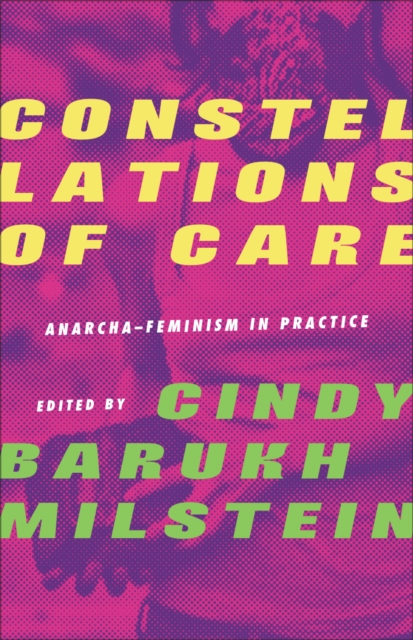
Constellations of Care
'Offers the conversations we need to sustain the possibility of anarchist, feminist, and queer world-making in the ruins of everyday brutality' - Mattilda Bernstein Sycamore
What do we do when the state has abandoned us? From failing health systems to housing crises to cascading ecological collapse, it’s increasingly evident that state-centered politics do not protect us from the violence of colonialism and capitalism, fascism and patriarchy. In fact, they actively work to harm us.
Anarchist feminism—or anarcha-feminism—shows us that the ways we tend to our social relations can build a new world inside the old one. We can take care of each other when nothing else will, supplying communal well-being and liberatory horizons.
From communitarian kitchens to medic collectives, squatted social centers to queer theater troupes, Ljubljana to Mexico City,
Constellations of Care powerfully underscores that we already have everything we need and desire in one another to carve out lives worth living.
eBook

Attending to unproof: an archaeology of possibilities
The fragmentation of the archaeological record presents methodological challenges: as researchers analyse and construct models, they do not (and in most cases cannot and will not) know what is missing. Here, the author argues that these gaps are one of the field's greatest strengths; they force practitioners to be reflective in their understanding of, and approach to, studying the material traces of past people's lives and to make space for ways of being foreign to present reality. The uncertainty of a past in ruins is a place of possibility that empowers us all to imagine and to work towards a better future.
Journal Article
From proof and unproof to critical fabulation: a response to Frieman
In her debate article, Frieman's (2024) reflections on the idea of unproof are a welcome and elegant addition to current debate on the nature of archaeological evidence, how we construct the stories we tell about the past, and the role of archaeology in the contemporary world. Frieman draws on both feminist and anarchist theory to argue that the value of archaeology is the way it allows us to grasp worlds different from our own and suggests that this can allow us to pre-figure better future worlds. This chimes closely with other recent work on the subject (e.g. Barton 2021; Cipolla et al. 2024; Schofield 2024)—clearly, archaeologists are considering the radical potential of our own discipline to change the world.
Journal Article

Theorizing Postdevelopment
The paper seeks to define and situate postdevelopment (PD) theory within the social sciences by discussing its relation to other theoretical approaches. It concludes that PD can be seen to a rather limited extent as a development theory, but rather as a sociology of knowledge of this discipline and a critique of its foundation. PD shares the critique of capitalism with Marxism but also has a more negative view of industrial modernity, its relation to nature, economic growth and productivity. For some, PD is characterized by a spirituality alien to western modernity, although this does not seem to be necessary to subscribe to the approach. Although PD’s critique is intimately related to ecofeminist thinking (and ecofeminist authors), many of its male protagonists seem unaware of this proximity. PD is clearly a postcolonial (or decolonial) critique of colonial and neocolonial relations of power which can be found also in knowledge production, in particular in the division between the ‘developed’ Self (Europe and European settler colonies and other societies emulating them) and the ‘backward’ Other. And PD, at the least sceptical PD, is based on a post-anarchist perspective of ontological equality, oriented towards self-determination in the pluriverse and rearguard theories.
Journal Article
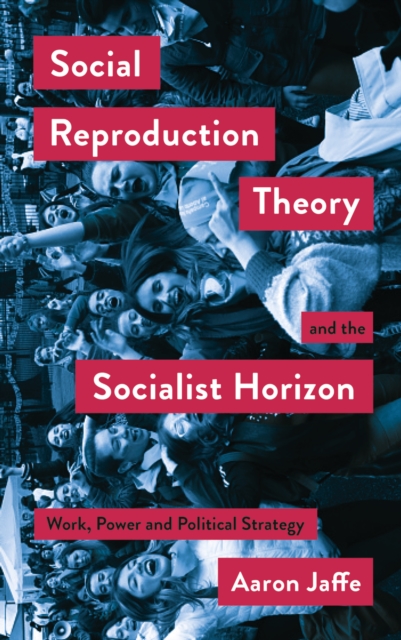
Social Reproduction Theory and the Socialist Horizon
How do we integrate the theoretical underpinnings of social reproduction theory (SRT) into our understanding of the social harms inflicted upon us? How can we use it to inform our struggles and affect societal change under capitalism? Integrating our understanding of productive and reproductive spheres and exploring the connection between identity-based oppression and class exploitation, SRT has emerged as a powerful Marxist frame for social analysis and political practice. In this book, Aaron Jaffe extracts SRT's radical potential, relying on recent struggles, including the International Women's Strike and the teachers' strikes, showing how we can use SRT to motivate socialist politics and strategy. Using social reproduction theory to appreciate distinct forms of social domination, this unique and necessary book will have vital strategic implications for anti-capitalists, anti-racists, LGBT activists, disability activists and feminists.
eBook

Feminist Utopias, Queerness and Paul Goodman
The question of whether a (queer) politics of utopia can be located in the past, the future or the present conjures a set of ambivalences and dichotomies, of which the creativity–negativity debate and the (non)future of neoliberalism are cogent for feminist praxis. Convergences can be traced between understandings of utopia grounded in everyday experimentation and queer feminist critiques of normativity as a life project as well as an ongoing educational project. This article dissects social critic, psychologist, poet, novelist and anarchist Paul Goodman’s essay ‘The politics of being queer’ (1969), reading it through a queer feminist lens in order to shed new light on his ‘buried conversations’ with feminism. Mindful of and in opposition to Goodman’s controversial avowal of ‘masculinities’—most notably in his Growing Up Absurd (1960)—the article situates his idea(s) of freedom-autonomy and the disidentifications he proposed—with gay liberation agendas/movements, with bisexuality, with ‘masculinity’—within a wider feminist educational/pedagogical project of experimenting with utopia in the here and now. Goodman’s calls for a liberated society left us a utopian imaginary for engaging with an embodied politics for the present—for teaching, educating, loving and living differently.
Journal Article

A feminist and decolonial perspective on passing the test in activist ethnography
PurposeThe purpose of this paper is to question the idea of “passing a test” within activist ethnography. Activist ethnography is an ethnographic engagement with social movement organizations as anti-authoritarian, anarchist, feminist and/or anti-racist collectives. It is based on the personal situating of the researcher within the field to avoid a replication of colonialist research dynamics. Addressing these concerns, we explore activist ethnography through feminist standpoint epistemologies and decolonial perspectives.Design/methodology/approachThis paper draws on our two activist ethnographies conducted as PhD research in two distinct European cities with two different starting points. While Léa entered the field through her PhD research, Claire partly withdrew and re-entered as academic.FindingsEven when activist researchers share the political positioning of the social movement they want to study, they still experience tests regarding their research methodology. As activists, they are accountable to their movement and experience – as most other activist – a constant threat of exclusion. In addition, activist networks are fractured along political lines, the test is therefore ongoing.Originality/valueOur contribution is threefold. First, the understanding of tests within activist ethnography helps decolonizing ethnography. Being both the knower and the known, activist ethnographers reflect on the colonial and heterosexist history of ethnography which offers potentials to use ethnography in non-exploitative ways. Second, we conceive of activist ethnography as a prefigurative methodology, i.e. as an embedded activist practice, that should therefore answer to the same tests as any other practice of prefigurative movements: it should aim to enact here and now the type of society the movement reaches for. Finally, we argue that activist ethnography relies on and contribute to developing consciousness about the researcher’s political subjectivity.
Journal Article