
Catalogue Search | MBRL


Are you sure you want to remove the book from the shelf?

{{itemTitle}}
1,559
result(s) for
"Fermi, Enrico"
Sort by:

The Pope of Physics : Enrico Fermi and the birth of the atomic age
\"A modest, unassuming man, Fermi was nevertheless one of the most productive and creative scientists of the twentieth century, one of the fathers of the atomic bomb and a Nobel Prize winner whose contributions to physics and nuclear technology live on today, with the largest particle accelerator in the United States and the nation's most significant science and technology award both bearing his name. In this, the first major biography of Fermi in English, Gino Segrè ... brings this scientific visionary to life\"-- Provided by publisher.
Book

Prospects for observing and localizing gravitational-wave transients with Advanced LIGO, Advanced Virgo and KAGRA
We present our current best estimate of the plausible observing scenarios for the Advanced LIGO, Advanced Virgo and KAGRA gravitational-wave detectors over the next several years, with the intention of providing information to facilitate planning for multi-messenger astronomy with gravitational waves. We estimate the sensitivity of the network to transient gravitational-wave signals for the third (O3), fourth (O4) and fifth observing (O5) runs, including the planned upgrades of the Advanced LIGO and Advanced Virgo detectors. We study the capability of the network to determine the sky location of the source for gravitational-wave signals from the inspiral of binary systems of compact objects, that is binary neutron star, neutron star–black hole, and binary black hole systems. The ability to localize the sources is given as a sky-area probability, luminosity distance, and comoving volume. The median sky localization area (90% credible region) is expected to be a few hundreds of square degrees for all types of binary systems during O3 with the Advanced LIGO and Virgo (HLV) network. The median sky localization area will improve to a few tens of square degrees during O4 with the Advanced LIGO, Virgo, and KAGRA (HLVK) network. During O3, the median localization volume (90% credible region) is expected to be on the order of
10
5
,
10
6
,
10
7
Mpc
3
for binary neutron star, neutron star–black hole, and binary black hole systems, respectively. The localization volume in O4 is expected to be about a factor two smaller than in O3. We predict a detection count of
1
-
1
+
12
(
10
-
10
+
52
) for binary neutron star mergers, of
0
-
0
+
19
(
1
-
1
+
91
) for neutron star–black hole mergers, and
17
-
11
+
22
(
79
-
44
+
89
) for binary black hole mergers in a one-calendar-year observing run of the HLV network during O3 (HLVK network during O4). We evaluate sensitivity and localization expectations for unmodeled signal searches, including the search for intermediate mass black hole binary mergers.
Journal Article

The Nobel Prize to Enrico Fermi
This paper investigates how Enrico Fermi was evaluated for a Nobel Prize during the period 1935–1938.
Journal Article


Why science?
This book aims to describe, for readers uneducated in science, the development of humanity's desire to know and understand the world around us through the various stages of its development to the present, when science is almost universally recognized — at least in the Western world — as the most reliable way of knowing. The book describes the history of the large-scale exploration of the surface of the earth by sea, beginning with the Vikings and the Chinese, and of the unknown interiors of the American and African continents by foot and horseback. After the invention of the telescope, visual exploration of the surfaces of the Moon and Mars were made possible, and finally a visit to the Moon. The book then turns to our legacy from the ancient Greeks of wanting to understand rather than just know, and why the scientific way of understanding is valued. For concreteness, it relates the lives and accomplishments of six great scientists, four from the nineteenth century and two from the twentieth. Finally, the book explains how chemistry came to be seen as the most basic of the sciences, and then how physics became the most fundamental.
eBook


The Chicago Piles unearthed
The divergence of the Chicago Pile 1 (CP-1) on December 2nd, 1942 marks the birth of the nuclear age. CP-1 was the first nuclear reactor, conceived as a proof-of-principle physics experiment to demonstrate the feasibility of a self-sustained neutron chain reaction. After only three months of operation, CP-1 was dismantled due to safety reasons and rebuilt at the Argonne Site, under the name of Chicago Pile 2 (CP-2). CP-2 had a longer life, contributing vastly to research on material science and nuclear reactor theory, and was finally decommissioned in 1954. These astonishing scientific artifacts remain poorly characterized, in spite of their pivotal historical role. Here, we fill this gap by building fully detailed three-dimensional digital twins of CP-1 and CP-2 using TRIPOLI-4, the Monte Carlo particle transport code developed at CEA, based on the aggregation of information retrieved from published and unpublished documents of the Manhattan Project. Simulation results faithfully reproduce the available experimental measurements and shed light on the early development of fuel and moderator materials.
Journal Article
After Enrico Fermi’s Nobel: Towards Chicago, Fermi’s Students and their Nobel Prizes
We remember the figure of Enrico Fermi, how he greatly influenced American physics and, through his students, revolutionised its teaching. In relation to this, the Nobel prizes won by his PhD students and others who were inspired by him are also remembered.
Journal Article
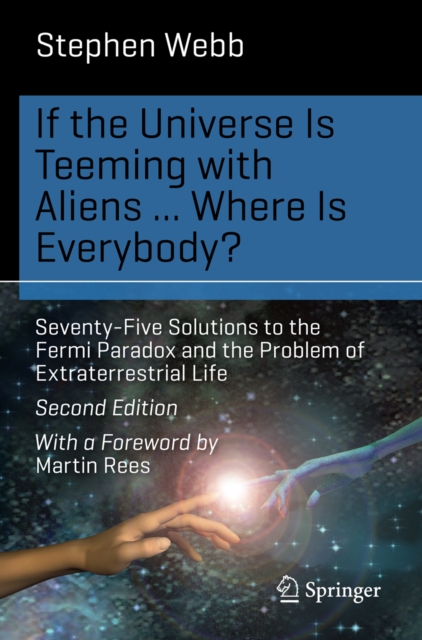
If the Universe Is Teeming with Aliens ... WHERE IS EVERYBODY?
Given the fact that there are perhaps 400 billion stars in our Galaxy alone, and perhaps 400 billion galaxies in the Universe, it stands to reason that somewhere out there, in the 14-billion-year-old cosmos, there is or once was a civilization at least as advanced as our own. The sheer enormity of the numbers almost demands that we accept the truth of this hypothesis. Why, then, have we encountered no evidence, no messages, no artifacts of these extraterrestrials? In this second, significantly revised and expanded edition of his widely popular book, Webb discusses in detail the (for now!) 75 most cogent and intriguing solutions to Fermi's famous paradox: If the numbers strongly point to the existence of extraterrestrial civilizations, why have we found no evidence of them?Reviews from the first edition:\"Amidst the plethora of books that treat the possibility of extraterrestrial intelligence, this one by Webb ... is outstanding. ... Each solution is presented in a very logical, interesting, thorough manner with accompanying explanations and notes that the intelligent layperson can understand. Webb digs into the issues ... by considering a very broad set of in-depth solutions that he addresses through an interesting and challenging mode of presentation that stretches the mind. ... An excellent book for anyone who has ever asked 'Are we alone?'.\" (W. E. Howard III, Choice, March, 2003)\"Fifty ideas are presented ... that reveal a clearly reasoned examination of what is known as 'The Fermi Paradox'. ... For anyone who enjoys a good detective story, or using their thinking faculties and stretching the imagination to the limits ... 'Where is everybody' will be enormously informative and entertaining. ... Read this book, and whatever your views are about life elsewhere in the Universe, your appreciation for how special life is here on Earth will be enhanced! A worthy addition to any personal library.\" (Philip Bridle, BBC Radio, March, 2003)Since gaining a BSc in physics from the University of Bristol and a PhD in theoretical physics from the University of Manchester, Stephen Webb has worked in a variety of universities in the UK. He is a regular contributor to the Yearbook of Astronomy series and has published an undergraduate textbook on distance determination in astronomy and cosmology as well as several popular science books. His interest in the Fermi paradox combines lifelong interests in both science and science fiction.
eBook