
Catalogue Search | MBRL


Are you sure you want to remove the book from the shelf?

{{itemTitle}}
231
result(s) for
"Festivals Mexico."
Sort by:

Cultural traditions in Mexico
Describes how the blending of native Mexican and Spanish traditions, beliefs, and rituals has resulted in many of the lively and colorful festivals celebrated in Mexico today.
Book

Power and Persuasion
Demonstrates how the annual fiesta cycle reflects political dependency of local communities on the nation-state, helps maintain formal authority, and perpetuates behavioral norms and social values.
eBook

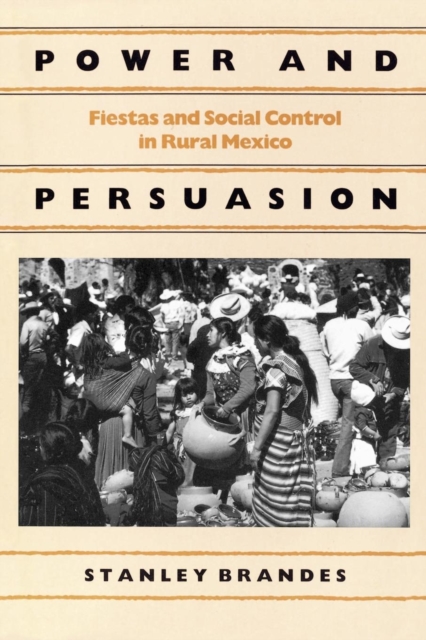
Power and persuasion : fiestas and social control in rural Mexico
No detailed description available for \"Power and Persuasion\".
eBook
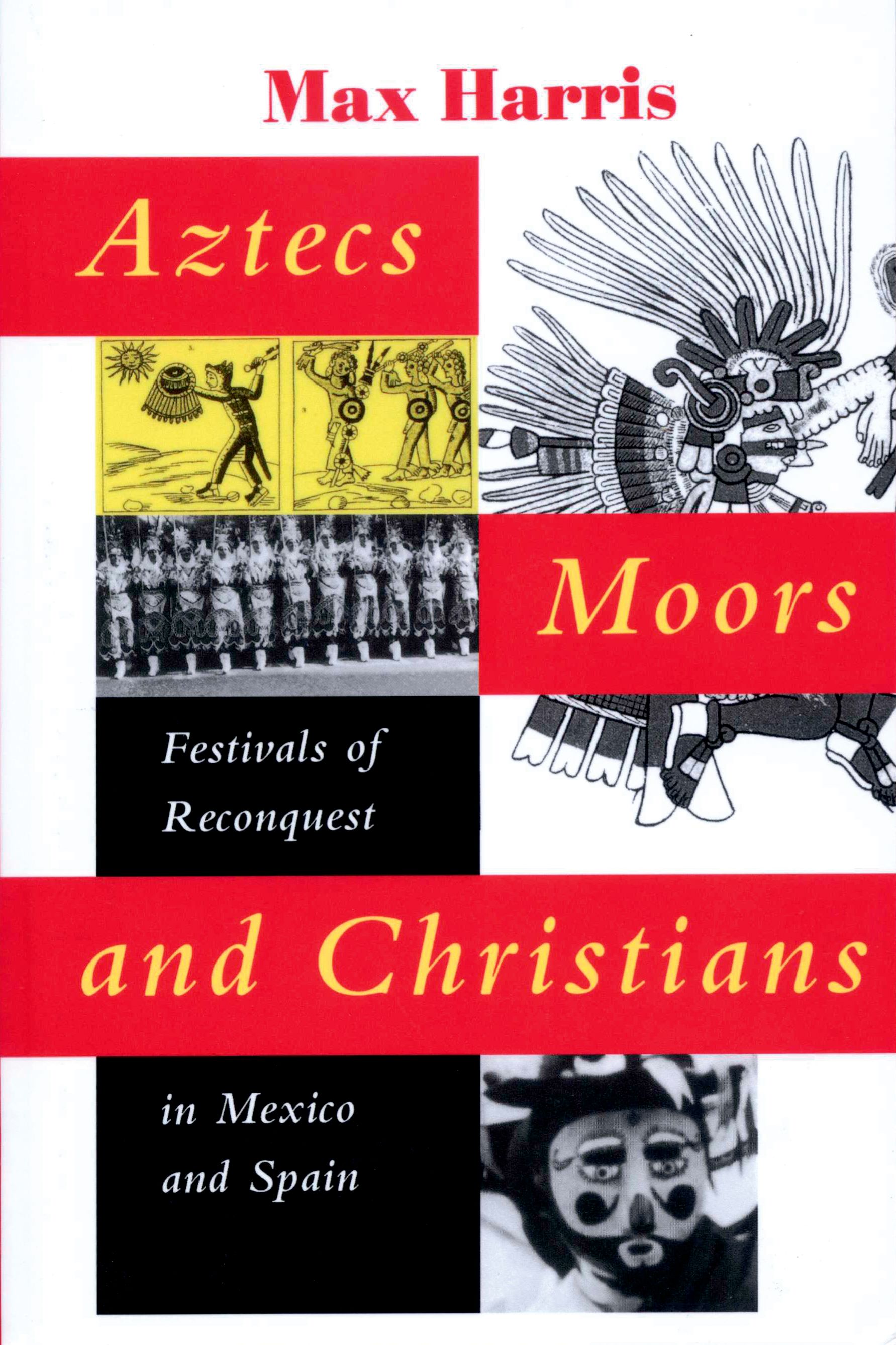
Aztecs, Moors, and Christians
In villages and towns across Spain and its former New World colonies, local performers stage mock battles between Spanish Christians and Moors or Aztecs that range from brief sword dances to massive street theatre lasting several days. The festival tradition officially celebrates the triumph of Spanish Catholicism over its enemies, yet this does not explain its persistence for more than five hundred years nor its widespread diffusion. In this insightful book, Max Harris seeks to understand Mexicans' \"puzzling and enduring passion\" for festivals of moros y cristianos. He begins by tracing the performances' roots in medieval Spain and showing how they came to be superimposed on the mock battles that had been a part of pre-contact Aztec calendar rituals. Then using James Scott's distinction between \"public\" and \"hidden transcripts,\" he reveals how, in the hands of folk and indigenous performers, these spectacles of conquest became prophecies of the eventual reconquest of Mexico by the defeated Aztec peoples. Even today, as lively descriptions of current festivals make plain, they remain a remarkably sophisticated vehicle for the communal expression of dissent.
eBook

The Village Is Like a Wheel
In this modern-day anthropological manifesto, Roger Magazine proposes a radical but commonsense change to the study of people whose understanding of the world differs substantially from our own. Specifically, it argues for a major shift in the prevailing approach to the study of rural highland peoples in Mexico. Using ethnographic material, Roger Magazine builds a convincing case that many of the discipline's usual topics and approaches distract anthropologists from what is truly important to the people whose lives they study. While Western anthropologists have usually focused on the production of things, such as community, social structure, cultural practices, identities, and material goods-since this is what they see as the appropriate objective of productive action in their own lives-residents of rural highland communities in Mexico (among others) are primarily concerned with what Magazine calls the production of active subjectivity in other persons.According to Magazine, where Western anthropologists often assume that persons are individuals capable of acting on their own to produce things, rural highland Mexicans see persons as inherently interdependent and in need of others even to act. He utilizes the term \"active subjectivity\" to denote the fact that what they produce in others is not simply action but also a subjective state or attitude of willingness to perform the action.The author's goals are to improve understandings of rural highland Mexicans' lives and to contribute to a broader disciplinary effort aimed at revealing the cultural specificity or ethnocentricity of our supposedly universally applicable concepts and theories.
eBook

Aztecs, Moors, and Christians : festivals of reconquest in Mexico and Spain
In villages and towns across Spain and its former New World colonies, local performers stage mock battles between Spanish Christians and Moors or Aztecs that range from brief sword dances to massive street theatre lasting several days. The performances officially celebrate the triumph of Spanish Catholicism over its enemies. Such an explanation does not, however, account for the tradition’s persistence for more than five hundred years nor for its widespread diffusion. In this perceptive book, Max Harris seeks to understand the puzzling and enduring passion of both Mexicans and Spaniards for festivals of moros y cristianos. He begins by tracing the performances’ roots in medieval Spain and showing how they came to be superimposed on the mock battles that had been part of pre-contact Aztec calendar rituals. Then, using James Scott’s distinction between public and hidden transcripts, he reveals how, in the hands of folk and indigenous performers, these spectacles of conquest became prophecies of the eventual reconquest of Mexico by the defeated Aztec peoples. Finally, he documents the early arrival of native American performance practices in Europe and the shift of moros y cristianos from court to folk tradition in Spain. Even today, as lively descriptions of current festivals make plain, mock battles between Aztecs, Moors, and Christians remain a remarkably sophisticated vehicle for the communal expression of dissent.
eBook

Made in Mexico
This book concerns the aesthetic, political, and socio-political aspects of tourism in southern Mexico, particularly in the state of Oaxaca. Tourists seeking \"authenticity\" buy crafts and festival tickets, and spend even more on travel expenses. What does a craft object or a festival moment need to look like or sound like to please both tradition bearers and tourists in terms of aesthetics? Under what conditions are transactions between these parties psychologically healthy and sustainable? What political factors can interfere with the success of this negotiation, and what happens when the process breaks down? With Subcommandante Marcos and the Zapatistas still operating defiantly in the area, these are not merely theoretical problems.Chris Goertzen analyzes the nature and meaning of a single craft object, a woven pillowcase from Chiapas, thus previewing what the book will accomplish in greater depth in Oaxaca. He introduces the book's guiding concepts, especially concerning the types of aesthetic intensification that have replaced fading cultural contexts, and the tragic partnership between ethnic distinctiveness and oppressive politics. He then brings these concepts to bear on crafts in Oaxaca and on Oaxaca's Guelaguetza, the anchor for tourism in the state and a festival with an increasingly contested meaning.
eBook
Village Celebrates Day of the Donkey
In Otumba, Mexico, \"the Day of the Burro--which organizers say is unique in the world--pays tribute to the venerable donkey\" (DALLAS MORNING NEWS). While many people look down on this animal, the donkey maintains a special place in the hearts of the Mexicans. Learn about the donkey's contributions to the economic well-being of Otumba and how this holiday evolved.
Newspaper Article
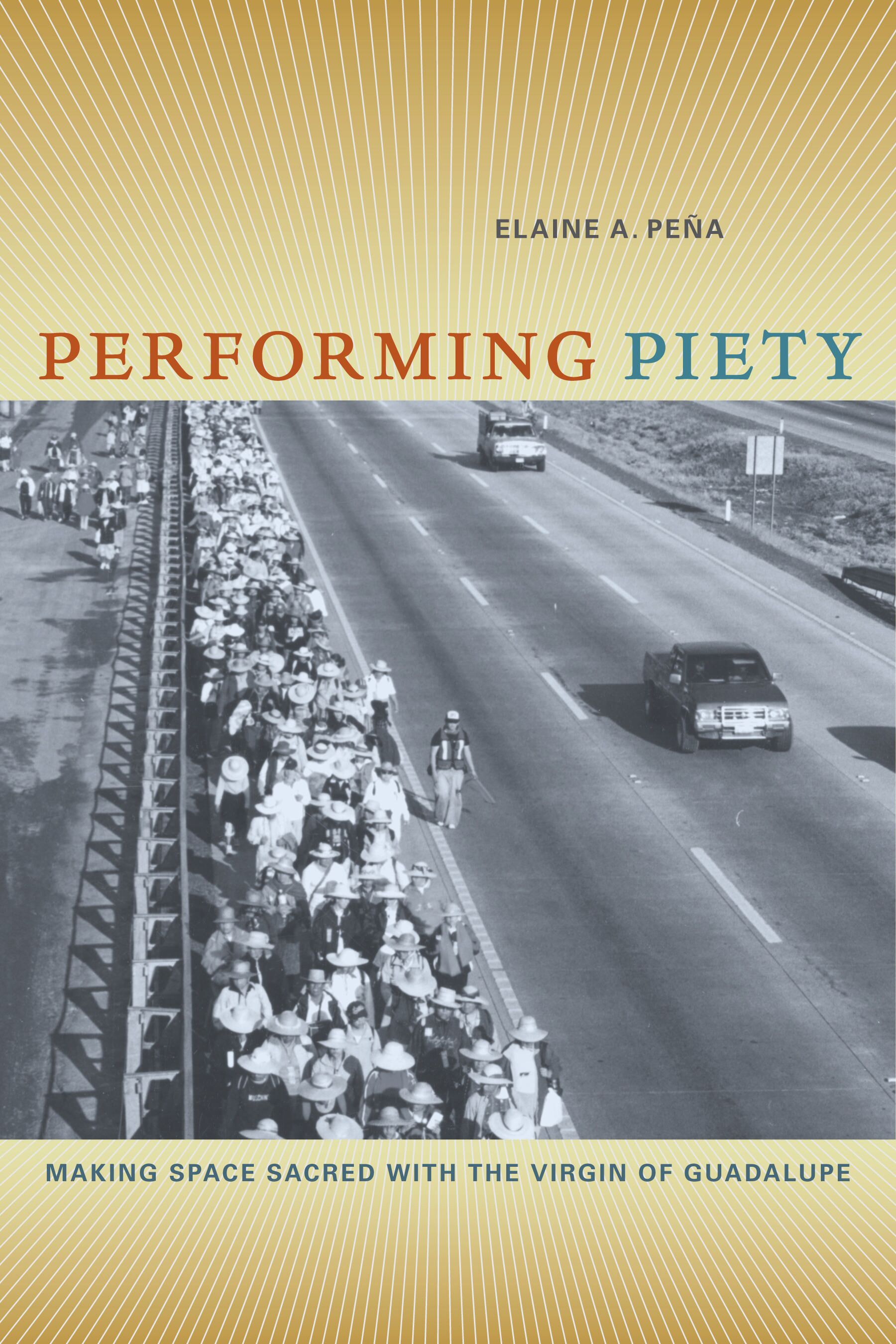
Performing piety
The Virgin of Guadalupe, though quintessentially Mexican, inspires devotion throughout the Americas and around the world. This study sheds new light on the long-standing transnational dimensions of Guadalupan worship by examining the production of sacred space in three disparate but interconnected locations--at the sacred space known as Tepeyac in Mexico City, at its replica in Des Plaines, Illinois, and at a sidewalk shrine constructed by Mexican nationals in Chicago. Weaving together rich on-the-ground observations with insights drawn from performance studies, Elaine A. Peña demonstrates how devotees' rituals--pilgrimage, prayers, and festivals--develop, sustain, and legitimize these sacred spaces. Interdisciplinary in scope, Performing Piety paints a nuanced picture of the lived experience of Guadalupan devotion in which different forms of knowing, socio-economic and political coping tactics, conceptions of history, and faith-based traditions circulate within and between sacred spaces.
eBook