
Catalogue Search | MBRL


Are you sure you want to remove the book from the shelf?

{{itemTitle}}
8
result(s) for
"Ficino, Marsilio, 1433-1499 Influence."
Sort by:

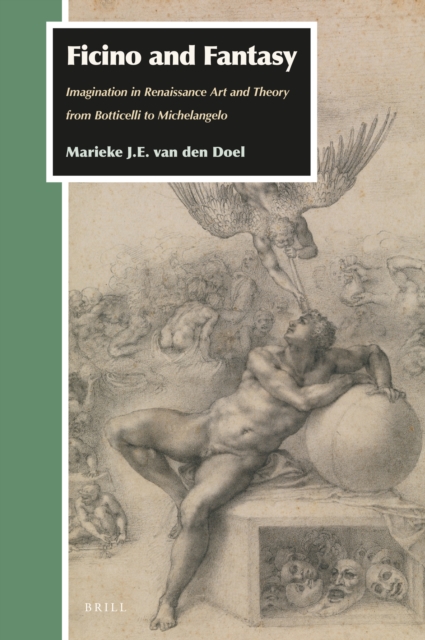
Ficino and fantasy : imagination in Renaissance art and theory from Botticelli to Michelangelo
Did the Florentine philosopher Marsilio Ficino (1433-99) influence the art of his time? This book starts with an exploration of Ficino's views on the imagination and discusses whether, how and why these ideas may have been received in Italian Renaissance works of art.
eBook
All things natural : Ficino on Plato's Timaeus
Marsilio Ficino, a leading scholar of the Italian Renaissance who translated all the works of Plato into Latin, examines Plato's Timaeus, the most widely influential and hotly debated of the Platonic writings. Offering a probable account of the creation and nature of the cosmos, the discussion incorporates such questions as What is the function of arithmetic and geometry in the design of creation? What is the nature of mind, soul, matter, and time? and What is our place in the universe? To his main commentary Ficino adds an appendix, which amplifies and elucidates Plato's meanings and reveals fascinating details about Ficino himself.
eBook

Melancholia, Mammon, and Magic
Focusing on Guyon’s encounter with Mammon, this essay examines melancholia in The Faerie Queene in relation to Marsilio Ficino’s Three Books on Life. Ficino recognizes melancholia as a serious malady, but he also claims that some melancholics are extraordinarily intelligent and creative. In Spenser’s poem, some melancholy characters (Despair, Mammon, and Maleger, for example) are dangerous, while others (Phantastes, the youthful sage in Alma’s castle, and the poem’s most idealistic lovers) appear in a more positive light. Ficino traces the causes of a melancholy temperament to astrological factors. Saturn’s influence predisposes an individual to inquire into the depths of experience, aspiring also to self-transcending knowledge and power. The ill effects of black bile can be tempered by habits that nourish the vital spiritus and connect the human microcosm with beneficial daemons and angels. Describing heavenly influences that can be captured to cure melancholia, Ficino stresses the importance of Phoebus Apollo, Venus, and Jupiter, the “Three Graces.” Two engravings by Dürer, St. Jerome in His Study and Melencolia I, provide pictorial analogues to architectonically significant passages in Books I and II of The Faerie Queene; the pattern of textual echoes and contrasts continues in Book III. A Platonic program emerges from details in Guyon’s encounter with Mammon, his sojourn in Alma’s castle, and his testing in the Bower of Bliss. This sequence is capped by all that is revealed in the Garden of Adonis canto (FQ III.vi) under the aegis of the three Graces.
Journal Article

Pythagoras in the Renaissance: The Case of Marsilio Ficino
This article discusses the manner in which Ficino employs the figure of Pythagoras and various aspects of the Pythagorean tradition in the philosophical areas of psychology, moral philosophy, and ontology. It also argues that the figure of Pythagoras as prophet was particularly appealing to a Ficino situated in the cultural environment of late fifteenth-century Florence. Text, culture, and ideology interacted in a complex way: spurred on by his early appreciation of Iamblichus's soteriological presentation of Pythagoras, Ficino helped create an ideology in Florence which was receptive to a prophetic figure. The piece thus suggests that Ficino viewed a certain segment of the history of thought through late ancient, Iamblichean eyes.
Journal Article

The Philosopher, the Poet, and the Fragment: Ficino, Poliziano, and Le stanze per la giostra
The Stanze per la giostra by Poliziano has long been of interest to historians concerned with the cultural climate of Laurentian Florence. Critics have often viewed Marsilio Ficino and his Neoplatonic ideas as having had a seminal influence, on both the cultural élite and Poliziano himself. The Stanze has therefore been read mostly as a type of exercise in poetic Neoplatonic discourse. The article seeks to show, instead, that the philosophical content and devices of the Stanze derive from Tuscan poetic traditions rather than directly from Ficino. Of particular importance to Poliziano's poetic ideas were the canzone 'Donna me prega' by Cavalcanti and Petrarch's Trionfi.
Journal Article

MARSILIO FICINO RENAISSANCE MAN
Discusses the work of the Florentine scholar who addressed contemporary concerns with intelligence, wisdom and compassion - a remarkable man from whose writings we can still learn much. (Quotes from original text)
Magazine Article
The Return of Lucretius to Renaissance Florence
Passannante reviews The Return of Lucretius to Renaissance Florence by Alison Brown.
Book Review