
Catalogue Search | MBRL


Are you sure you want to remove the book from the shelf?

{{itemTitle}}
117
result(s) for
"Fiction-21st century-History and criticism"
Sort by:

Twenty-first-century fiction : a critical introduction
\"The widespread use of electronic communication at the dawn of the twenty-first century has created a global context for our interactions, transforming the ways we relate to the world and to one another. This critical introduction reads the fiction of the past decade as a response to our contemporary predicament - one that draws on new cultural and technological developments to challenge established notions of democracy, humanity, and national and global sovereignty. Peter Boxall traces formal and thematic similarities in the novels of contemporary writers including Don DeLillo, Margaret Atwood, J. M. Coetzee, Marilynne Robinson, Cormac McCarthy, W. G. Sebald and Philip Roth, as well as David Mitchell, Chimamanda Ngozi Adichie, Dave Eggers, Ali Smith, Amy Waldman and Roberto Bolaنno. In doing so, Boxall maps new territory for scholars, students and interested readers of today's literature by exploring how these authors narrate shared cultural life in the new century\"-- Provided by publisher.
Book

\We, the Barbarians\
\"We, the Barbarians\" embarks on a careful and exhaustive
reading of three of the most prominent authors in the latest wave
of Mexican fiction: Yuri Herrera, Fernanda Melchor, and Valeria
Luiselli. Originally published in Mexico in 2021, this work is
divided into three parts, one for each author's narrative
production. The book analyzes all of the literary works published
by Herrera, Melchor, and Luiselli from the beginning of their
writing careers until 2021, allowing for a diachronic
interpretation of their respective narrative projects as well as
for comparative approaches to their aesthetic and ideological
contours. Characterized by the fragmentation of civil society and
the decomposition of the myths that accompanied the consolidation
of the modern nation, Mexican visual and literary arts have
explored a myriad of representational avenues to approach the
phenomena of violence, institutional decay, and political
instability. The critical and theoretical approaches in \"We,
the Barbarians\" explore a variety of alternative symbolic
representations of topics such as nationalism, community, and
affect in times impacted by systemic violence, precariousness, and
radical inequality. Moraña perceives the negotiations between
regional/local imaginaries and global scenarios characterized by
the devaluation and resignification of life, both at individual and
collective levels. Though it uses three authors as its focus, this
book seeks to more broadly theorize the question of the
relationship between literature and the social in the twenty-first
century.
eBook

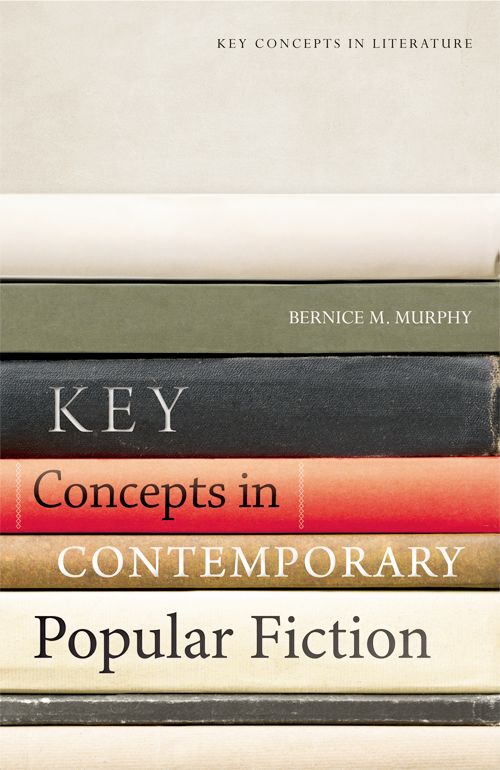
Key Concepts in Contemporary Popular Fiction
Key Concepts in Contemporary Popular Fiction r provides an accessible, concise and reliable overview of core critical terminology, key theoretical approaches, and the major genres and sub-genres within popular fiction.
eBook


Transforming Family
One of the lasting legacies of colonialism is the assumption that
families should conform to a kinship arrangement built on
normative, nuclear, individuality-based models. An alternate
understanding of familial aspiration is one cultivated across
national borders and cultures and beyond the constraints of
diasporas. This alternate understanding, which imagines a category
of \"trans-\" families, relies on decolonial and queer intellectual
thought to mobilize or transform power across borders. In
Transforming Family Jocelyn Frelier examines a selection
of novels penned by francophone authors in France, Morocco, and
Algeria, including Azouz Begag, Nina Bouraoui, Fouad Laroui, Leïla
Sebbar, Leïla Slimani, and Abdellah Taïa. Each novel contributes a
unique argument about this alternate understanding of family,
questioning how family relates to race, gender, class, embodiment,
and intersectionality. Arguing that trans- families are always
already queer, Frelier opens up new spaces of agency for both
family units and individuals who seek representation and fulfilling
futures. The novels analyzed in Transforming Family , as
well as the families they depict, resist classification and delink
the legacies of colonialism from contemporary modes of being. As a
result, these novels create trans- identities for their
protagonists and contribute to a scholarly understanding of the
becoming trans- of cultural production. As international political
debates related to migration, the family unit, and the \"global
migrant crisis\" surge, Frelier destabilizes governmental criteria
for the \"regrouping\" of families by turning to a set of definitions
found in the cultural production of members of the francophone,
North African diaspora.
eBook

The Cambridge companion to British fiction : 1980-2018
\"Introduction: Framing the Present Peter Boxall When does the present begin? An immediate answer to this curiously vexing question might be to suggest that the present does not begin. The present, one might argue, has no duration. It is the now, the passing moment, and as such cannot be truly said to have a beginning or an end, and cannot be measured, or regarded in any sense as having passed, or being to come. The present does not unfold or occur, but is the vanishing, fleeting medium of our immediate becoming\"-- Provided by publisher.
Book
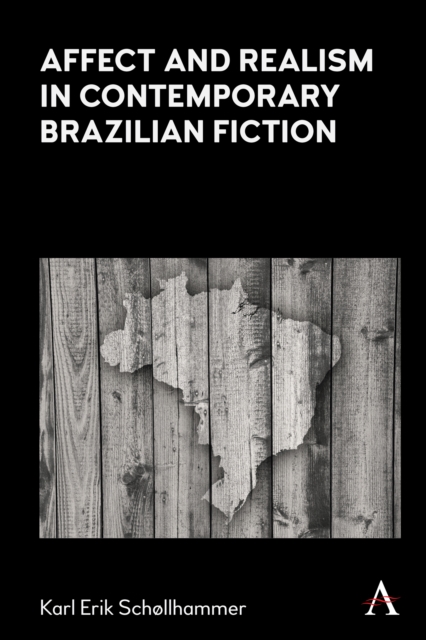
Affect and Realism in Contemporary Brazilian Fiction
This book is about contemporary Brazilian fiction from the past two decades and concerned with the possibilities of literary intervention in the reality of the historical moment. Thus, an understanding of the actual role of literature is strategic in the definition of the contemporary, and the book shows an optimism among current writers and artists with respect to the aesthetic, ethical, and political role of literature and art in the twentieth century. In contemporary Brazilian prose, two simultaneous ambitions are often reconciled. The commitment to individual or social reality is a challenge that is assumed without thereby necessarily accepting and following the molds of the traditional search for national or cultural identities. This foundation is one of the constants of contemporary prose, without thereby eliminating the continuous existence of a formal experimentalism that is the clearest heir of the modernist project.
eBook


Medicine and Empathy in Contemporary British Fiction
This book marks a critical intervention in the medical humanities that takes issue with its understanding of empathy as something that one has.
eBook