
Catalogue Search | MBRL


Are you sure you want to remove the book from the shelf?

{{itemTitle}}
3,066
result(s) for
"Fictitious characters"
Sort by:

Favorite first friends!
Pikachu meets other Pokâemon a trainer can choose as their first partner, including Bulbasaur, Charmander, Chikorita, Mudkip, and Litten.
Book
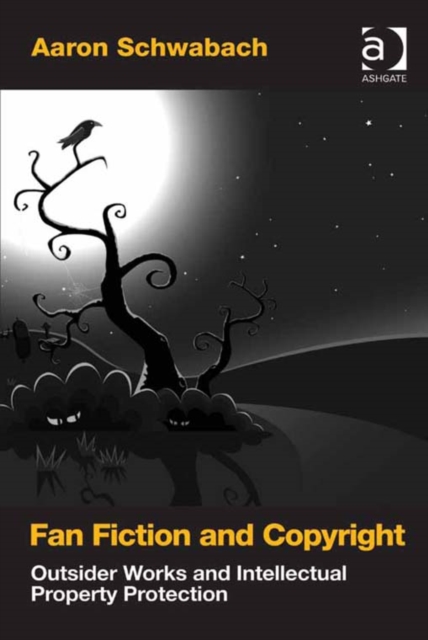
Fan Fiction and Copyright
As long as there have been fans, there has been fan fiction. There seems to be a fundamental human need to tell additional stories about the characters after the book, series, play or movie is over. But developments in information technology and copyright law have put these fan stories at risk of collision with the content owners’ intellectual property rights. Fan fiction has long been a nearly invisible form of outsider art, but over the past decade it has grown exponentially in volume and in legal importance. Because of its nature, authorship, and underground status, fan fiction stands at an intersection of key issues regarding property, sexuality, and gender. In Fan Fiction and Copyright, author Aaron Schwabach examines various types of fan-created content and asks whether and to what extent they are protected from liability for copyright infringement. Professor Schwabach discusses examples of original and fan works from a wide range of media, genres, and cultures. From Sherlock Holmes to Harry Potter, fictional characters, their authors, and their fans are sympathetically yet realistically assessed. Fan Fiction and Copyright looks closely at examples of three categories of disputes between authors and their fans: Disputes over the fans’ use of copyrighted characters, disputes over online publication of fiction resembling copyright work, and in the case of J.K. Rowling and a fansite webmaster, a dispute over the compiling of a reference work detailing an author's fictional universe. Offering more thorough coverage of many such controversies than has ever been available elsewhere, and discussing fan works from the United States, Brazil, China, India, Russia, and elsewhere, Fan Fiction and Copyright advances the understanding of fan fiction as transformative use and points the way toward a safe harbor for fan fiction.
eBook

Pokemon : movie companion
A guide to the Pokemon movies provides synopses of the plots, locations, characters, and battles of the more than a dozen motion pictures.
BOOK

From Blofeld to Moneypenny: Gender in James Bond
Since its inception, 007 has captured the hearts of a worldwide audience, and the franchise is now available over multiple media platforms, including movie, comic strips, games, graphic novels and fashion statements. This edited collection examines the role that gender has played across the platforms that the James Bond franchise now occupies.
eBook

The Avengers : the greatest heroes
This guide to the world of the Avengers includes information about teams, super-powers, and enemies.
Book

China and the Chinese in Popular Film
There's a folk memory of China in which numberless yellow hordes pour out of the 'mysterious East' to overwhelm the vulnerable West, accompanied by a stereotype of the Chinese as cruel, cunning and depraved. Hollywood films played their part in perpetuating these myths and stereotypes that constituted 'The Yellow Peril'. Jeffrey Richards examines in detail how and why they did it. He shows how the negative image was embodied in recurrent cinematic depictions of opium dens, tong wars, sadistic dragon ladies and corrupt warlords and how, in the 1930s and 1940s, a countervailing positive image involved the heroic peasants of The Good Earth and Dragon Seed fighting against Japanese invasion in wartime tributes to the West's ally, Nationalist China. The cinema's split level response is also traced through the images of the ultimate Oriental villain, the sinister Dr. Fu Manchu and the timeless Chinese hero, the intelligent and benevolent detective Charlie Chan.Filling a longstanding gap in Cinema and Cultural History, the book is founded in fresh research into Hollywood's shifting representations of China and its people.
eBook

The Smurfs anthology. Vol. 5
Smurf vs. Smurf and Smurf Soup get the Anthology treatment! While Papa Smurf works in his laboratory, two Smurfs begin arguing about the proper use of the word \"smurf.\" Smurfs that live in the northern part of the village use it as a verb (as in \"bottle smurfer\"), while the southerners use it as a noun (as in \"smurf opener\"). Without Papa Smurf around to calm things down, the argument quickly escalates until the northern and southern smurfs divide themselves along the village lines! Plus, another never-before-seen Johan & Peewit comic, featuring the Smurfs!
Book

Robin and the Making of American Adolescence
Holy adolescence, Batman!Robin and the Making of American Adolescence offers the first character history and analysis of the most famous superhero sidekick, Robin.Debuting just a few months after Batman himself, Robin has been an integral part of the Dark Knight's history--and debuting just a few months prior to the word \"teenager\" first.
eBook

Pokémon sun & moon
\"Pokémon Sun and Moon video games! Sun dreams of money. Moon dreams of scientific discoveries. When their paths cross with Team Skull, both their plans go awry Moon is on her way to deliver a rare Pokémon to Professor Kukui in the Alola region when she meets his good friend Sun, a courier entrusted with a special Pokédex. Sun offers to safely deliver Moon to the professor's lab But then they tangle with a group of grunts from Team Skull and are attacked by a mysterious Pokémon! What is this sparkling stone the mysterious Pokémon leaves behind?\"--ONIX annotation.
Book

An Irish-Jewish Politician, Joyce's Dublin, and Ulysses
A forgotten historical figure and his influence on the
writing of James Joyce
In this book, Neil Davison argues that Albert Altman (1853 ‒
1903), a Dublin-based businessman and Irish nationalist, influenced
James Joyce's creation of the character of Leopold Bloom, as well
as Ulysses 's broader themes surrounding race, nationalism,
and empire. Using extensive archival research, Davison reveals
parallels between the lives of Altman and Bloom, including how the
experience of double marginalization-which Altman felt as both a
Jew in Ireland and an Irishman in the British Empire-is a major
idea explored in Joyce's work.
Altman, a successful salt and coal merchant, was involved in
municipal politics over issues of Home Rule and labor, and
frequently appeared in the press over the two decades of Joyce's
youth. His prominence, Davison shows, made him a familiar name in
the Home Rule circles with which Joyce and his father most
identified. The book concludes by tracing the influence of Altman's
career on the Dubliners story \"Ivy Day in the Committee
Room,\" as well as throughout the whole of Ulysses . Through
Altman's biography, Davison recovers a forgotten life story that
illuminates Irish and Jewish identity and culture in Joyce's
Dublin.
A volume in the Florida James Joyce Series, edited by Sebastian
D. G. Knowles
eBook