
Catalogue Search | MBRL


Are you sure you want to remove the book from the shelf?

{{itemTitle}}
16
result(s) for
"Figurative Structuralism"
Sort by:

Las estructuras místicas del imaginario en una novela de ciencia ficción mexicana contemporánea: Gel azul, de Bernardo Fernández (Bef)
Se estudian las implicaciones de la instauración de un simbólica tecnocientífica de la intimidad en la novela de ciencia ficción mexicana Gel azul (2006), de Bernardo Fernández (Bef). La orientación del análisis es estructuralista-figurativa y se enfoca en la configuración de las estructuras místicas del imaginario a través de la identificación e interpretación de dicha simbólica, por ser esta la determinante imaginaria fundamental. Nos concentramos en las categorías —interrelacionadas— de espacio, sujeto-cuerpo y tecnología en esta manifestación del régimen nocturno de la imagen y se concluye con una interpretación sobre su sentido en el contexto cultural actual.
Journal Article

Aesthetic Appreciation of a Novel: An Exploratory Study of Contributing Factors
Aesthetic appreciation portrays one’s ability to perceive the beauty of a creative product, such as a novel, a poem, and so on. Prerequisites for aesthetic appreciation include, amongst others, knowledge, awareness, and recognition of the features that would make a product not only uniquely meaningful but also pleasing and appealing. Concerned specifically with the novel as a creative literary product, aesthetic appreciation of the novel entails valuing and admiring the qualities that would make the novel uniquely impressive. This study explores the main factors which would contribute to fostering a sense of aesthetic appreciation on the part of a novel’s reader. To realise the study’s aims, the author used a mixed-methods research design employing two study instruments: a ten-item questionnaire and a two-question interview. The study sample encompassed two categories: university instructors and passionate readers. The findings indicated that acquiring a repertoire of vocabulary, enhancing reading comprehension skills, developing critical reading skills, augmenting writing skills, and promoting communication skills could play a significant role in fostering aesthetic appreciation of the novel. Additionally, the study identified several factors which would contribute to developing a sense of aesthetic appreciation, such as using standard language, figures of speech, effective plot construction, and constructive character building. Based on the study findings, the paper proposes a framework for aesthetic appreciation of the novel, highlighting main factors and requirements.
Journal Article

“Just a tool”? Troubling language and power in generative AI writing
Purpose
The purpose of this paper is to share findings from empirically driven conceptual research into the implications for English teachers of understanding generative AI as a “tool” for writing.
Design/methodology/approach
The paper reports early findings from an Australian National Survey of English teachers and interrogates the notion of the AI writer as “tool” through intersectional feminist discursive-material analysis of the metaphorical entailments of the term.
Findings
Through this work, the authors have developed the concept of “coloniser tool-thinking” and juxtaposed it with First Nations and feminist understandings of “tools” and “objects” to demonstrate risks to the pursuit of social and planetary justice through understanding generative AI as a tool for English teachers and students.
Originality/value
Bringing together white and First Nations English researchers in dialogue, the paper contributes a unique perspective to challenge widespread and common-sense use of “tool” for generative AI services.
Journal Article
The Feminism of Afro-American in Audre Lorde’s Selected Poems
This research aims to discover the feminism of Afro-Americans in the selected poems of Audre Lorde by understanding the meaning and elaborating it with Lorde’s attitude towards feminism. The research employed a descriptive qualitative method and structuralism is the determined approach to process the data. Therefore, this study is not only concerned with the structure of the poems but also combined with the feminism theory. The result of this research indicated that the objects contained several poetical elements: figurative language, imagery, diction, and tone, that have a main function in enriching the meanings and semantic atmospheres in order to disclose the feminism issues inside the poems. Therefore, the analysis of poetical devices shows how significant the author treats feminism inside her selected poems.
Journal Article

On Rereading The Presentation of Self: Some Reflections
In this article, the author shares his reflections on rereading Erving Goffman's book titled \"The Presentation of Self in Everyday Life.\" \"The Presentation of Self,\" first published in 1959, was Goffman's first book. Goffman describes the work as \"a sort of handbook\" and, alternatively, as a \"report.\" His own PhD on the Shetland Islands is quite frequently referred to--a study that falls into the category of what he calls \"respectable researches,\" where regularities of behavior are \"reliably recorded.\" In the text, these examples taken from empirical field work famously jostle with quotations and observations from literary texts. Goffman uses anthropological method, but he is not acting as an anthropologist--the book presumes and draws upon tacit knowledge in which the author and reader have to collaborate. \"Presentation of Self\" has been influential in almost every social science discipline, especially sociology, social psychology, anthropology, and linguistics. Its impact has extended through to theatre studies (naturally), media and cultural studies--and to the theatre itself. (Contains 2 footnotes.)
Journal Article

Multilingualism in Education: A Poststructuralist Critique
Discussions of multilingualism in education, as exemplified by the articles in this issue, can be critically reevaluated using perspectives available from poststructuralism. These perspectives focus on the potential ambiguity of language and language practices. This, in turn, encourages us to question simple notions of the relationship of learners to the languages they speak, especially the \"mother tongue,\" to see the individual's relation to language as a relation to power, and to recognize the polyvalent role of language tests in the context of multilingual education as, on the one hand, enforcing the relations of power in language and, on the other, disrupting them. The article focuses on the extent to which these themes are acknowledged in the articles in this issue, exploring the impact of the contrasting contexts represented, and presents examples of other discussions, especially in colonial and postcolonial contexts, that reflect alternative views of multilingualism in education. These include Derrida's reflections on his own language socialization as a colonial subject in Algeria during the time of the Vichy regime and studies of the role of language in contemporary education systems in Africa and Southeast Asia. (Verlag).
Journal Article

Learning from stories of mental distress in occupational therapy education
Purpose
The purpose of this paper is to describe processes of learning from personal experiences of mental distress when mental health service users participate in occupational therapy education with tutors and students who have also had experiences of mental distress.
Design/methodology/approach
A post-structural theoretical perspective was applied to stories which emerged from the research process. Semi-structured group and individual interviews were used with three service users, three students and three tutors (including the author) who had all had, at some time in their lives, experiences of mental distress.
Findings
Stories based on previously hidden personal experiences of mental distress began to shift dominant understandings. Further, as educators, service users challenged whose authority it is to speak about mental distress and permitted different narrative positions for students and tutors. However, technologies of power and technologies of self of powerful discourses in professional education continued to disqualify and exclude personal knowledges. Learning from stories requires a critical approach to storytelling to expose how hidden power relations maintain some knowledges as dominant. Further, learning requires narrative work, which was often hidden and unaccounted for, to navigate complex and contradictory positions in learning.
Social implications
Although storytelling based on personal experience can help develop a skilled and healthy mental health workforce, its impact will be limited without changes in classrooms, courses and higher education which support learning at the margins of personal/professional and personal/political learning.
Originality/value
Learning from stories of mental distress requires conditions which take account of the hidden practices which operate in mental health professional education.
Journal Article

Speculative Realism, Visionary Pragmatism, and Poet-Shamanic Aesthetics in Gloria Anzaldúa-and Beyond
According to Anzaldúa, these linguistic images, when internalized, can trigger the imagination, which then affects our embodied state - our physical bodies - at the cellular level. [...]I could remind readers that poststructuralism, Speculative Realism, and Object-Oriented Philosophy are only \"recent\" developments to those who remain solidly anchored in an exclusive focus on canonical western philosophy.
Journal Article
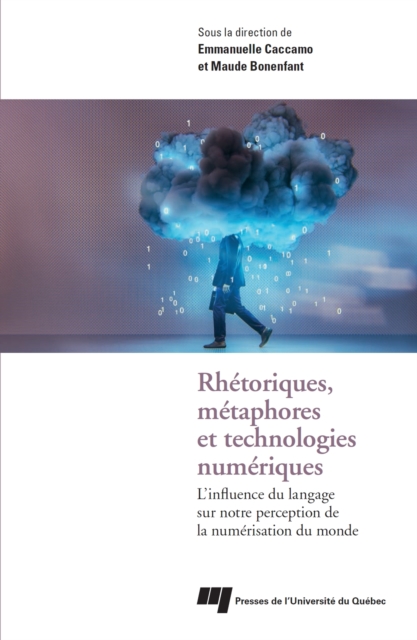
Rhétoriques, métaphores et technologies numériques
Le développement des technologies informatiques, à l’exemple de la ville connectée, des données massives (big data) et de l’intelligence artificielle est appuyé par un ensemble de discours à visée persuasive. Par divers procédés de langage, figures et stratégies rhétoriques, ces argumentaires visent notamment à légitimer une numérisation de plus en plus croissante des sociétés. Les métaphores jouent à ce sujet un rôle crucial. Bien qu’elles puissent avoir une fonction esthétique ou pédagogique, elles peuvent également endosser un rôle idéologique et ainsi véhiculer des valeurs morales et politiques particulières et nous détourner d’enjeux fondamentaux. L’exemple bien connu de la métaphore du « nuage » informatique porte une vision quasi idéale de la technologie numérique et participe malencontreusement à persuader du caractère « immatériel » des réseaux et des systèmes informatiques. L’imagerie légère et vaporeuse de la figure occulte l’ampleur du désastre écologique lié aux développements du numérique.Ce livre s’adresse à un lectorat universitaire, mais aussi à un public averti qui s’intéresse aux technologies, aux discours et à la société. Il présente différentes études de déconstruction des métaphores employées pour qualifier les nouvelles technologies et saisir l’importance éthique d’examiner minutieusement les discours argumentatifs sur les données massives, la ville intelligente, la robotique, les jeux vidéo et, plus largement, sur le numérique.
eBook

Towards a 'poethics' of therapeutic practice: Extending the relationship of ethics and aesthetics in narrative therapies through a consideration of the late work of Michel Foucault
This paper seeks to extend the narrative metaphor for therapy through further considerations of the relationship between ethics and aesthetics in narrative practice. This is a story peopled with both real and imaginary beings - including a partially retired detective, a wise young girl and her family, two poststructural philosophers, several sailors, sundry narrative practitioners, a few million frogs and a talking (and flying) piece of fruit. Drawing on aspects of the theoretical work of Michel Foucault and Couze Venn, the writer tells how she has come to think of her therapeutic practice as an 'ethics and aesthetics of existence', in the form of an 'apprenticeship to the other'. However, the paper does not privilege the philosophy of philosophers (or for that matter the therapy of therapists) above local knowledges. At the heart of this paper is the story of a particular family, their ethics and aesthetics of existence, and what Sheridan took back into her own identity and practice from her meetings with this family.
Journal Article