
Catalogue Search | MBRL


Are you sure you want to remove the book from the shelf?

{{itemTitle}}
104,418
result(s) for
"Film Industry, The"
Sort by:

Doing women's film history : reframing cinemas, past and future
\"Distinguished scholars Christina Gledhill and Julia Knight's anthology shows women's work in and around cinema across time in different parts of the world, from pioneering days, through recent developments, pointing towards future modes of production and history writing. At the same time, given the very different historical, socioeconomic, political, and cultural conditions of the cinemas in view, these essays concentrate on key historiographic questions. They include how to identify women's participation in their cinema cultures, where to locate previously unconsidered sources of evidence, how to develop new research methodologies and analytical concepts capable of revealing the impact of gender on film production and reception, and how to reframe film history to accommodate such questions and approaches. If what unifies the range of essays consists of their central focus on women and gender, thereby decentralizing American cinema in film history, it is not the intention to fragment cinemas into discrete national boxes. Instead, analysis of different geopolitical and historical circumstances of women's involvement in different cinemas enable us to better understand the complexity and diversity of that involvement and therefore of cinema itself\"-- Provided by publisher.
Book

The Value Gap
How female directors, producers, and writers navigate
the challenges and barriers facing female-driven projects at each
stage of filmmaking in contemporary Hollywood.
Conversations about gender equity in the workplace accelerated in
the 2010s, with debates inside Hollywood specifically pointing to
broader systemic problems of employment disparities and
exploitative labor practices. Compounded by the devastating #MeToo
revelations, these problems led to a wide-scale call for change.
The Value Gap traces female-driven filmmaking across
development, financing, production, film festivals, marketing, and
distribution, examining the realities facing women working in the
industry during this transformative moment. Drawing from five years
of extensive interviews with female producers, writers, and
directors at different stages of their careers, Courtney Brannon
Donoghue examines how Hollywood business cultures \"value\"
female-driven projects as risky or not bankable. Industry claims
that \"movies targeting female audiences don't make money\" or \"women
can't direct big-budget blockbusters\" have long circulated to
rationalize systemic gender inequities and have served to normalize
studios prioritizing the white male-driven status quo. Through a
critical media industry studies lens, The Value Gap
challenges this pervasive logic with firsthand accounts of women
actively navigating the male-dominated and conglomerate-owned
industrial landscape.
eBook

Latin American women filmmakers : social and cultural perspectives
\"Women are noticeably marginalized from the Latin American film industry, with lower budgets and inadequate distribution, and they often rely on their creativity to make more interesting films. This book highlights the voices and stories of some of these directors from Brazil, Chile, Argentina, and Mexico. Roberts-Camps's insightful exploration is the most broad-ranging account of its kind, making the book relevant to the study of literature as well as film. \"-- Provided by publisher.
Book

Playing to the world's biggest audience
In this provocative analysis of screen industries in China, Hong Kong, Taiwan, and Singapore, Michael Curtin delineates the globalizing pressures and opportunities that since the 1980s have dramatically transformed the terrain of Chinese film and television, including the end of the cold war, the rise of the World Trade Organization, the escalation of democracy movements, and the emergence of an East Asian youth culture. Reaching beyond national frameworks, Curtin examines the prospect of a global Chinese audience that will include more viewers than in the United States and Europe combined. He draws on in-depth interviews with a diverse array of media executives plus a wealth of historical material to argue that this vast and increasingly wealthy market is likely to shake the very foundations of Hollywood's century-long hegemony.
eBook

Our gang : a racial history of The little rascals
\"It was the age of Jim Crow, riddled with racial violence and unrest. But in the world of Our Gang, black and white children happily played and made mischief together. They even had their own black and white version of the KKK, the Cluck Cluck Klams--and the public loved it.The story of race and Our Gang, or The Little Rascals, is rife with the contradictions and aspirations of the sharply conflicted, changing American society that was its theater. Exposing these connections for the first time, Julia Lee shows us how much this series, from the first silent shorts in 1922 to its television revival in the 1950s, reveals about black and white American culture--on either side of the silver screen. Behind the scenes, we find unconventional men like Hal Roach and his gag writers, whose Rascals tapped into powerful American myths about race and childhood. We meet the four black stars of the series--Ernie \"Sunshine Sammy\" Morrison, Allen \"Farina\" Hoskins, Matthew \"Stymie\" Beard, and Billie \"Buckwheat\" Thomas--the gang within the Gang, whose personal histories Lee pursues through the passing years and shifting political landscape. In their checkered lives, and in the tumultuous life of the series, we discover an unexplored story of America, the messy, multiracial nation that found in Our Gang a comic avatar, a slapstick version of democracy itself. \"-- Provided by publisher.
Book

Migrating to the Movies
The rise of cinema as the predominant American entertainment around the turn of the last century coincided with the migration of hundreds of thousands of African Americans from the South to the urban \"land of hope\" in the North. This richly illustrated book, discussing many early films and illuminating black urban life in this period, is the first detailed look at the numerous early relationships between African Americans and cinema. It investigates African American migrations onto the screen, into the audience, and behind the camera, showing that African American urban populations and cinema shaped each other in powerful ways. Focusing on Black film culture in Chicago during the silent era,Migrating to the Moviesbegins with the earliest cinematic representations of African Americans and concludes with the silent films of Oscar Micheaux and other early \"race films\" made for Black audiences, discussing some of the extraordinary ways in which African Americans staked their claim in cinema's development as an art and a cultural institution.
eBook

Assessing the Impact of the Film Industry Promotion Law on Chinese Film Enterprises: A PSM-DID Approach
This study evaluates the impact of China’s Film Industry Promotion Law—the first industry-specific law in the cultural sector—on the financial and social performance of Chinese film enterprises. Using a Propensity Score Matching-Difference- in-Differences (PSM-DID) approach with data from A-share listed companies (2011–2019), the study finds that while the law improved social performance, it led to a decline in financial performance. However, overall corporate performance significantly improved. These results highlight the dual role of regulatory frameworks in balancing social benefits and economic outcomes. The study fills a research gap, introduces an innovative analytical framework, and enhances understanding of how institutional environments affect corporate performance, offering valuable insights for shaping film industry policies in developing countries.
Plain Language Summary
Assessing the Impact of China’s Film Industry Promotion Law on the Financial and Social Performance of Film Companies
This study explores how China’s Film Industry Promotion Law, implemented in 2017, affects the performance of film companies. Using data from 2011 to 2019, the research employs a method that combines matching techniques with a difference-in-differences approach to compare the effects of the law on film companies and non-film companies. The results show that while the law led to a decline in the financial performance of film companies, it improved their social performance, particularly in corporate social responsibility (CSR) ratings. Overall, the companies’ performance improved when considering both financial and social aspects. This study is important because it shows the complex effects of government regulations, which aim to balance cultural and economic goals. The law helped film companies achieve social benefits, such as promoting cultural values, but also imposed financial challenges, highlighting a trade-off between economic success and societal contributions. The findings can help policymakers refine future regulations and guide other countries considering similar laws for their cultural sectors.
Journal Article

Film Festivals
Movies, stars, auteurs, critics, and the sheer excitement of cinema come together in film festivals as quintessential constellations of art, business, and glamour. Yet, how well do we actually understand the forces and meanings that these events embody? Film Festivals offers the first comprehensive overview of the history, people, films, and multiple functions of the festival world. From Sundance to Hong Kong, from the glitter of Cannes to edgier festivals that challenge boundaries or foster LGBTQ cultural production, film festivals celebrate art, promote business, bring cinema to diverse audiences, and raise key issues about how we see our world. Cindy Hing-Yuk Wong situates festivals within changing global practices of film, including their important ties to both Hollywood and independent cinema. She explores how these events have become central in the construction of cinema knowledge as well as the behind-the-scene mechanics of finance, distribution, and evaluation. By linking general structures and connections to specific films and auteurs, Wong addresses the components and creation of film festivals that continue to reshape filmmaking as art and business.
eBook
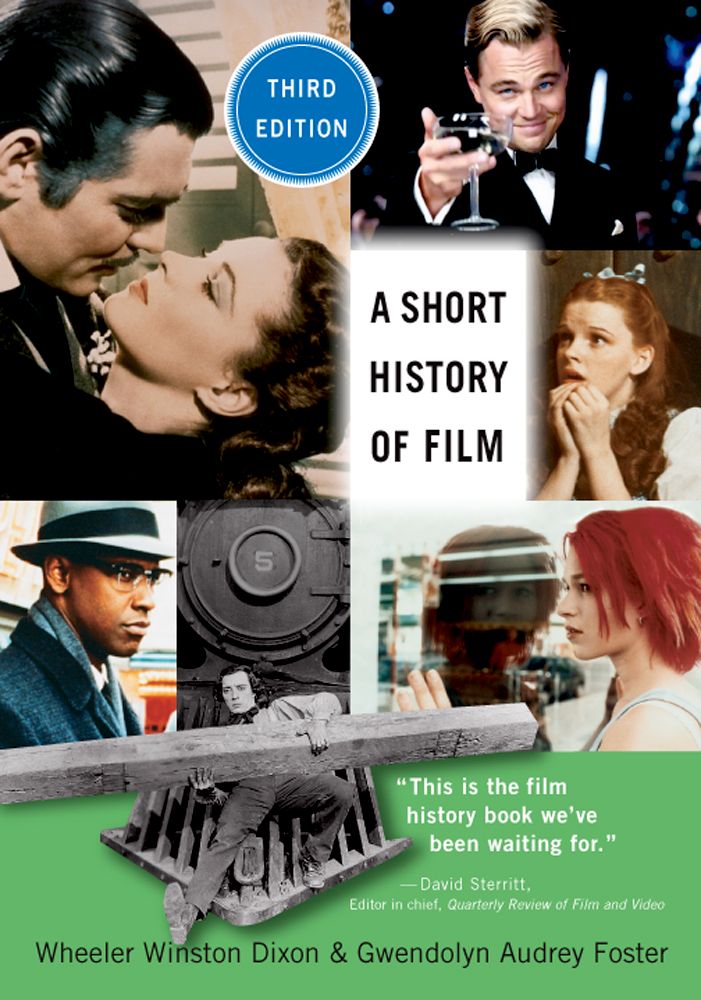
A Short History of Film, Third Edition
With more than 250 images, new information on international cinema—especially Polish, Chinese, Russian, Canadian, and Iranian filmmakers—an expanded section on African-American filmmakers, updated discussions of new works by major American directors, and a new section on the rise of comic book movies and computer generated special effects, this is the most up to date resource for film history courses in the twenty-first century.
eBook

Stellar Transformations
Stellar Transformations: Movie Stars of the 2010s circles around questions of stardom, performance, and their cultural contexts in ways that remind us of the alluring magic of stars while also bringing to the fore the changing ways in which viewers engaged with them during the last decade. A salient idea that guides much of the collection is the one of transformation, expressed in these pages as the way in which post-millennial movie stars are in one way or another reshaping ideas of performance and star presence, either through the self-conscious revision of aspects of their own personas or in redirecting or progressing some earlier aspect of the culture. Including a diverse lineup of stars such as Oscar Isaac, Kristen Stewart, Tilda Swinton, and Tyler Perry, the chapters in Stellar Transformations paint the portrait of the meaning of star images during the complex decade of the 2010s, and in doing so will offer useful case studies for scholars and students engaged in the study of stardom, celebrity, and performance in cinema.
eBook