
Catalogue Search | MBRL


Are you sure you want to remove the book from the shelf?

{{itemTitle}}
96,656
result(s) for
"Film adaptations"
Sort by:


Maximum Movies—Pulp Fictions
In the words of Richard Maltby . . . \"Maximum Movies--Pulp Fictions describes two improbably imbricated worlds and the piece of cultural history their intersections provoked.\" One of these worlds comprises a clutch of noisy, garish pulp movies--Kiss Me Deadly, Shock Corridor, Fixed Bayonets!, I Walked with a Zombie, The Lineup, Terror in a Texas Town, Ride Lonesome--pumped out for the grind houses at the end of the urban exhibition chain by the studios' B-divisions and fly-by-night independents. The other is occupied by critics, intellectuals, cinephiles, and filmmakers such as Jean-Luc Godard, Manny Farber, and Lawrence Alloway, who championed the cause of these movies and incited the cultural guardians of the day by attacking a rigorously policed canon of tasteful, rarified, and ossified art objects. Against the legitimate, and in defense of the illegitimate, in an insolent and unruly manner, they agitated for the recognition of lurid sensational crime stories, war pictures, fast-paced Westerns, thrillers, and gangster melodramas were claimed as examples of the true, the real, and the authentic in contemporary culture--the foundation upon which modern film studies sits.
eBook


Film adaptation and its discontents : from Gone with the wind to The passion of the Christ
Most books on film adaptation—the relation between films and their literary sources—focus on a series of close one-to-one comparisons between specific films and canonical novels. This volume identifies and investigates a far wider array of problems posed by the process of adaptation. Beginning with an examination of why adaptation study has so often supported the institution of literature rather than fostering the practice of literacy, Thomas Leitch considers how the creators of short silent films attempted to give them the weight of literature, what sorts of fidelity are possible in an adaptation of sacred scripture, what it means for an adaptation to pose as an introduction to, rather than a transcription of, a literary classic, and why and how some films have sought impossibly close fidelity to their sources. After examining the surprisingly divergent fidelity claims made by three different kinds of canonical adaptations, Leitch's analysis moves beyond literary sources to consider why a small number of adapters have risen to the status of auteurs and how illustrated books, comic strips, video games, and true stories have been adapted to the screen. The range of films studied, from silent Shakespeare to Sherlock Holmes to The Lord of the Rings, is as broad as the problems that come under review.
eBook

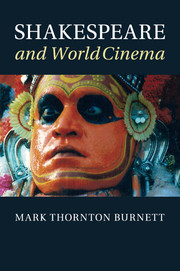
Shakespeare and World Cinema
Shakespeare and World Cinema radically re-imagines the field of Shakespeare on film, drawing on a wealth of examples from Africa, the Arctic, Brazil, China, France, India, Malaysia, Mexico, Singapore, Tibet, Venezuela, Yemen and elsewhere. Mark Thornton Burnett explores the contemporary significance of Shakespeare cinema outside the Hollywood mainstream for the first time, arguing that these adaptations are an essential part of the story of Shakespearean performance and reception. The book reveals in unique detail the scope, inventiveness and vitality of over seventy films that have undeservedly slipped beneath the radar of critical attention and also discusses regional Shakespeare cinema in Latin America and Asia. Utilising original interviews with filmmakers throughout, it introduces new auteurs, analyses multiple adaptations of plays such as Macbeth and Romeo and Juliet and pioneers fresh methodologies for understanding the role that Shakespeare continues to play in the international marketplace.
eBook


Film Phenomenology and Adaptation
Film Phenomenology and Adaptation: Sensuous Elaboration argues that in order to make sense of film adaptation, we must first apprehend their sensual form. Across its chapters, this book brings the philosophy and research methodology of phenomenology into contact with adaptation studies, examining how vision, hearing, touch, and the structures of the embodied imagination and memory thicken and make tangible an adaptation's source. In doing so, this book not only conceives adaptation as an intertextual layering of source material and adaptation, but also an intersubjective and textural experience that includes the materiality of the body.
eBook


Screening the Gothic
Filmmakers have long been drawn to the Gothic with its eerie settings and promise of horror lurking beneath the surface. Moreover, the Gothic allows filmmakers to hold a mirror up to their own age and reveal society's deepest fears. Franco Zeffirelli'sJane Eyre, Francis Ford Coppola'sBram Stoker's Dracula, and Kenneth Branagh'sHamletare just a few examples of film adaptations of literary Gothic texts. In this ground-breaking study, Lisa Hopkins explores how the Gothic has been deployed in these and other contemporary films and comes to some surprising conclusions. For instance, in a brilliant chapter on films geared to children, Hopkins finds that horror resides not in the trolls, wizards, and goblins that abound inHarry Potter, but in the heart of the family.
Screening the Gothicoffers a radical new way of understanding the relationship between film and the Gothic as it surveys a wide range of films, many of which have received scant critical attention. Its central claim is that, paradoxically, those texts whose affiliations with the Gothic were the clearest became the least Gothic when filmed. Thus, Hopkins surprises readers by revealing Gothic elements in films such asSense and SensibilityandMansfield Park, as well as exploring more obviously Gothic films likeThe MummyandThe Fellowship of the Ring. Written in an accessible and engaging manner,Screening the Gothicwill be of interest to film lovers as well as students and scholars.
eBook