
Catalogue Search | MBRL


Are you sure you want to remove the book from the shelf?

{{itemTitle}}
22
result(s) for
"Film criticism-United States-History-20th century"
Sort by:


Maximum Movies—Pulp Fictions
In the words of Richard Maltby . . . \"Maximum Movies--Pulp Fictions describes two improbably imbricated worlds and the piece of cultural history their intersections provoked.\" One of these worlds comprises a clutch of noisy, garish pulp movies--Kiss Me Deadly, Shock Corridor, Fixed Bayonets!, I Walked with a Zombie, The Lineup, Terror in a Texas Town, Ride Lonesome--pumped out for the grind houses at the end of the urban exhibition chain by the studios' B-divisions and fly-by-night independents. The other is occupied by critics, intellectuals, cinephiles, and filmmakers such as Jean-Luc Godard, Manny Farber, and Lawrence Alloway, who championed the cause of these movies and incited the cultural guardians of the day by attacking a rigorously policed canon of tasteful, rarified, and ossified art objects. Against the legitimate, and in defense of the illegitimate, in an insolent and unruly manner, they agitated for the recognition of lurid sensational crime stories, war pictures, fast-paced Westerns, thrillers, and gangster melodramas were claimed as examples of the true, the real, and the authentic in contemporary culture--the foundation upon which modern film studies sits.
eBook

Post-westerns : cinema, region, West
\"A study of post-1945 contemporary Western films within the social and cultural context of western studies\"-- Provided by publisher.
Book
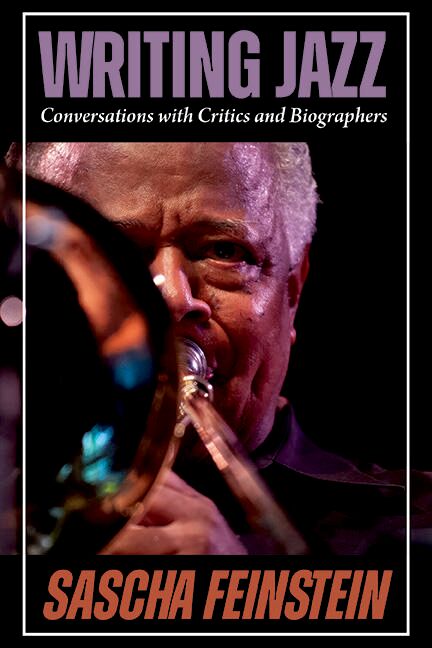
Writing Jazz
Fourteen interviews with distinguished jazz writers
that explore the exciting challenges of writing about
jazz.
Writing Jazz presents interviews with fourteen
distinguished jazz scholars: Whitney Balliett, Bob Blumenthal,
Stanley Crouch, Linda Dahl, Maxine Gordon, Farah Jasmine
Griffin, John Edward Hasse, Willard Jenkins, Hettie Jones,
Robin D. G. Kelley, Laurie Pepper, Tom Piazza, Ricky Riccardi,
and A. B. Spellman. This literary jam session explores the many
challenges and thrills of writing about jazz in various prose
forms, including liner notes, memoirs, biographies, and
critical guides. The distinguished writers interviewed in this
collection obviously share a passion for jazz, and each has
produced a hefty amount of literature that illuminates both the
music and its practitioners. A well-known writer on jazz,
Sascha Feinstein has explored the relationship of jazz and
literature throughout his career, making
Writing Jazz an essential contribution to the field of
jazz-related literature.
eBook

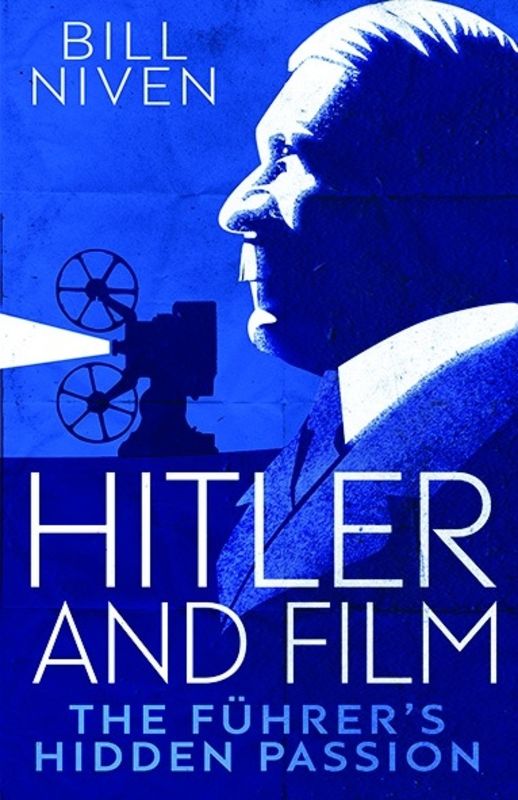
Hitler and film : the führer's hidden passion
A presence in Third Reich cinema, Adolf Hitler also personally financed, ordered, and censored films and newsreels and engaged in complex relationships with their stars and directors. Here, Bill Niven offers a powerful argument for reconsidering Hitler's fascination with film as a means to further the Nazi agenda.
eBook


Early American Cinema in Transition
The period 1907–1913 marks a crucial transitional moment in American cinema. As moving picture shows changed from mere novelty to an increasingly popular entertainment, fledgling studios responded with longer running times and more complex storytelling. A growing trade press and changing production procedures also influenced filmmaking. In
Early American Cinema in Transition , Charlie Keil looks at a broad cross-section of fiction films to examine the formal changes in cinema of this period and the ways that filmmakers developed narrative techniques to suit the fifteen-minute, one-reel format. Keil outlines the kinds of narratives that proved most suitable for a single reel’s duration, the particular demands that time and space exerted on this early form of film narration, and the ways filmmakers employed the unique features of a primarily visual medium to craft stories that would appeal to an audience numbering in the millions. He underscores his analysis with a detailed look at six films:
The Boy Detective; The Forgotten Watch; Rose O’Salem-Town; Cupid’s Monkey Wrench; Belle Boyd, A Confederate Spy; and
Suspense.
eBook

Women adapting : bringing three serials of the roaring twenties to stage and screen
\"In Women Adapting, Bethany Wood examines how the developing preference for adaptations in early twentieth century entertainment promoted interrelationships among fiction, theatre, and film. Weaving together a broad range of archival sources, including personal correspondence, rejected rough drafts, advertisements, films, periodical illustrations, contracts, 'lost' songs, and film stills, Wood deftly explores how early-twentieth-century processes of adaptation forged connections across industries in entertainment. By centering her cross-disciplinary study on issues of gender, Wood considers how inter-industrial systems of adaptation affect both women writers and the female characters they create\"-- Provided by publisher.
Book

Life moves pretty fast : the lessons we learned from eighties movies (and why we don't learn them from movies anymore)
\"From Vogue contributor and Guardian columnist Hadley Freeman, a personalized guide to eighties movies that describes why they changed movie-making forever--featuring exclusive interviews with the producers, directors, writers and stars of the best cult classics\"-- Provided by publisher.
Book