
Catalogue Search | MBRL


Are you sure you want to remove the book from the shelf?

{{itemTitle}}
304
result(s) for
"Finance Religious aspects Islam."
Sort by:

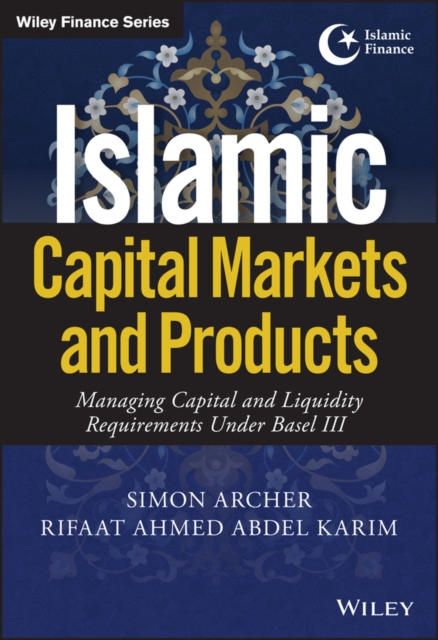
Islamic capital markets and products
Ensure Basel III compliance with expert analysis specific to Islamic Finance Islamic Capital Markets and Products provides a thorough examination of Islamic capital markets (ICM), with particular attention to the products that they offer and the legal and regulatory infrastructure within which they operate. Since Islamic banks act as asset managers, attention is paid to the regulatory challenges which they face in the light of Basel III, as regards both eligible capital and liquidity risk management. The authors of the chapters are professionals and practitioners, and write from experience. The editors also contributed to some of the chapters. The markets and products covered include Islamic equities, Islamic investment certificates (Sukūk) which are Shari'ah compliant alternatives to conventional bonds, and Islamic Collective Investment Schemes. The coverage of legal and regulatory issues includes an examination of the implications for ICM of securities laws and regulations and of Basel III, as well as collateralisation issues. Shari'ah compliance aspects, in terms both of the selection criteria for Islamic equities and of the 'purification' of impermissible components of income, are also examined in some detail, as are the implications of Basel III for eligible capital in general and for Shari'ah compliant capital instruments in particular. A similar analysis is also made of the implications of the Basel III requirements for liquidity risk management and high quality liquid assets (HQLA), including Shari'ah compliant HQLA. The book concludes with three case studies, two describing the ICM in Malaysia and Bahrain and a third which describes Sukūk issued as Shari'ah compliant capital instruments, followed by brief concluding remarks by the editors.
eBook

Principles of Islamic accounting
Your introduction to Islamic accounting
Principles of Islamic Accounting is the first and only text that covers the fundamentals of Islamic accounting in English. A comprehensive guide, this groundbreaking reference offers both insight into Islamic accounting best practices and disclosure for Shariah-compliant instruments. Covering everything from basic transaction analysis to the preparation of financial statements, this reference serves as a broad framework around which undergraduate students can build their understanding of the Islamic business environment by offering context and showcasing how Islamic values can influence the disclosure of financial information.
Islamic accounting is becoming an increasingly important aspect of the business field as globalization results in a surge in business partnerships and transactions around the world. Today's students need to understand Islamic accounting principles in order to effectively work with professionals who adhere to these standards—and accessing this information via text in English was not possible until this revolutionary reference.
* Review the basics through an introduction to Islamic accounting
* Understand the recording process, and how to complete the accounting cycle and adjust accounts as necessary
* Explore accounting for assets, liabilities, equity, and sukuk, as well as zakat and takaful accounting
* Discover details regarding Islamic commercial law, accounting for Islamic financial institutions, and Islamic corporate governance and sustainability, and look at auditing from an Islamic perspective
Principles of Islamic Accounting is an essential text for first-year university students who are studying Islamic accounting, as well as professional societies and organizations that support the use of Islamic accounting principles, such as The Islamic Finance Professionals Association.
eBook

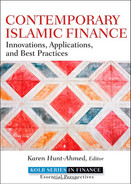
Contemporary Islamic Finance
A comprehensive look at the innovations, applications, and best practices of Islamic finance Islamic-compliant finance is transacted in every major world financial center, and the need for information on the topic in light of its global reach has grown exponentially.
eBook

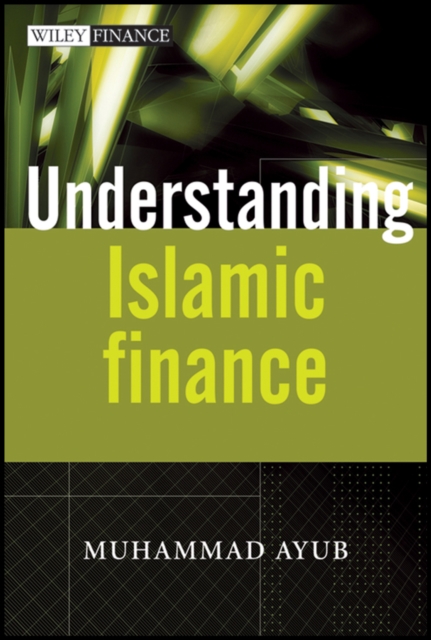
Understanding Islamic finance
In Understanding Islamic Finance Muhammad Ayub introduces all the essential elements of this growing market by providing an in-depth background to the subject and clear descriptions of all the major products and processes associated with Islamic finance.
eBook
Shari'ah compliant private equity and Islamic venture capital
This book focuses on the applicability of Shari'ah-based structures and Islamic venture capital to the private equity industry. It includes case studies and examples of business financial appraisals to give an in-depth view of the application and operation of shariah compliant private equity and Islamic venture capital.
eBook