
Catalogue Search | MBRL


Are you sure you want to remove the book from the shelf?

{{itemTitle}}
679
result(s) for
"Finances Histoire."
Sort by:


States of Credit
States of Creditprovides the first comprehensive look at the joint development of representative assemblies and public borrowing in Europe during the medieval and early modern eras. In this pioneering book, David Stasavage argues that unique advances in political representation allowed certain European states to gain early and advantageous access to credit, but the emergence of an active form of political representation itself depended on two underlying factors: compact geography and a strong mercantile presence.
Stasavage shows that active representative assemblies were more likely to be sustained in geographically small polities. These assemblies, dominated by mercantile groups that lent to governments, were in turn more likely to preserve access to credit. Given these conditions, smaller European city-states, such as Genoa and Cologne, had an advantage over larger territorial states, including France and Castile, because mercantile elites structured political institutions in order to effectively monitor public credit. While creditor oversight of public funds became an asset for city-states in need of finance, Stasavage suggests that the long-run implications were more ambiguous. City-states with the best access to credit often had the most closed and oligarchic systems of representation, hindering their ability to accept new economic innovations. This eventually transformed certain city-states from economic dynamos into rentier republics.
Exploring the links between representation and debt in medieval and early modern Europe,States of Creditcontributes to broad debates about state formation and Europe's economic rise.
eBook

Paths toward the modern fiscal state : England, Japan, and China
Wenkai He shows why England and Japan, facing crises in public finance, developed the tools and institutions of a modern fiscal state, while China, facing similar circumstances, did not. He's explanation for China's failure at a critical moment illuminates one of the most important but least understood transformations of the modern world.
eBook

Layered money : from gold and dollars to Bitcoin and Central Bank Digital Currencies
In this fascinating deep dive into the evolution of monetary systems around the globe, Nik Bhatia takes us into the origins of how money has evolved to function in a \"layered\" manner. Using gold as an example of this term, he traces the layers of this ancient currency from raw mined material, to gold coins, and finally to bank-issued gold certificates. In a groundbreaking manner, Bhatia offers a similar paradigm for the evolution of digital currencies. Bhatia's analysis begins in Renaissance Florence with the gold Florin coin and a burgeoning banking culture, continues with the evolution of central banking, and concludes with a vision for the future of our international monetary system. As central banks around the world prepare to launch their own crypto-competitors, Bhatia illustrates how the invention of Bitcoin created a seismic shift in money and merged the monetary and cryptography sciences. His unique analysis of \"layered money\" illuminates money markets for the general reader and shows how Bitcoin is becoming a trusted global currency. Readers will come away with an understanding of the mechanics of our financial system, why the dollar is deeply entrenched despite its state of disrepair, and how Central Bank Digital Currencies (CBDCs) and cryptocurrencies will interact in our new monetary future.
Book


Fiscal crises, liberty, and representative government, 1450-1789
Only recently have historians of early modern Europe begun to link the seemingly arcane details of state finance with the development of political ideas and institutions. These essays contribute to this new fiscal history by focusing on the growth of representative institutions and the mechanics of European state finance from the end of the Middle Ages to the French Revolution.
Book
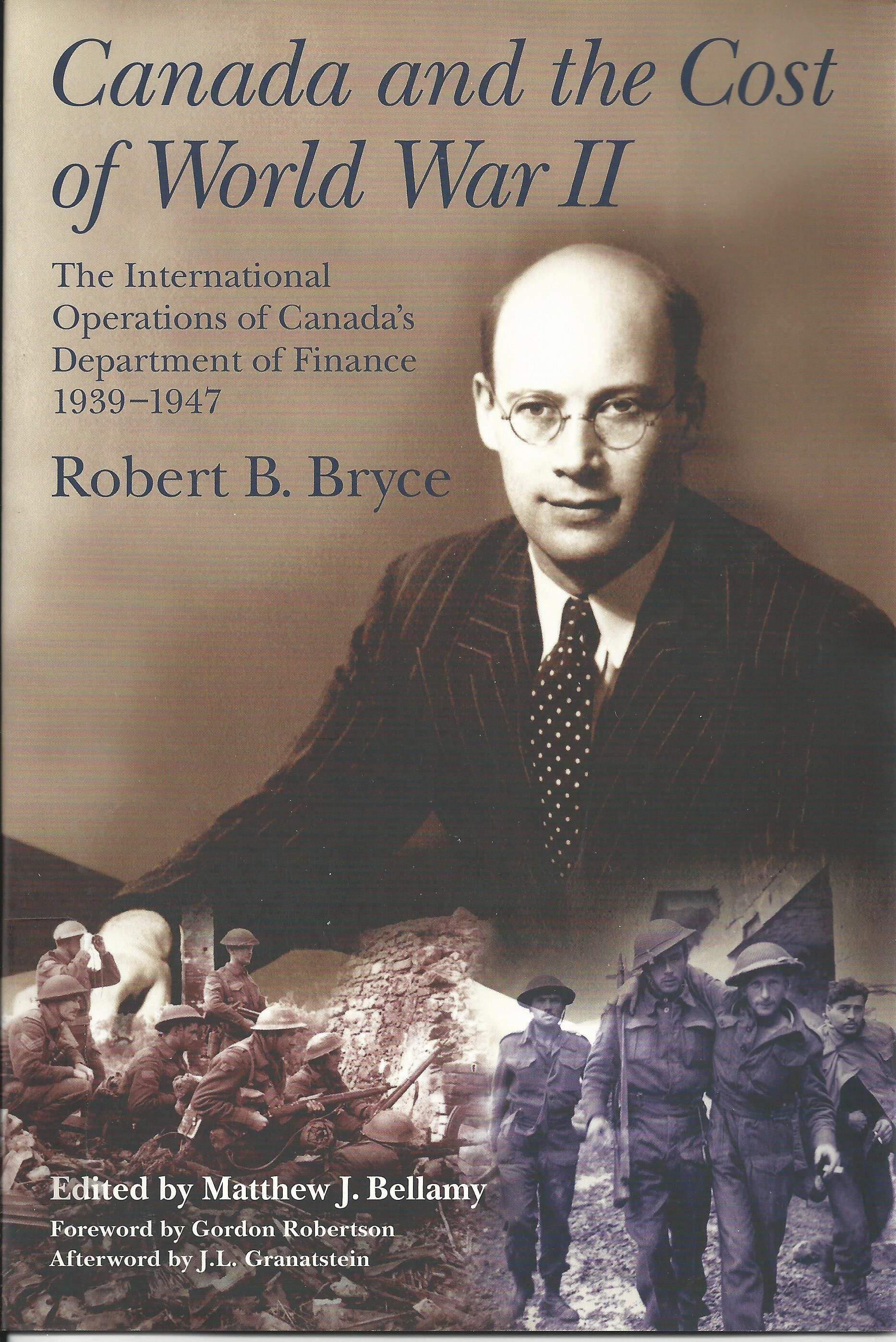
Canada and the Cost of World War II
Bryce chronicles in splendid detail how the tiny and overburdened department in Ottawa worked behind the scenes to deal with the critical public policy challenges that accompanied World War II and postwar reconstruction. Canada's financial aid made it possible for Britain to wage an effective war and then deal with the destruction it wrought. Bryce details how Canada's Department of Finance can also be credited with overcoming some of Britain's most pressing balance-of-payments problems after the war.
eBook


Socializing Capital
Ever since Adolph Berle and Gardiner Means wrote their classic 1932 analysis of the American corporation,The Modern Corporation and Private Property, social scientists have been intrigued and challenged by the evolution of this crucial part of American social and economic life. Here William Roy conducts a historical inquiry into the rise of the large publicly traded American corporation. Departing from the received wisdom, which sees the big, vertically integrated corporation as the result of technological development and market growth that required greater efficiency in larger scale firms, Roy focuses on political, social, and institutional processes governed by the dynamics of power.
The author shows how the corporation started as a quasi-public device used by governments to create and administer public services like turnpikes and canals and then how it germinated within a system of stock markets, brokerage houses, and investment banks into a mechanism for the organization of railroads. Finally, and most particularly, he analyzes its flowering into the realm of manufacturing, when at the turn of this century, many of the same giants that still dominate the American economic landscape were created. Thus, the corporation altered manufacturing entities so that they were each owned by many people instead of by single individuals as had previously been the case.
eBook