
Catalogue Search | MBRL


Are you sure you want to remove the book from the shelf?

{{itemTitle}}
192,788
result(s) for
"Financial risk"
Sort by:


What Drives Risk Perception? A Global Survey with Financial Professionals and Laypeople
Risk is an integral part of many economic decisions and is vitally important in finance. Despite extensive research on decision making under risk, little is known about how risks are actually perceived by financial professionals, the key players in global financial markets. In a large-scale survey experiment with 2,213 finance professionals and 4,559 laypeople in nine countries representing ~50% of the world’s population and more than 60% of the world’s gross domestic product, we expose participants to return distributions with equal expected return, and we systematically vary the distributions’ next three higher moments. Of these, skewness is the only moment that systematically affects financial professionals’ perception of financial risk. Strikingly, variance does not influence risk perception, even though return volatility is the most common risk measure in finance in both academia and the industry. When testing other, compound risk measures, the probability to experience losses is the strongest predictor of what is perceived as being risky. Analyzing professionals’ propensity to invest, skewness and loss probability also have strong predictive power, while volatility and kurtosis have some additional effect. Our results are very similar for laypeople, and they are robust across and within countries with different cultural backgrounds, as well as for different job fields of professionals.
This paper was accepted by Yuval Rottenstreich, decision analysis.
Journal Article

Future perspectives in risk models and finance
This book provides a perspective on a number of approaches to financial modelling and risk management. It examines both theoretical and practical issues. Theoretically, financial risks models are models of a real and a financial \"uncertainty\", based on both common and private information and economic theories defining the rules that financial markets comply to. Financial models are thus challenged by their definitions and by a changing financial system fueled by globalization, technology growth, complexity, regulation and the many factors that contribute to rendering financial processes to be continuously questioned and re-assessed. The underlying mathematical foundations of financial risks models provide future guidelines for risk modeling. The bookâءءs chapters provide selective insights and developments that can contribute to better understand the complexity of financial modelling and its ability to bridge financial theories and their practice.
Book
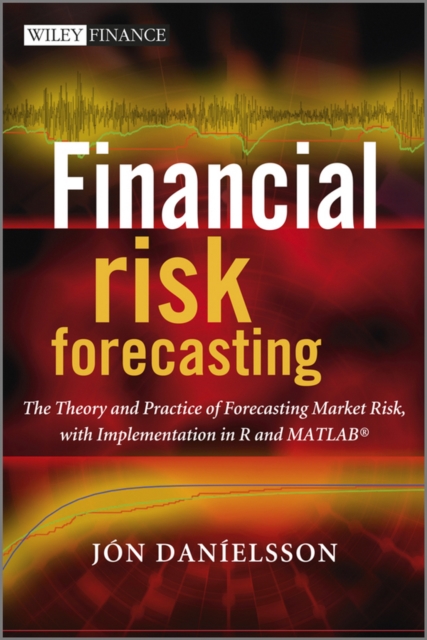
Financial Risk Forecasting
Financial Risk Forecasting is a complete introduction to practical quantitative risk management, with a focus on market risk. Derived from the authors teaching notes and years spent training practitioners in risk management techniques, it brings together the three key disciplines of finance, statistics and modeling (programming), to provide a thorough grounding in risk management techniques. Written by renowned risk expert Jon Danielsson, the book begins with an introduction to financial markets and market prices, volatility clusters, fat tails and nonlinear dependence. It then goes on to present volatility forecasting with both univatiate and multivatiate methods, discussing the various methods used by industry, with a special focus on the GARCH family of models. The evaluation of the quality of forecasts is discussed in detail. Next, the main concepts in risk and models to forecast risk are discussed, especially volatility, value-at-risk and expected shortfall. The focus is both on risk in basic assets such as stocks and foreign exchange, but also calculations of risk in bonds and options, with analytical methods such as delta-normal VaR and duration-normal VaR and Monte Carlo simulation. The book then moves on to the evaluation of risk models with methods like backtesting, followed by a discussion on stress testing. The book concludes by focussing on the forecasting of risk in very large and uncommon events with extreme value theory and considering the underlying assumptions behind almost every risk model in practical use – that risk is exogenous – and what happens when those assumptions are violated. Every method presented brings together theoretical discussion and derivation of key equations and a discussion of issues in practical implementation. Each method is implemented in both MATLAB and R, two of the most commonly used mathematical programming languages for risk forecasting with which the reader can implement the models illustrated in the book. The book includes four appendices. The first introduces basic concepts in statistics and financial time series referred to throughout the book. The second and third introduce R and MATLAB, providing a discussion of the basic implementation of the software packages. And the final looks at the concept of maximum likelihood, especially issues in implementation and testing. The book is accompanied by a website - www.financialriskforecasting.com [http://www.financialriskforecasting.com/] – which features downloadable code as used in the book.
eBook


Relation between Audit Effort and Financial Report Misstatements: Evidence from Quarterly and Annual Restatements
We identify two research design issues that explain the inconsistency between the theoretically predicted negative relation between audit effort and misstatements (measured using restatements) and empirical findings. First, auditor risk adjustment behavior induces an upward bias in the association between audit effort and restatements. Second, the theoretical prediction applies only to audited financial reports (i.e., annual reports) and not to unaudited reports (i.e., interim quarterly reports). Comingling restatements of audited with unaudited reports introduces an additional upward bias in the association between audit effort and restatements. After correcting for these two sources of bias, we find a robust negative association between audit effort and annual report restatements.
Journal Article


ESG Disclosure and Idiosyncratic Risk in Initial Public Offerings
Although legitimacy theory provides strong arguments that environmental, social and governance (ESG) disclosure and performance can help mitigate firm-specific (idiosyncratic) risks, this relationship has been repeatedly challenged by conceptual arguments, such as ‘transparency fallacy’ or ‘impression management’, and mixed empirical evidence. Therefore, we investigate this relationship in the revelatory case of initial public offerings (IPOs), which represent the first sale of common stock to the wider public. IPOs are characterised by strong information asymmetry between firm insiders and society, while at the same time suffering from uncertainty in firm legitimacy, culminating in amplified financial risks for both issuers and investors in aftermarket trading. Using data from the United States, we demonstrate that (1) voluntary ESG disclosure reduces idiosyncratic volatility and downside tail risk and (2) higher ESG ratings have lower associated firm-specific volatility and downside tail risk during the first year of trading in the aftermarket. We provide theoretical arguments for the relationships observed, suggesting that companies striving for ESG performance and communicating their efforts signal their compliance with sustainability-related norms, thus acquiring and upholding a societal license to operate. ESG performance and disclosure help companies build their reputation capital with investors after going public. We also report that ESG disclosure is a more consistent proxy for ex-ante uncertainty as an indicator of aftermarket risk, thereby replacing some of the more conventional measures, such as firm age, offered in the existing literature.
Journal Article


Stronger Risk Controls, Lower Risk: Evidence from U.S. Bank Holding Companies
We construct a risk management index (RMI) to measure the strength and independence of the risk management function at bank holding companies (BHCs). The U.S. BHCs with higher RMI before the onset of the financial crisis have lower tail risk, lower nonperforming loans, and better operating and stock return performance during the financial crisis years. Over the period 1995 to 2010, BHCs with a higher lagged RMI have lower tail risk and higher return on assets, all else equal. Overall, these results suggest that a strong and independent risk management function can curtail tail risk exposures at banks.
Journal Article