
Catalogue Search | MBRL


Are you sure you want to remove the book from the shelf?

{{itemTitle}}
8,475
result(s) for
"Fire effects"
Sort by:
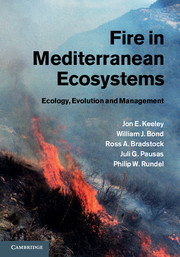
Fire in Mediterranean Ecosystems
Exploring the role of fire in each of the five Mediterranean-type climate ecosystems, this book offers a unique view of the evolution of fire-adapted traits and the role of fire in shaping Earth's ecosystems. Analyzing these geographically separate but ecologically convergent ecosystems provides key tools for understanding fire regime diversity and its role in the assembly and evolutionary convergence of ecosystems. Topics covered include regional patterns, the ecological role of wildfires, the evolution of species within those systems, and the ways in which societies have adapted to living in fire-prone environments. Outlining complex processes clearly and methodically, the discussion challenges the belief that climate and soils alone can explain the global distribution and assembly of plant communities. An ideal research tool for graduates and researchers, this study provides valuable insights into fire management and the requirements for regionally tailored approaches to fire management across the globe.
eBook

Drought before fire increases tree mortality after fire
Fire and drought are expected to increase in frequency and severity in temperate forests due to climate change. To evaluate whether drought increases the likelihood of post‐fire tree mortality, we used a large database of tree survival and mortality from 32 years of wildland fires covering four dominant western North American conifers. We used Bayesian hierarchical modeling to predict the probability of individual tree mortality after fire based on species—Pinus contorta (lodgepole pine), Abies concolor (white fir), Pseudotsuga menziesii (Douglas‐fir), and Pinus ponderosa (ponderosa pine)—bark thickness, bark char, percentage live tree crown scorched or consumed crown volume scorch (CVS), and mean annual climatic water deficit (CWD) anomalies the year pre‐fire and fire year relative to the 1985–2015 reference period. Although crown injury was the primary determinant of tree mortality after fire, drought increased likelihood of death, with a 2‐SD increase in CWD (+115.7) resulting in a 78% increase in the probability of mortality. We assessed the crown scorch level expected to result in >50% probability of mortality under different CWD scenarios: observed CWD, CWD of +2, and +4°C warming scenarios. Increased climatic moisture stress amplified tree death, reducing the threshold that causes tree mortality across all conifers under +4°C warming, with more subtle and species‐specific reductions for the +2°C scenario. Models predicting post‐fire tree mortality are components of global and regional carbon estimates, habitat suitability assessments, and forest management planning and decision support systems. The amplifying effects of drought on post‐fire tree mortality and predicted future climates are likely to lead to higher tree mortality following fires in forested landscapes of western North America and may have cascading effects on ecosystem services and future forest resilience.
Journal Article

Fuels and fires influence vegetation via above- and belowground pathways in a high-diversity plant community
1. Fire strongly influences plant populations and communities around the world, making it an important agent of plant evolution. Fire influences vegetation through multiple pathways, both above- and belowground. Few studies have yet attempted to tie these pathways together in a mechanistic way through soil heating even though the importance of soil heating for plants in fire-prone ecosystems is increasingly recognized. 2. Here we combine an experimental approach with structural equation modelling (SEM) to simultaneously examine multiple pathways through which fire might influence herbaceous vegetation. In a high-diversity longleaf pine groundcover community in Louisiana, USA, we manipulated fine-fuel biomass and monitored the resulting fires with high-resolution thermocouples placed in vertical profile above- and belowground. 3. We predicted that vegetation response to burning would be inversely related to fuel load owing to relationships among fuels, fire temperature, duration and soil heating. 4. We found that fuel manipulations altered fire properties and vegetation responses, of which soil heating proved to be a highly accurate predictor. Fire duration acting through soil heating was important for vegetation response in our SEMs, whereas fire temperature was not. 5. Our results indicate that in this herbaceous plant community, fire duration is a good predictor of soil heating and therefore of vegetation response to fire. Soil heating may be the key determinant of vegeration response to fire in ecosystems wherein plants persist by resprouting or reseeding from soil-stored propagules. 6. Synthesis. Our SEMs demonstrate how the complex pathways through which fires influence plant community structure and dynamics can be examined simultaneously. Comparative studies of these pathways across different communities will provide important insights into the ecology, evolution and conservation of fire-prone ecosystems.
Journal Article

Trajectories of change in sagebrush steppe vegetation communities in relation to multiple wildfires
Repeated perturbations, both biotic and abiotic, can lead to fundamental changes in the nature of ecosystems, including changes in state. Sagebrush steppe communities provide important habitat for wildlife and grazing for livestock. Fire is an integral part of these systems, but there is concern that increased ignition frequencies and invasive species are fundamentally altering them. Despite these issues, the majority of studies of fire effects in systems dominated by
Artemisia tridentata
wyomingensis
have focused on the effects of single burns. The Arid Lands Ecology Reserve (ALE), in south-central Washington (USA), was one of the largest contiguous areas of sagebrush steppe habitat in the state until large wildfires burned the majority of it in 2000 and 2007. We analyzed data from permanent vegetation transects established in 1996 and resampled in 2002 and 2009. Our objective was to describe how the fires, and subsequent postfire restoration efforts, affected communities' successional pathways. Plant communities differed in response to repeated fire and restoration; these differences could largely be ascribed to the functional traits of the dominant species. Low-elevation communities, previously dominated by obligate seeders, moved furthest from their initial composition and were dominated by weedy, early-successional species in 2009. Higher-elevation sites with resprouting shrubs, native bunchgrasses, and few invasive species were generally more resilient to the effects of repeated disturbances. Shrub cover has been almost entirely removed from ALE, although there was some recovery where communities were dominated by resprouters.
Bromus tectorum
dominance was reduced by herbicide application in areas where it was previously abundant, but it increased significantly in untreated areas. Several resprouting species, notably
Phlox longifolia
and
Poa secunda
, expanded remarkably following competitive release from shrub canopies and/or abundant
B. tectorum
. Our results suggest that community dynamics can be understood through a state and transition model with two axes (shrub/grass and native/invasive abundance), although such models also need to account for differences in plant functional traits and disturbance regimes. We use our results to develop a conceptual model that will be validated with further research.
Journal Article

Did the 2002 Hayman Fire, Colorado, USA, Burn with Uncharacteristic Severity?
There is considerable interest in evaluating whether recent wildfires in dry conifer forests of western North America are burning with uncharacteristic severity—that is, with a severity outside the historical range of variability. In 2002, the Hayman Fire burned an unlogged 3400 ha dry conifer forest landscape in the Colorado Front Range, USA, that had been the subject of previous fire history and forest age structure research. We opportunistically leveraged pre-existing data from this research, in combination with post-fire aerial imagery, to provide insight into whether the Hayman Fire’s patterns of high-severity, stand-replacing fire effects were uncharacteristic. Living old overstory trees were well distributed and abundant in the landscape before the Hayman Fire, despite the fact that some stand-replacing burning had been a component of the landscape’s historical mixed-severity fire regime. Of 106 randomly selected stand polygons that were sampled for the age of the oldest living overstory tree prior to the fire, 30% contained only trees ≤200 yr, while 70% contained at least one tree >200 yr and 29% contained at least one tree >400 yr. Following the Hayman Fire, only 5% of the polygons contained any living trees; these polygons were all immediately adjacent to the reservoir in the center of the landscape. At most, 4% of the polygons contained one or more trees >200 yr post fire, and 3% contained one or more trees >400 yr. The nearly complete loss of old trees, most of which were located in areas with evidence of past non-stand-replacing burning, leads us to conclude that the amount and extent of stand-replacing burning within the Hayman Fire were uncharacteristic for this landscape over at least the last two to four centuries.
Journal Article
Prescribed fire science: the case for a refined research agenda
The realm of wildland fire science encompasses both wild and prescribed fires. Most of the research in the broader field has focused on wildfires, however, despite the prevalence of prescribed fires and demonstrated need for science to guide its application. We argue that prescribed fire science requires a fundamentally different approach to connecting related disciplines of physical, natural, and social sciences. We also posit that research aimed at questions relevant to prescribed fire will improve overall wildland fire science and stimulate the development of useful knowledge about managed wildfires. Because prescribed fires are increasingly promoted and applied for wildfire management and are intentionally ignited to meet policy and land manager objectives, a broader research agenda incorporating the unique features of prescribed fire is needed. We highlight the primary differences between prescribed fire science and wildfire science in the study of fuels, fire behavior, fire weather, fire effects, and fire social science. Wildfires managed for resource benefits (“managed wildfires”) offer a bridge for linking these science frameworks. A recognition of the unique science needs related to prescribed fire will be key to addressing the global challenge of managing wildland fire for long-term sustainability of natural resources.
Journal Article

Spatio-Temporal Features of China’s Urban Fires: An Investigation with Reference to Gross Domestic Product and Humidity
Frequent fire accidents pose a serious threat to human life and property. The spatio-temporal features of China’s urban fires, and their drivers should be investigated. Based on the Spatio-temporal Dynamic panel data Model (SDM), and using fire data gathered from 337 Chinese cities in 2000 to 2009, the influence of spatio-temporal factors on the frequency of urban fires was analyzed. The results show that (1) the overall fire incidence of China increased annually before 2002 and reduced significantly after 2003, and then high fire incidence increased in western China; (2) Spatio-temporal factors play a significant role in the frequency of Chinese urban fires; specifically, the fire assimilation effect, fire inertia effect and fire caution effect. The ratio of fire incidence of China has reduced significantly, and the focus of fire incidence moved towards the western region of China. GDP and humidity have a significant effect on urban fire situation change in China, and these effects may be referred to as “fire assimilation effects”, “fire inertia effects” and “fire caution effects”.
Journal Article

Fire frequency drives decadal changes in soil carbon and nitrogen and ecosystem productivity
A meta-analysis and field data show that frequent fires in savannas and broadleaf forests decrease soil carbon and nitrogen over many decades; modelling shows that nitrogen loss drives carbon loss by reducing net primary productivity.
Soil degradation fuelled by fire
The patterns of naturally occurring fires have been altered, both spatially and temporally, as a result of climate and land-use changes. The long-term effects of fire frequency on soil carbon and nutrient storage and the resulting potential limitations on plant productivity remain poorly understood. On the basis of a meta-analysis and an independent dataset of additional field sites, this paper finds that frequent burning leads to soil carbon and nitrogen losses that emerge over decadal timescales. Furthermore, the authors use a model to suggest that the decadal losses of soil nitrogen as a result of more frequent burning could decrease the amount of carbon sequestered by net primary productivity.
Fire frequency is changing globally and is projected to affect the global carbon cycle and climate
1
,
2
,
3
. However, uncertainty about how ecosystems respond to decadal changes in fire frequency makes it difficult to predict the effects of altered fire regimes on the carbon cycle; for instance, we do not fully understand the long-term effects of fire on soil carbon and nutrient storage, or whether fire-driven nutrient losses limit plant productivity
4
,
5
. Here we analyse data from 48 sites in savanna grasslands, broadleaf forests and needleleaf forests spanning up to 65 years, during which time the frequency of fires was altered at each site. We find that frequently burned plots experienced a decline in surface soil carbon and nitrogen that was non-saturating through time, having 36 per cent (±13 per cent) less carbon and 38 per cent (±16 per cent) less nitrogen after 64 years than plots that were protected from fire. Fire-driven carbon and nitrogen losses were substantial in savanna grasslands and broadleaf forests, but not in temperate and boreal needleleaf forests. We also observe comparable soil carbon and nitrogen losses in an independent field dataset and in dynamic model simulations of global vegetation. The model study predicts that the long-term losses of soil nitrogen that result from more frequent burning may in turn decrease the carbon that is sequestered by net primary productivity by about 20 per cent of the total carbon that is emitted from burning biomass over the same period. Furthermore, we estimate that the effects of changes in fire frequency on ecosystem carbon storage may be 30 per cent too low if they do not include multidecadal changes in soil carbon, especially in drier savanna grasslands. Future changes in fire frequency may shift ecosystem carbon storage by changing soil carbon pools and nitrogen limitations on plant growth, altering the carbon sink capacity of frequently burning savanna grasslands and broadleaf forests.
Journal Article

Tree crown injury from wildland fires
The dead foliage of scorched crowns is one of the most conspicuous signatures of wildland fires. Globally, crown scorch from fires in savannas, woodlands and forests causes tree stress and death across diverse taxa. The term crown scorch, however, is inconsistently and ambiguously defined in the literature, causing confusion and conflicting interpretation of results. Furthermore, the underlying mechanisms causing foliage death from fire are poorly understood. The consequences of crown scorch – alterations in physiological, biogeochemical and ecological processes and ecosystem recovery pathways – remain largely unexamined. Most research on the topic assumes the mechanism of leaf and bud death is exposure to lethal air temperatures, with few direct measurements of lethal heating thresholds. Notable information gaps include how energy transfer injures and kills leaves and buds, how nutrients, carbohydrates, and hormones respond, and what physiological consequences lead to mortality. We clarify definitions to encourage use of unified terminology for foliage and bud necrosis resulting from fire. We review the current understanding of the physical mechanisms driving foliar injury, discuss the physiological responses, and explore novel ecological consequences of crown injury from fire. From these elements, we propose research needs for the increasingly interdisciplinary study of fire effects.
Journal Article

Fire effects on the persistence of soil organic matter and long-term carbon storage
One paradigm in biogeochemistry is that frequent disturbance tends to deplete carbon (C) in soil organic matter (SOM) by reducing biomass inputs and promoting losses. However, disturbance by fire has challenged this paradigm because soil C responses to frequent and/or intense fires are highly variable, despite observed declines in biomass inputs. Here, we review recent advances to illustrate that fire-driven changes in decomposition, mediated by altered SOM stability, are an important compensatory process offsetting declines in aboveground biomass pools. Fire alters the stability of SOM by affecting both the physicochemical properties of the SOM and the environmental drivers of decomposition, potentially offsetting C lost via combustion, but the mechanisms affecting the SOM stability differ across ecosystems. Thus, shifting our focus from a top-down view of fire impacting C cycling via changes in plant biomass to a bottom-up view of changes in decomposition may help to elucidate counterintuitive trends in the response of SOM to burning. Given that 70% of global topsoil C is in fire-prone regions, using fire to promote SOM stability may be an important nature-based climate solution to increase C storage.
Fires reduce plant biomass, which should deplete soil carbon stocks, but a review of recent literature shows that fires also slow decomposition rates and increase soil organic matter stability, offsetting aboveground biomass carbon losses.
Journal Article