
Catalogue Search | MBRL


Are you sure you want to remove the book from the shelf?

{{itemTitle}}
44,037
result(s) for
"Firearms - legislation "
Sort by:

Do guns make us free? : democracy and the armed society
Possibly the most emotionally charged debate taking place in the United States today centers on the Second Amendment to the Constitution and the rights of citizens to bear arms. In the wake of the Sandy Hook school massacre in Connecticut, the gun rights movement, headed by the National Rifle Association, appears more intractable than ever in its fight against gun control laws. The core argument of Second Amendment advocates is that the proliferation of firearms is essential to maintaining freedom in America, providing private citizens with a defense against possible government tyranny, and thus safeguarding all our other rights. But is this argument valid? Do guns indeed make us free? In this insightful and eye-opening analysis, the first philosophical examination of every aspect of the contentious and uniquely American debate over guns, Firmin DeBrabander examines the claims offered in favor of unchecked gun ownership. By exposing the contradictions and misinterpretations inherent in the case presented by gun rights supporters, this provocative volume demonstrates that an armed society is not a free society but one that actively hinders democratic participation.
Book

Developing and testing the predictive validity of household firearm storage measures: insights from rural Alaska
IntroductionMeasuring change in firearm storage is paramount to evaluating if interventions influence storage. Yet, there is little empirical basis for how to measure this change. This methodology study compared three different firearm storage measures using data from the Family Safety Net trial (n=46), a randomised controlled trial among firearm-owning adults in a rural Alaska Native community to encourage unloaded and locked firearm storage.MethodsThe team compared baseline and 1-month follow-up measures of household firearm storage: (1) cumulative firearm accessibility, (2) average firearm accessibility, and (3) number of unlocked firearms. All measures included information about locking status; the cumulative and average firearm accessibility measures incorporated additional information about ammunition. Unadjusted and adjusted generalised estimating equations evaluated the associations of the storage measures with adult perceptions of youth firearm access. Receiver operating characteristic curves from unadjusted models compared the measures’ abilities to predict adult perceptions of youth firearm access.ResultsAll household firearm storage measures were sensitive to change between baseline and 1 month follow-up (ps<0.05). These measures demonstrated a similar and moderate ability to predict adult perceptions of youth access (area under the curve range: 0.68–0.76).ConclusionThe number of unlocked firearms is an easily interpretable outcome when evaluating the effect of firearm storage interventions on storage practices, and it performed similarly well in predicting adults’ perceptions of youth firearm access as compared with more complex measures. Research that evaluates the ability of firearm storage measures to predict actual youth access will inform interventions to prevent youth firearm access.
Journal Article

That every man be armed : the evolution of a constitutional right
\"A revised and updated edition of Halbrook's 1984 book discussing the Second Amendment and the individual right to bear arms\"--Provided by publisher.
Book
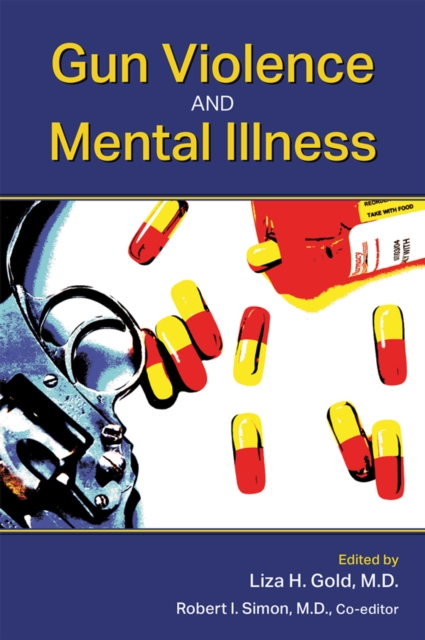
Gun Violence and Mental Illness
This important, multidisciplinary volume presents evidence-based analyses and risk assessment strategies for mental health clinicians, trainees, and those interested in finding more effective interventions to decrease the costs of the serious public health problems of gun violence and mental illness.
eBook

One nation under guns : how gun culture distorts our history and threatens our democracy
\"This takedown of American gun culture argues that the nation's fathers did not intend the Second Amendment to guarantee an individual right to bear arms--and that this intentional distortion of the record is an urgent threat to democracy. Hundreds of lives are lost to firearms every day in America. The cost is more than the numbers--it is also the fear, the anxiety, the dread of public spaces that an armed society has created under the tortured rubric of freedom. But the norms of today are not the norms of American history or the values of its Founders. They are the product of a gun culture that has imposed its vision on a sleeping nation. Historian Dominic Erdozain argues that we have wrongly ceded the big-picture argument on guns--as we parse legislation on background checks and automatic weapons bans, we fail to ask: Do individual gun rights have any place at all in American democracy? Taking readers on a brilliant historical journey, Erdozain shows how the Founders feared the tyranny of individuals as much as the tyranny of kings--the idea that any person had a right to walk around armed was anathema to their notion of freedom and the enduring republic they hoped to build. They baked these ideas into the Constitution and the Bill of Rights, ideas that were subsequently affirmed as bedrock by two centuries of jurisprudence. And yet: the twin scourges of America's sickness on race and its near-religious nationalism would work in tandem to create an alternate, darker vision of American freedom. This vision was defined by a mystic conception of good guys and bad guys, underpinned by a host of assumptions about innocence and guilt, power and entitlement. By the time the US Supreme Court essentially invented an individual gun right in 2008 by torturing the words of the Second Amendment in Heller--a decision that Erdozain convincingly eviscerates--many Americans had already acceded to gun activists' perverse unfreedom. To save our democracy, he argues, we must fight for the Founders' true idea of what it means to be free\"-- Provided by publisher.
Book

Reducing Gun Violence in America
Amid a growing consensus that the staggering toll of gun violence in the United States is an urgent public health issue, the Johns Hopkins University’s Bloomberg School of Public Health has convened experts on gun policy and violence from the United States and selected other countries to summarize relevant research and its implications for policymakers and concerned citizens. Legal scholars weigh in on the constitutionality of recommended policies, and researchers present new data on public support for a wide array of policies designed to reduce gun violence. Collected for the first time in one volume, this reliable, empirical research and legal analysis will inform the policy debate by helping lawmakers and opinion leaders identify the policy changes that are most likely to reduce gun violence in the United States.
Researchers draw on new and existing studies on U.S. gun policies to demonstrate both the weaknesses of current federal gun policies and the efficacy of various state laws designed to reduce firearm availability to high-risk groups. By analyzing scientific and legal data, the contributors provide evidence in support of enhanced regulation and oversight of licensed gun dealers, background checks for private sales, and purchaser licensing. Lessons from bans of assault weapons and of large-capacity magazines for guns are considered, as is the promise of “smart guns,” which could be fired only by authorized users. Compelling case studies from Australia, Scotland, and Brazil demonstrate effective policy responses to gun violence that have led to significant reductions in gun-related deaths. The book concludes with data on public support for strengthening gun laws and Second Amendment considerations.
eBook


Mixed Impact of Firearms Restrictions on Fatal Firearm Injuries in Males: A National Observational Study
Introduction: Public health organizations have recommended restricted access and safe storage practices as means to reduce firearm injuries and deaths. We aimed to assess the effect of four firearm restrictions on firearm deaths in Norway 1969–2009. Methods: All deaths due to firearm discharge were included (5,660 deaths, both sexes). The statistical analysis to assess impact of firearm legislations was restricted to males because of the sex disproportionality (94% were males). Results: A total of 89% of firearm deaths (both sexes) were classified as suicide, 8% as homicide, and 3% as unintentional (accident). During the past four decades, male accidental firearm death rates were reduced significantly by 90%. Male firearms suicide rates increased from 1969 to 1991 by 166%, and decreased by 62% from 1991 to 2009. Despite the great reduction in male accidental firearm deaths, we were unable to demonstrate effects of the laws. In contrast, we found that a 1990 regulation, requiring a police permit before acquiring a shotgun, had a beneficial impact on suicide in the total sample and in those aged 15–34 years. Male firearm homicides decreased post-2003 regulation regarding storing home guard weapons in private homes. Conclusions: Our findings suggest that two laws could have contributed to reduce male firearm mortality. It is, however, a challenge to measure the role of four firearm restrictions. The null findings are inconclusive, as they may reflect no true impact or study limitations.
Journal Article

The future of the gun
The author believes that \"potential future developments in gun technology could change the world. However, [what he sees as] the radical anti-gun lobby stands between innovation and the American people ... and ... [threatens] to stop progress in its tracks\"--Amazon.com.
Book

What Do We Know About the Association Between Firearm Legislation and Firearm-Related Injuries?
Firearms account for a substantial proportion of external causes of death, injury, and
disability across the world. Legislation to regulate firearms has often been passed with
the intent of reducing problems related to their use. However, lack of clarity around
which interventions are effective remains a major challenge for policy development. Aiming
to meet this challenge, we systematically reviewed studies exploring the associations
between firearm-related laws and firearm homicides, suicides, and unintentional
injuries/deaths. We restricted our search to studies published from 1950 to 2014. Evidence
from 130 studies in 10 countries suggests that in certain nations the simultaneous
implementation of laws targeting multiple firearms restrictions is associated with
reductions in firearm deaths. Laws restricting the purchase of (e.g., background checks)
and access to (e.g., safer storage) firearms are also associated with lower rates of
intimate partner homicides and firearm unintentional deaths in children, respectively.
Limitations of studies include challenges inherent to their ecological design, their
execution, and the lack of robustness of findings to model specifications. High quality
research on the association between the implementation or repeal of firearm legislation
(rather than the evaluation of existing laws) and firearm injuries would lead to a better
understanding of what interventions are likely to work given local contexts. This
information is key to move this field forward and for the development of effective
policies that may counteract the burden that firearm injuries pose on populations.
Journal Article