
Catalogue Search | MBRL


Are you sure you want to remove the book from the shelf?

{{itemTitle}}
8
result(s) for
"Firearms in popular culture United States."
Sort by:

Gunslinging justice : the American culture of gun violence in Westerns and the law
Gunslinging justice examines gun violence in Western films and literature alongside changes in justifiable homicide and gun rights in the United States.
Book

American Gun Culture
Taylor's neutral account of U.S. gun culture never loses sight of the fact that guns are all around us. With millions of guns and gun owners, it is imperative that policy and future research pertaining to guns consider the relative cultural and symbolic value that gun owners place on their guns. Taylor's candid, emotional and occasionally funny research explores the symbolic meaning of guns and the ways in which the meaning assigned to guns influences gun ownership and use. Some of his more interesting findings center around conversations with gun collectors and enthusiasts about a series of interaction rituals; rituals pertaining to being a gun owner, a gun user, and possibly even the gun as an object of near-worship. Gun owners also recognize a unique stigma, and respond through a complex series of stigma management techniques. And much, much more.
eBook
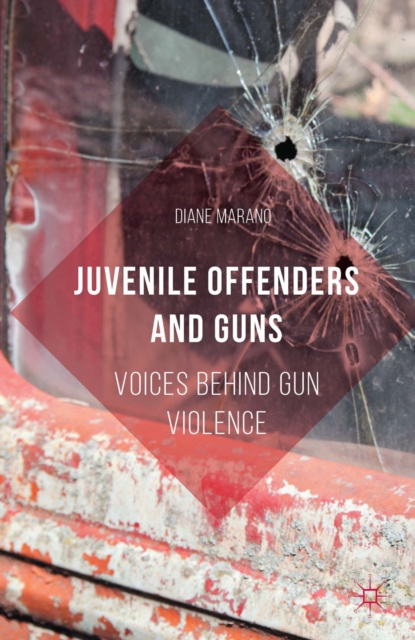
Juvenile offenders and guns : voices behind gun violence
Juvenile Offenders and Guns explores how and why twenty-five incarcerated young men of color acquired and used guns, and how guns made them feel. Guns have multiple meanings and serve many purposes for these youth as they attempt to construct a capable masculinity in their worlds, growing up in homes where money is often scarce and fathers absent.
eBook

Concerns With Entertainment-Education
Entertainment-education has proved to be an engaging medium through which to explore health and social issues in populations. Given the popularity of the zombie theme in popular culture it is no surprise therefore that the Centers for Disease Control and Prevention adopted this theme in an effort to engage youth and young adults in emergency preparedness. However, an earlier observational study involving elementary school children based on this premise raised concerns that it may have unexpectedly promoted a focus on firearms. A randomized control study involving 89 children (average age 10.4 years) was therefore conducted to explore this possibility in more depth. One group was exposed to a natural disaster scenario, while the other group was exposed to the zombie pandemic theme. When subsequently asked to prepare emergency kit lists, participants in the zombie themed scenario were 15.84 times as likely to include firearms in their lists compared with participants who were exposed to the natural disaster scenario. Although the sample size in this study was small, it is suggested that future interventions using entertainment-education need to explore all aspects of the messages implicit in their chosen medium, rather than just focusing on one element.
Journal Article

My Brother's Reaper: Examining Officially Reported Siblicide Incidents in the United States, 2000-2007
With higher rates than any other form of intrafamilial violence, Hoffman and Edwards (2004) note, sibling violence \"constitutes a pandemic form of victimization of children, with the symptoms often going unrecognized and the effect ignored\" (p. 187). Approximately 80% of children reside with at least one sibling (Kreider, 2008), and in its most extreme form sibling violence manifests as siblicide. Siblicide is poorly understood with fewer than 20 empirical studies identified in the extant literature since 1980 (see Eriksen & Jensen, 2006). The present work employs 8 years of Supplemental Homicide Report (SHR) data, 2000-2007, with siblicide victims and offenders age 21 years and younger, to construct contemporary victim and offender profiles examining incident characteristics. Findings highlight the sex-based nature of the offense with unique victimization patterns across victims and offenders. Older brothers using a firearm are the most frequent offenders against both male and female siblings. Strain as a theoretical foundation of siblicide is offered as an avenue for future inquiry.
Journal Article

The Discursive Figuration of U.S. Supremacy in Narratives Sympathetic To Undocumented Immigrants
The reality television program, 30 Days with Morgan Spurlock, relates a compelling narrative in its episode entitled \"Immigration\" by having Frank, an avowed Minuteman, live with the Gonzalez family -- whose members are undocumented -- in East Los Angeles. The episode begins with images of Frank patrolling the border, binoculars in hand & 9mm handgun at his side, while passionately arguing that the United States must enforce its immigration laws. He insists that immigrants who have crossed \"illegally\" must be policed & deported back to their country. The viewers are then introduced to the seven Gonzalez family members, who live in a 500-square-foot, one-bedroom apartment. Upon entering the Gonzalez's home, Frank adamantly argues that the family must be deported. Although his intransigent views slowly melt away due to the warmth & hardworking nature of this family, the critical turning point for Frank occurs when he goes to Mexico & witnesses firsthand the \"squalor\" & abject poverty from which the Gonzalez family fled. After this horrible experience, Frank explains that the Gonzalez family was merely trying to survive by entering the United States \"Illegally.\" By the end of the episode, he tearfully embraces one of the daughters, & promises to sponsor her if she is deported. Adapted from the source document.
Journal Article

A Public Health Approach to Tackling the Role of Culture in Shaping the Gun Violence Epidemic in the United States
Gun-related violence is the leading cause of morbidity and mortality in the United States. The burden gun violence poses for the health of the population is disproportionately larger than it is in many countries. Increasing evidence links high rates of gun violence to the ubiquity of guns, high rates of firearm ownership, and low barriers to accessing firearms in the US.
Journal Article

Conclusion
Ramón Saldívar (1990) contends that to fully appreciate Chicano/a fiction, it is necessary to examine its genealogy, in particular, its relationship to the discursive erasure of Mexican Americans from the history of the American West. Saldívar observes that such texts “signify the imaginary ways in which historical men and women live out their lives.” In other words, Chicano/a narrative imagines histories of Mexican Americans, histories that have not made it into the official version of “how the West was won.” Saldívar takes as his originary model of Chicano/a narrative, Américo Paredes’s 1958 text, “With His Pistol in His Hand” a
Book Chapter