
Catalogue Search | MBRL


Are you sure you want to remove the book from the shelf?

{{itemTitle}}
48
result(s) for
"First, 1096-1099"
Sort by:


Sanctifying the Name of God
How are martyrs made, and how do the memories of martyrs express, nourish, and mold the ideals of the community?Sanctifying the Name of Godwrestles with these questions against the background of the massacres of Jews in the Rhineland during the outbreak of the First Crusade. Marking the first extensive wave of anti-Jewish violence in medieval Christian Europe, these \"Persecutions of 1096\" exerted a profound influence on the course of European Jewish history. When the crusaders demanded that Jews choose between Christianity and death, many opted for baptism. Many others, however, chose to die as Jews rather than to live as Christians, and of these, many actually inflicted death upon themselves and their loved ones. Stories of their self-sacrifice ushered the Jewish ideal of martyrdom-kiddush ha-Shem, the sanctification of God's holy name-into a new phase, conditioning the collective memory and mindset of Ashkenazic Jewry for centuries to come, during the Holocaust, and even today. The Jewish survivors of 1096 memorialized the victims as martyrs as they rebuilt their communities during the decades following the Crusade. Three twelfth-century Hebrew chronicles of the persecutions preserve their memories of martyrdom and self-sacrifice, tales fraught with symbolic meaning that constitute one of the earliest Jewish attempts at local, contemporary historiography. Reading and analyzing these stories through the prism of Jewish and Christian religious and literary traditions, Jeremy Cohen shows how these persecution chronicles reveal much more about the storytellers, the martyrologists, than about the martyrs themselves. While they extol the glorious heroism of the martyrs, they also air the doubts, guilt, and conflicts of those who, by submitting temporarily to the Christian crusaders, survived.
eBook

Warfare and the miraculous in the chronicles of the First Crusade
\"Analyzes how chroniclers of the First Crusade attempted to represent the enterprise as a \"holy war.\" Focuses on accounts of miracles, especially the intervention of saints in the battle of Antioch; explores how the chroniclers related the crusade to biblical events\"--Provided by publisher.
Book
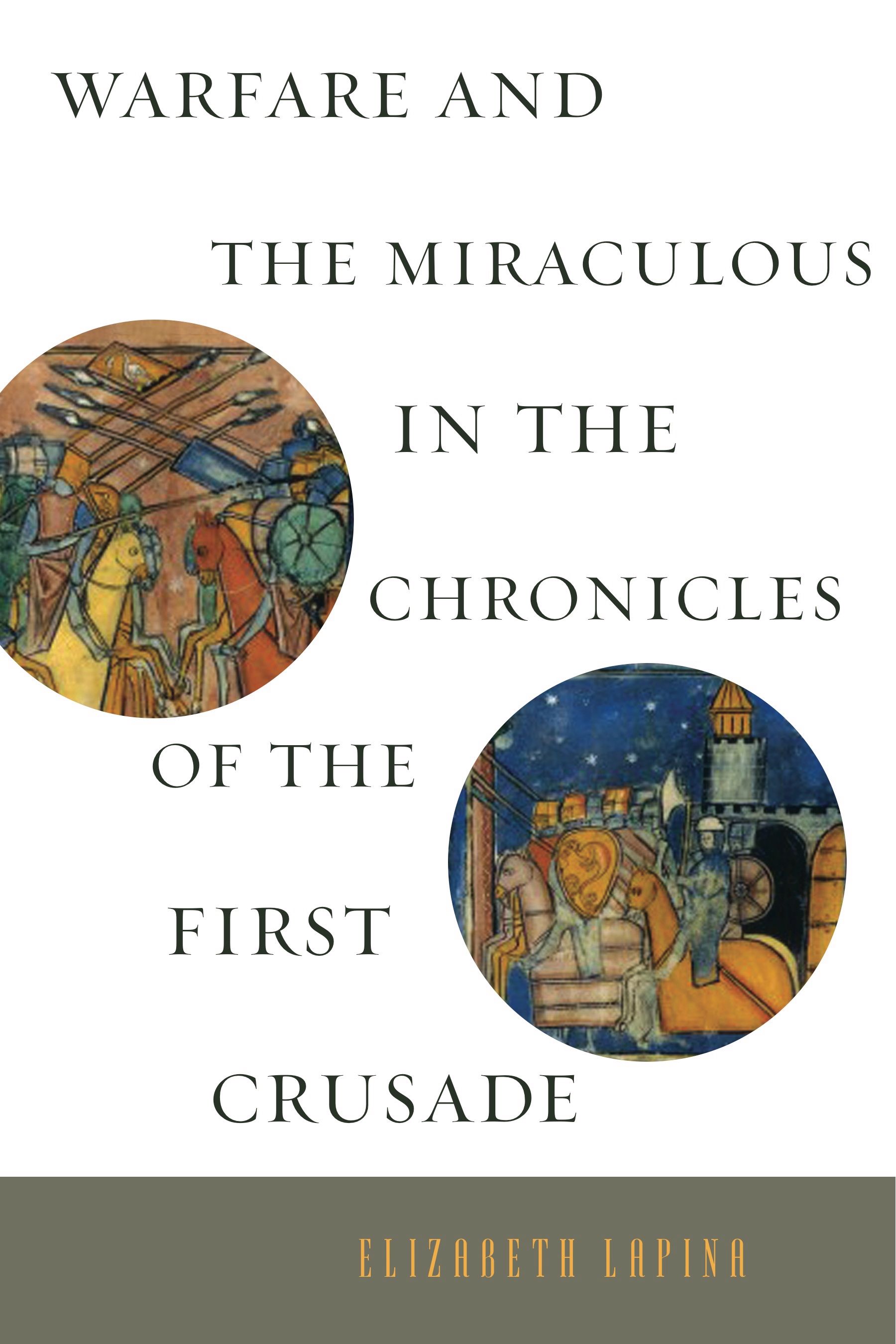
Warfare and the miraculous in the chronicles of the First Crusade
In Warfare and the Miraculous in the Chronicles of the First Crusade, Elizabeth Lapina examines a variety of these chronicles, written both by participants in the crusade and by those who stayed behind. Her goal is to understand the enterprise from the perspective of its contemporaries and near contemporaries. Lapina analyzes the diversity of ways in which the chroniclers tried to justify the First Crusade as a \"holy war,\" where physical violence could be not just sinless, but salvific.
The book focuses on accounts of miracles reported to have happened in the course of the crusade, especially the miracle of the intervention of saints in the Battle of Antioch. Lapina shows why and how chroniclers used these miracles to provide historical precedent and to reconcile the messiness of history with the conviction that history was ordered by divine will. In doing so, she provides an important glimpse into the intellectual efforts of the chronicles and their authors, illuminating their perspectives toward the concepts of history, salvation, and the East. Warfare and the Miraculous in the Chronicles of the First Crusade demonstrates how these narratives sought to position the crusade as an event in the time line of sacred history. Lapina offers original insights into the effects of the crusade on the Western imaginary as well as how medieval authors thought about and represented history.
eBook


Remembering the crusades : myth, image, and identity
Few events in European history generated more historical, artistic, and literary responses than the conquest of Jerusalem by the armies of the First Crusade in 1099. This epic military and religious expedition, and the many that followed it, became part of the collective memory of communities in Europe, Byzantium, North Africa, and the Near East. Remembering the Crusades examines the ways in which those memories were negotiated, transmitted, and transformed from the Middle Ages through the modern period.
Bringing together leading scholars in art history, literature, and medieval European and Near Eastern history, this volume addresses a number of important questions. How did medieval communities respond to the intellectual, cultural, and existential challenges posed by the unique fusion of piety and violence of the First Crusade? How did the crusades alter the form and meaning of monuments and landscapes throughout Europe and the Near East? What role did the crusades play in shaping the collective identity of cities, institutions, and religious sects?
In exploring these and other questions, the contributors analyze how the events of the First Crusade resonated in a wide range of cultural artifacts, including literary texts, art and architecture, and liturgical ceremonies. They discuss how Christians, Jews, and Muslims recalled and interpreted the events of the crusades and what far-reaching implications that remembering had on their communities throughout the centuries.
Remembering the Crusades is the first collection of essays to investigate the commemoration of the crusades in eastern and western cultures. Its unprecedented multidisciplinary and cross-cultural approach points the way to a complete reevaluation of the place of the crusades in medieval and modern societies.
eBook


Nebuchadnezzar's dream : the Crusades, apocalyptic prophecy, and the end of history
In 1099, the soldiers of the First Crusade took Jerusalem. As the news of this victory spread throughout Medieval Europe, it felt nothing less than miraculous and dream-like, to such an extent that many believed history itself had been fundamentally altered by the event and that the Rapture was at hand. As a result of military conquest, Christians could see themselves as agents of rather than mere actors in their own salvation. The capture of Jerusalem changed everything. A loosely defined geographic backwater, comprised of petty kingdoms and shifting alliances, Medieval Europe began now to imagine itself as the center of the world. The West had overtaken the East not just on the world's stage but in God's plans. To justify this, its writers and thinkers turned to ancient prophecies, and specifically to one of the most enigmatic passages in the Bible the dream King Nebuchadnezzar has in the Book of Daniel, of a statue with a golden head and feet of clay. Conventional interpretation of the dream transformed the state into a series of kingdoms, each less glorious than the last, leading inexorably to the end of all earthly realms-- in short, to the Apocalypse. The First Crusade signified to Christians that the dream of Nebuchadnezzar would be fulfilled on their terms. Such heady reconceptions continued until the disaster of the Second Crusade and with it, the collapse of any dreams of unification or salvation-any notion that conquering the Holy Land and defeating the Infidel could absolve sin. In Nebuchadnezzar's Dream, Jay Rubenstein boldly maps out the steps by which these social, political, economic, and intellectual shifts occurred throughout the 12th century, drawing on those who guided and explained them. The Crusades raised the possibility of imagining the Apocalypse as more than prophecy but actual event. Rubenstein examines how those who confronted the conflict between prophecy and reality transformed the meaning and memory of the Crusades as well as their place in history.
eBook
The Templar
In 1097, Hugh de Payens, his younger sister Eleanor and his close friend Godefroi of St Omer join Count Raymond of Toulouse's army on its journey across Europe, through Byzantium, to Jerusalem in order to reclaim the Holy Land in the name of Christendom.
Book
