
Catalogue Search | MBRL


Are you sure you want to remove the book from the shelf?

{{itemTitle}}
728
result(s) for
"Fiscal policy Case studies."
Sort by:

Legislatures and the budget process : the myth of fiscal control
\"From an institutional perspective, the book carries out comparative analysis of the power of the purse. It explores cross-national differences, their determinants and their impact on fiscal policy. The empirical analysis is based on a dataset of legislative budgeting in all 30 OECD countries, a broader 80-country dataset, and case study evidence\"-- Provided by publisher.
Book

This time is different
Throughout history, rich and poor countries alike have been lending, borrowing, crashing--and recovering--their way through an extraordinary range of financial crises. Each time, the experts have chimed, \"this time is different\"--claiming that the old rules of valuation no longer apply and that the new situation bears little similarity to past disasters. With this breakthrough study, leading economists Carmen Reinhart and Kenneth Rogoff definitively prove them wrong. Covering sixty-six countries across five continents, This Time Is Different presents a comprehensive look at the varieties of financial crises, and guides us through eight astonishing centuries of government defaults, banking panics, and inflationary spikes--from medieval currency debasements to today's subprime catastrophe. Carmen Reinhart and Kenneth Rogoff, leading economists whose work has been influential in the policy debate concerning the current financial crisis, provocatively argue that financial combustions are universal rites of passage for emerging and established market nations. The authors draw important lessons from history to show us how much--or how little--we have learned.
eBook

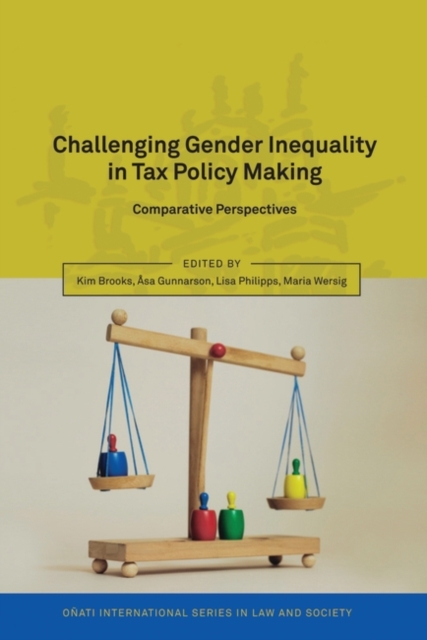
Challenging Gender Inequality in Tax Policy Making
This volume takes a critical look at the gender of tax policy around the world. Contributors based in eight different countries examine the profound effects that gender norms and practices have had in shaping tax law and policy, and how taxation in turn impacts upon the possibilities for equality along gender, race, class, sexuality and other lines. Chapters explore how the gendered fiscal state might be theorised; how structural choices about rates and bases in tax policy design contribute to gender inequality; how tax policy affects family configurations and perceptions of what constitutes family; how fiscal systems impact on savings and wealth accumulation by women and men; and the role of different policy-making processes and institutions in occluding and sometimes challenging these patterns. Most significantly, perhaps, the book explores these questions in an international frame, traversing countries and continents. The conclusion: fiscal policy has deep rooted, long standing gender implications that affect virtually every aspect of our social, political, and economic lives whether we live in Canada, Australia or Kenya.
eBook

Beyond the annual budget
What conditions determine the success of Medium Term Expenditure Frameworks (MDTFs)? How should the implementation of MTEFs be sequenced and coordinated with other budget reforms? What role should organizations such as the World Bank, bilateral development partners, and other international agencies play in supporting MTEF adoption? How can country authorities implement a new MTEF or strengthen an existing one?Beyond the Annual Budget provides a comprehensive review of global experience with Medium Term Expenditure Frameworks (MTEFs). Looking at countries both with and without MTEFs over the period 1990 to 2008, the authors adopt a systematic methodological approach and rely on multiple analytical techniquesincluding event studies and econometric analysisto obtain results about the impact of MTEFs on fiscal performance. The authors then draw on case studies and other material to determine whether MTEFs should be a common element of public financial management systems given differences in country circumstances. Guidance is also provided on the design and implementation of MTEFs in the context of broader public financial management systems reform.This volume will be of interest to multilateral and bilateral providers of technical assistance in the public financial management area, and to country authorities seeking to introduce or strengthen MTEFs.
eBook

Stuck in the Middle: Is Fiscal Policy Failing the Middle Class?
Stuck in the Middleexamines both economic and social public policy initiatives in its assertion that enhancing the welfare of people in developed and developing nations requires an explicit focus on the middle class.
Contents Foreword 1. Overview: Fiscal Policy, Distribution, and the Middle Class 2. Stylized Facts on the Middle Class and the Development Process 3. The Future of Global Income Inequality 4. The Scope and Limits of Subsidies 5. Policies for Lower Global Wealth Inequality 6. Can Happiness Research Help Fiscal Policy? 7. The Politics of Effective and Sustainable Redistribution
eBook

The second great contraction
Throughout history, rich and poor countries alike have been lending, borrowing, crashing--and recovering--their way through an extraordinary range of financial crises. Each time, the experts have chimed, \"this time is different\"--claiming that the old rules of valuation no longer apply and that the new situation bears little similarity to past disasters. With this breakthrough study, leading economists Carmen Reinhart and Kenneth Rogoff definitively prove them wrong. Covering sixty-six countries across five continents, This Time Is Different presents a comprehensive look at the varieties of financial crises, and guides us through eight astonishing centuries of government defaults, banking panics, and inflationary spikes--from medieval currency debasements to today's subprime catastrophe. Carmen Reinhart and Kenneth Rogoff, leading economists whose work has been influential in the policy debate concerning the current financial crisis, provocatively argue that financial combustions are universal rites of passage for emerging and established market nations. The authors draw important lessons from history to show us how much--or how little--we have learned.
eBook
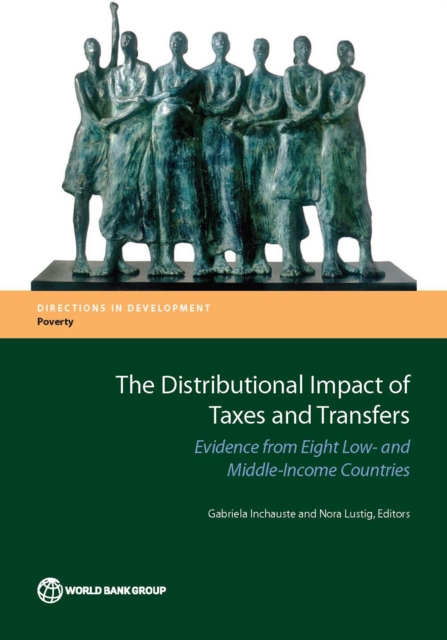
The Distributional Impact of Taxes and Transfers
The World Bank has partnered with the Commitment to Equity Institute at Tulane University to implement their diagnostic tool--the Commitment to Equity (CEQ) Assessment--designed to assess how taxation and public expenditures affect income inequality, poverty, and different economic groups.
eBook