
Catalogue Search | MBRL


Are you sure you want to remove the book from the shelf?

{{itemTitle}}
51
result(s) for
"Fixed Ideas"
Sort by:

OCD for dummies
Manage OCD and live a better life, thanks to this friendly Dummies guide
People with obsessive-compulsive disorder (OCD) need skills and tools to manage their symptoms. OCD For Dummies offers help for you or your loved one when it comes to recognizing, diagnosing, treating, and living with this common mental and behavioral disorder. Dummies gives you all the information you need on getting your symptoms under control and working toward remission. This edition updates you with the latest research on OCD, new therapeutic treatments, and all the most up-to-date resources to help you along on your OCD journey. You're not alone—there are millions of people out there who understand what you're going through, and OCD For Dummies does, too. Understand obsessive-compulsive disorder and get the help you need with this book.
* Discover what causes OCD and learn how identify the symptoms and early warning signs
* Learn about the latest medications, treatments, and resources available to help manage OCD symptoms
* Differentiate between OCD and related disorders so you can get the right help
* Help a loved one who suffers from OCD and get tips on how you can be supportive
If you or someone you know has symptoms of OCD or has received a recent diagnosis, this book will gently guide you through building the skills and awareness that will let you live life to its fullest.
eBook

The Mindfulness Workbook for OCD
Combining mindfulness practices with cognitive behavioral therapy (CBT), this fully revised and updated second edition of The Mindfulness Workbook for OCD offers practical and accessible tools for managing the unwanted thoughts and compulsive urges associated with obsessive-compulsive disorder (OCD). With this powerful workbook, readers will develop present-moment awareness, learn to challenge their own distorted thinking, and stop treating thoughts as threats and feelings as facts.
eBook

OCD: tools to help young people fight back!
This manual for therapists describes how to set up and run a 14-session evidence-based CBT programme for treating OCD in young people, originally pioneered by the Maudsley Hospital.
eBook

Obsessive-Compulsive Personality Disorder
Complete yet concise, Obsessive-Compulsive Personality Disorder provides an up-to-date analysis of this widespread, multi-faceted disorder. Estimated to be twice as common as any other personality disorder, OCPD is nevertheless both underrepresented in the literature and frequently misunderstood by clinicians and the patients who grapple with its effects. Misdiagnosis, failure to diagnose, and ignorance of treatment options are common. This text represents the collective contributions of some of the foremost authorities in the field under the leadership of editors who are determined to raise awareness and educate practitioners and patients alike about the phenomenology, neurobiology, and psychology of this disorder. The book begins with the history and epidemiology of the disorder before proceeding to the clinical features, which are presented using case examples. From there, the text addresses the developmental aspects of OCPD and then considers other related personality disorders that frequently co-occur with or may be mistaken for OCPD. Additional chapters address the developmental aspects of OCPD, the neurobiology and cognitive underpinnings of OCPD, and available treatment approaches.
The following coverage is especially noteworthy: • Four chapters focus on common mental health disorders that can be difficult to differentiate from OCPD, with the most common misdiagnoses being obsessive-compulsive disorder and hoarding disorder. OCPD has also been linked with eating disorders, impulse disorders, and aggression, and the book helps the reader understand the relationship between and among these disorders.• Gender and/or cultural factors may influence the presentation of psychiatric disorders, including OCPD, and the book explores the potentially heterogeneous etiology of the disorder and the danger of assuming that one size fits all in terms of treatment.• Both psychotherapeutic and pharmacological treatment approaches are examined in detail, including cognitive-behavioral therapies (the rationale behind their use, estimated effectiveness, and limitations of current interventions) and the current state of drug treatment.• OCPD can be trying for family members and others who care about the patient, and the book offers a chapter examining what loved ones can do to help, including how to recognize when a personality trait within the OCPD criteria rises to the level of a disorder.• Although OCPD can be disabling, there can be positive aspects to having an obsessional personality, and the book discusses the situations under which these traits can be advantageous. Down-to-earth, clinically rich, and unique, Obsessive-Compulsive Personality Disorder will help clinicians navigate the thorny OCPD assessment, diagnosis, and treatment path while providing information and comfort to patients and their families.
eBook

Etiology, Pathogenesis, and Therapy According to Pierre Janet Concerning Conversion Disorders and Dissociative Disorders
Pierre Janet's works on conversion disorders or dissociative disorders has mainly fallen to the wayside in favour of Freud's works. In the first part of this paper, Janet's conception of hysteria is discussed and his place in French psychiatry described. Different aspects of Janet's
diathesis-stress approach are presented (particularly the pathogenic concept of fixed ideas), which refer not only to a conception of hysteria but also to traumatic (stress) disorders and other psychological disturbances. The second part of the paper details the varieties of Janetian therapeutic
treatments of these disorders: the \"liquidation\" of fixed ideas by hypnosis and suggestion, confrontation techniques, which resemble contemporary cognitive behavioural approaches, and special cognitive (\"logagogic\") interventions. Finally, we discuss the various treatment strategies based
on psychoeconomic considerations such as physical or psycho-phyical therapies, psychoeducation, treatment through rest, and simplification of life for dealing with basic disturbances of psychic disorders.
Journal Article
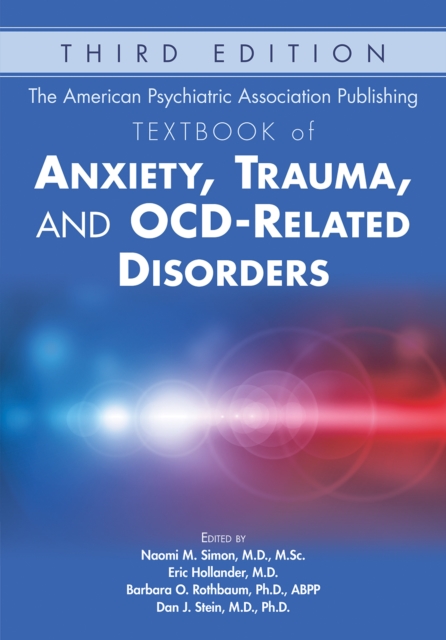
The American Psychiatric Association Publishing Textbook of Anxiety, Trauma, and OCD-Related Disorders
Designed for clinicians at every level, The American Psychiatric Association Publishing Textbook of Anxiety, Trauma, and OCD-Related Disorders addresses the origin, assessment, diagnosis, and treatment of these disorders in a comprehensive, up-to-date, and compelling manner. Fresh voices are everywhere in this authoritative revision of the classic text, as more than 60% of the contributors are new. They join stalwarts from the previous edition -- experts who bring stellar credentials and a discerning eye to the task of revising the text to reflect cutting-edge scholarship and evidence-based clinical knowledge. Following a comprehensive overview of core principles, the book provides detailed coverage of specific DSM-5 diagnoses: generalized anxiety disorder, obsessive-compulsive and related disorders, panic disorder and agoraphobia, social anxiety disorder, specific phobia, and trauma- and stressor-related disorders. Each section presents the latest thinking on phenomenology and pathogenesis, then provides evidence-based clinical recommendations for pharmacotherapy and psychotherapy.
New and noteworthy material includes the following: • Two new chapters focus on the features, phenomenology, and course of acute and integrated grief, as well as the epidemiology, clinical features, evaluation, and pathophysiology of complicated grief (CG), which affects a significant minority. Proper treatment of CG is critical, because once it persists beyond 6 months, impairment may last for years, if not a lifetime. Accordingly, a separate chapter is devoted to treatment options, including a hybrid of cognitive-behavioral, interpersonal, motivational interviewing, and psychodynamic methods.• The Unified Protocol (UP) for Transdiagnostic Treatment of Emotional Disorders is examined in a fascinating new chapter. The UP is a promising treatment with empirical support for reduction of both symptoms and higher-order temperamental changes, such as changes in neuroticism, an underlying mechanism associated with onset and maintenance of emotional disorders.• The chapter on anxiety disorders in late life is completely new and emphasizes the prevalence of anxiety in this population and its likelihood of remaining undetected and untreated. The epidemiology, diagnosis, and treatment of these disorders are examined in detail so that the reader will recognize the clinical features, be able to differentiate them from depression, and can identify appropriate treatment, whether pharmacological or psychotherapeutic.• Each chapter features a concise list of key clinical points to help the reader focus on the most important material for study, as well as a list of recommended reading for those who wish to learn more.
Grounded in the latest research, clinically rich, and pedagogically strong, The American Psychiatric Association Publishing Textbook of Anxiety, Trauma, and OCD-Related Disorders is the go-to text for mental health clinicians looking for evidence-based knowledge and support.
eBook
Obsessive-Compulsive and Related Disorders
The second edition of this successful pocketbook has been updated to include new developments in the diagnosis and management of patients with obsessive-compulsive and related disorders. The revised text also summarizes the implications of the publication of DSM-5 on clinical practice.
eBook
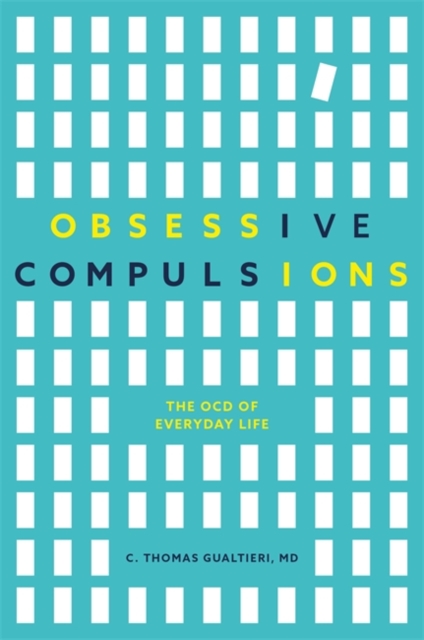
Obsessive Compulsions
Combining up-to-date science with anecdotal witticisms, this groundbreaking book explores obsessive-compulsive traits. It looks at the cause of these traits in the brain, and how we can manage them day-to-day. Discussing the link between brain evolution and obsessive traits, this is a highly insightful and original look into common compulsions.
eBook
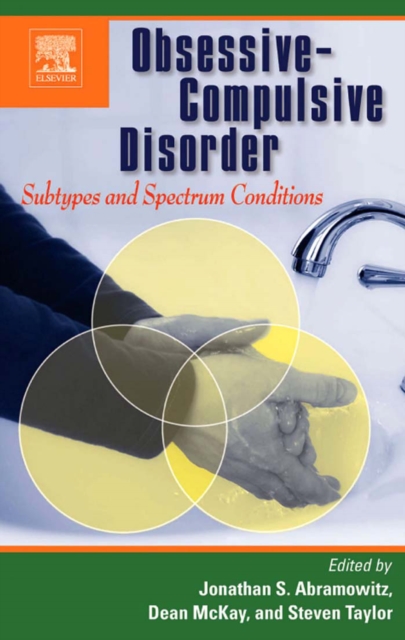
Obsessive-compulsive disorder: subtypes and spectrum conditions
Researchers and clinicians working with Obsessive-Compulsive Disorders (OCD) and related disorders who need the most current information available will find this volume of great use. This work covers contemporary theory, research, and treatment of the various subtypes of OCD and problems often referred to as OCD spectrum disorders. As the mental health field considers the next iteration of the DSM, an entire research agenda is being planned to elucidate issues such as how best to understand and classify OCD. The questions of subtypes and spectrum disorders are at the heart of this issue and will guide how OCD is conceptualized in DSM-V. This volume, dedicated to such diagnostic, theoretical, and treatment issues, helps informs the field of the most up-to-date knowledge and what remains to be resolved. * Deconstructs OCD into its subtypes* Reviews current research and treatment for these problems* Considers how OCD will be conceptualized in DSM-V* Represents an international scope with contributions from field experts in psychology, psychiatry, and social work* Includes critical discussion of the OCD subtype and OCD spectrum concepts
eBook

OCD and Autism
This step-by-step manual explains how to adapt CBT (Cognitive Behaviour Therapy) approaches to OCD (Obsessive Compulsive Disorder) for autistic children and adults. It outlines why there is the need to adapt treatment for the autistic population, and includes detailed guidance on each phase of the approach.
It explains assessment of OCD in autism, the links between the two conditions and difficulties in identifying aspects of OCD in autistic people. The book offers advice on dealing with difficult issues and on the next steps after treatment is complete. Accompanying worksheets and handouts are available to download.
eBook