
Catalogue Search | MBRL


Are you sure you want to remove the book from the shelf?

{{itemTitle}}
5,041
result(s) for
"Flowers History."
Sort by:


Blooming Flowers
An evocative and richly illustrated exploration of flowers and how, over the centuries, they have given us so much sustenance, meaning, and pleasure The bright yellow of a marigold and the cheerful red of a geranium, the evocative fragrance of a lotus or a saffron-infused paella-there is no end of reasons to love flowers. Ranging through the centuries and across the globe, Kasia Boddy looks at the wealth of floral associations that has been passed down in perfumes, poems, and paintings; in the design of buildings, clothes, and jewelry; in songs, TV shows, and children's names; and in nearly every religious, social, and political ritual. Exploring the first daffodils of spring and the last chrysanthemums of autumn, this is also a book about seasons. In vibrant detail and drawing on a rich array of illustrations, Boddy considers how the sunflower, poppy, rose, lily-and many others-have given rise to meaning, value, and inspiration throughout history, and why they are integral to so many different cultures.
eBook


Holland Flowering
Worldwide, the indelible image of the Netherlands is the tulip. But the tulip is not alone: flowers of all kinds have long been a key part of both the Dutch identity and the Dutch economy, and inHolland Flowering, Andrew Gebhardt offers a dazzling tour of Dutch flower culture, from the earliest days of horticulture to attempts to grow bulbs on the moon.Building his account around the world's largest flower auction, Aalsmeer's, which is located near Amsterdam, Gebhardt links past and present, petals and painting, colonial trading and the European Union. The resulting book is as unusual as it is ambitious, full of insights into horticulture, the workings of markets, globalization, aesthetics, and Dutch popular culture.
eBook
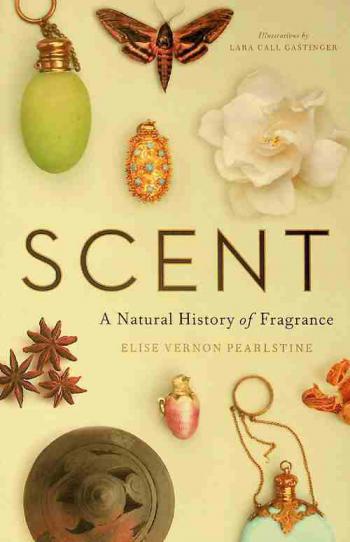
Scent : a natural history of fragrance
In this wide-ranging and accessible new book, biologist-turned-perfumer Elise Vernon Pearlstine turns our human-centered perception of fragrance on its head and investigates plants' evolutionary reasons for creating aromatic molecules. Delving into themes of spirituality, wealth, power, addiction, royalty, fantasy, and more, Pearlstine uncovers the natural history of aromatic substances and their intersection with human culture and civilization.

Flowers that kill : communicative opacity in political spaces
Flowers are beautiful. People often communicate their love, sorrow, and other feelings to each other by offering flowers, like roses. Flowers can also be symbols of collective identity, as cherry blossoms are for the Japanese. But, are they also deceptive? Do people become aware when their meaning changes, perhaps as flowers are deployed by the state and dictators? Did people recognize that the roses they offered to Stalin and Hitler became a propaganda tool? Or were they like the Japanese, who, including the soldiers, did not realize when the state told them to fall like cherry blossoms, it meant their deaths?
Flowers That Kill proposes an entirely new theoretical understanding of the role of quotidian symbols and their political significance to understand how they lead people, if indirectly, to wars, violence, and even self-exclusion and self-destruction precisely because symbolic communication is full of ambiguity and opacity. Using a broad comparative approach, Emiko Ohnuki-Tierney illustrates how the aesthetic and multiple meanings of symbols, and at times symbols without images become possible sources for creating opacity which prevents people from recognizing the shifting meaning of the symbols.
eBook


Floral Culture and the Tudor and Stuart Courts
At court, flowers coloured, scented, adorned, sustained, nourished, and enthralled. These interdisciplinary essays engage with flowers as real, artificial, and represented objects across the Tudor and Stuart courts in gardens, literature, painting, interior furnishing, garments, and as jewels, medicine, and food. Situating this burgeoning floral culture within a European floral revolution of science, natural history, global trade, and colonial expansion, they reveal the court's distinctive floral identity and history. If the rose operated as a particularly English lingua franca of royal power across two dynasties, this volume sheds light on an array of wild and garden flowers to offer an immersive picture of how the Tudor and Stuart courts lived and functioned, styled and displayed themselves through flowers. It contributes to a revival of interest in the early modern green world and provides a focused view of a court and court culture that used and revelled in blooms.
eBook

Floral jewels : from the world's leading designers
This volume highlights hundreds of examples of the finest floral jewellery ever made. Divided into the four seasons - and the flowers that bloom in them - it explores the history of flowers in the fine jewellery world and features dazzling illustrations, original sketches and gouache paintings showing how these blooms have been translated into pieces that are both priceless and ageless.
Book

Visible empire
Between 1777 and 1816, botanical expeditions crisscrossed the vast Spanish empire in an ambitious project to survey the flora of much of the Americas, the Caribbean, and the Philippines. While these voyages produced written texts and compiled collections of specimens, they dedicated an overwhelming proportion of their resources and energy to the creation of visual materials. European and American naturalists and artists collaborated to manufacture a staggering total of more than 12,000 botanical illustrations. Yet these images have remained largely overlooked—until now.
In this lavishly illustrated volume, Daniela Bleichmar gives this archive its due, finding in these botanical images a window into the worlds of Enlightenment science, visual culture, and empire. Through innovative interdisciplinary scholarship that bridges the histories of science, visual culture, and the Hispanic world, Bleichmar uses these images to trace two related histories: the little-known history of scientific expeditions in the Hispanic Enlightenment and the history of visual evidence in both science and administration in the early modern Spanish empire. As Bleichmar shows, in the Spanish empire visual epistemology operated not only in scientific contexts but also as part of an imperial apparatus that had a long-established tradition of deploying visual evidence for administrative purposes.
eBook