
Catalogue Search | MBRL


Are you sure you want to remove the book from the shelf?

{{itemTitle}}
148
result(s) for
"Fly tying."
Sort by:

The feather bender's flytying techniques : a comprehensive guide to classic and modern trout flies
A comprehensive, lavishly illustrated guide to tying popular trout flies. This book is aimed at all fly tyers, from those with modest experience to those with more advanced skills. The authors intention is to focus on certain important elementary techniques, and then share some of his favorite contemporary twists on old, tried-and-true techniques. Many of the flies in this book are based in his own techniques and patterns, ones that he has developed in more than thirty-five years of tying. The book is arranged in sections to give readers the opportunity to easily locate the pattern or technique they are looking for. Patterns are not grouped alphabetically, but by technique. For example, the section on dry flies has categories demonstrating a particular dry fly style or technique such as mastering the use of deer hair, parachute, CDC, and so on. If you are fairly new to fly tying, the opening chapters on materials and special techniques and tricks will familiarize you with some basics and help you get started. Seasoned tyers will similarly find information here to help them raise their tying skills to a new level. Each pattern is listed with a recipe, recommended hook style, size, and materials. They are listed in the order that that author uses them, and illustrated by the books step-by-step images. This will help you plan each pattern and assemble materials your beforehand.
BOOK
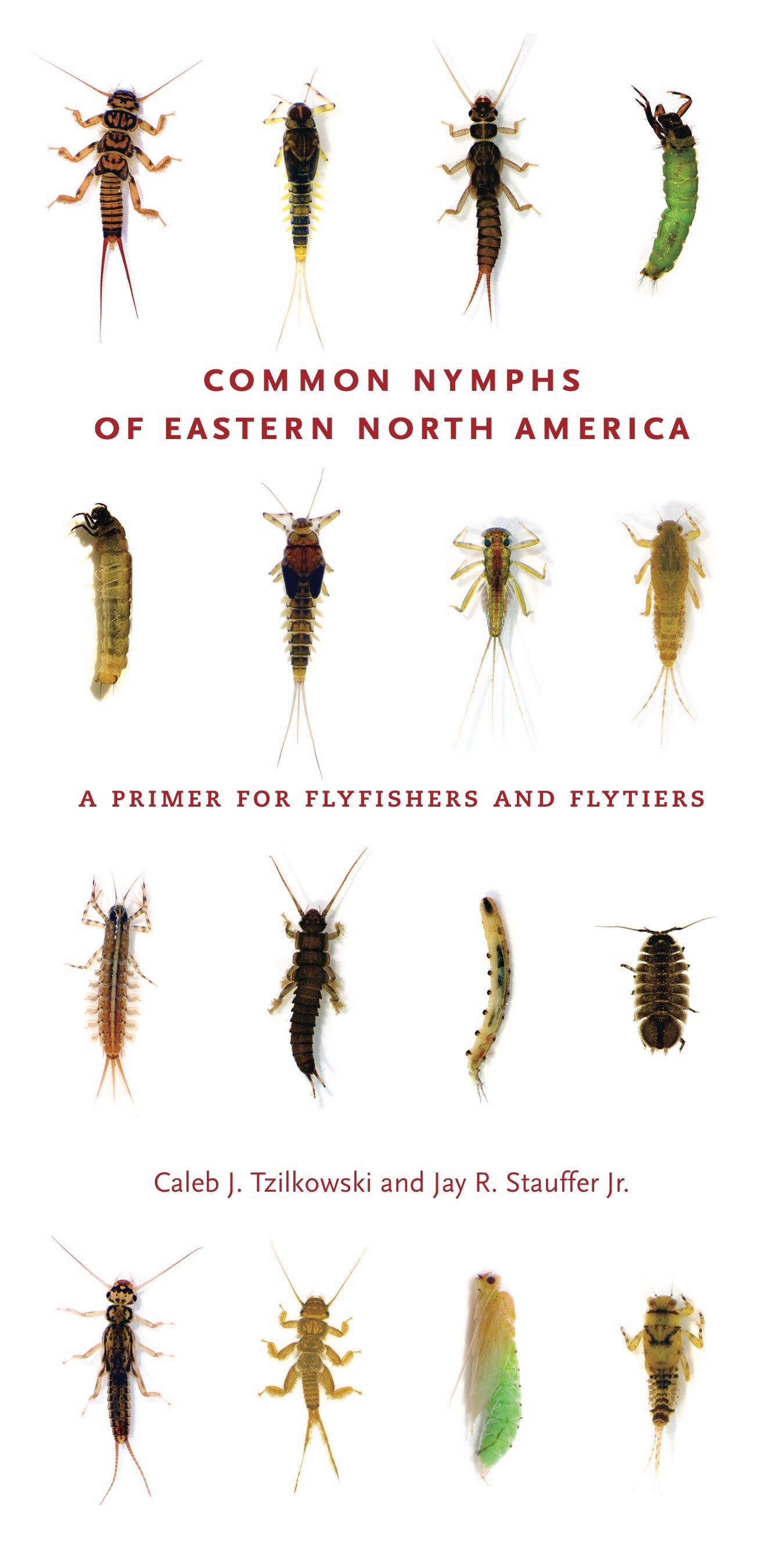
Common Nymphs of Eastern North America
Although the concept of \"matching the hatch\" has been central to
flyfishing for 150 years, it has been used almost exclusively for
dry flyfishing. With Common Nymphs of Eastern North America: A
Primer for Flyfishers and Flytiers , Caleb Tzilkowski and Jay
Stauffer Jr. take trout enthusiasts in another hatch-matching
direction-to the year-round underwater nymph \"hatch,\" which, in
most cases, constitutes 90 percent of trout diets.
Successful flyfishers have at least rudimentary knowledge of the
organisms that artificial flies imitate. The relatively few and
very best anglers are expert at identifying and imitating nymph
appearances and habits. A major hurdle to becoming expert at nymph
matching is overcoming two major limitations that make these
animals difficult to locate, capture, and identify: first, nymphs
live underwater, sometimes burrowed into the stream bottom, and
second, many nymphs are nearly microscopic in size. Common
Nymphs addresses those challenges by including habitat and
life history information regarding the nymphs, tips for their
identification, and representative high-resolution photographs of
more than thirty types of aquatic organisms and their
imitations.
In the seemingly saturated flyfishing literature, this book
offers something truly groundbreaking. With state-of-the-art
microscopy and their years of scientific and practical experience,
Tzilkowski and Stauffer provide readers an innovative close-up look
at identifying and imitating nymphs that have been historically
underrepresented in the flyfishing and flytying literature.
eBook


Tying locally
Most of us Adirondack aficionados feel we are environmentally and economically up-to-date. We know what buying locally means, even if we don't always find it possible. We wait for berries not flown in from Chile. We stock up on locally grown produce at the farm stand down the road. We buy a Hornbeck or Placid Boatworks canoe, rather than an Old Town or Mad River. And we eat lots of apples in the fall.
Journal Article