
Catalogue Search | MBRL


Are you sure you want to remove the book from the shelf?

{{itemTitle}}
157
result(s) for
"Folk literature, African History and criticism."
Sort by:


Contemporary Oral Literature Fieldwork
Contemporary Oral Literature Fieldwork is based on rich research experience dating back to the 1990s.The book is written against the backdrop of Africa�s confusion with regard to the place of oral literature in the face of the rest of the world, where oral literature exists in conjunction with new literary forms.
eBook


Oral Literature in Africa
Ruth Finnegan’s Oral Literature in Africa was first published in 1970, and since then has been widely praised as one of the most important books in its field. Based on years of fieldwork, the study traces the history of storytelling across the continent of Africa. This revised edition makes Finnegan’s ground-breaking research available to the next generation of scholars. It includes a new introduction, additional images and an updated bibliography, as well as its original chapters on poetry, prose, \"drum language\" and drama, and an overview of the social, linguistic and historical background of oral literature in Africa. Oral Literature in Africa has been accessed by hundreds of readers in over 60 different countries, including Ethiopia, Kenya, Rwanda and numerous other African countries. The digital editions of this book are free to download thanks to the generous support of interested readers and organisations, who made donations using the crowd-funding website Unglue.it. Oral Literature in Africa is part of our World Oral Literature Series in conjunction with the World Oral Literature Project.
eBook

Black Folklore and the Politics of Racial Representation
Before the innovative work of Zora Neale Hurston, folklorists
from the Hampton Institute collected, studied, and wrote about
African American folklore. Like Hurston, these folklorists worked
within but also beyond the bounds of white mainstream institutions.
They often called into question the meaning of the very folklore
projects in which they were engaged.
Shirley Moody-Turner analyzes this output, along with the
contributions of a disparate group of African American authors and
scholars. She explores how black authors and folklorists were
active participants--rather than passive observers--in
conversations about the politics of representing black folklore.
Examining literary texts, folklore documents, cultural
performances, legal discourse, and political rhetoric, Black
Folklore and the Politics of Racial Representation
demonstrates how folklore studies became a battleground across
which issues of racial identity and difference were asserted and
debated at the turn of the twentieth century. The study is framed
by two questions of historical and continuing import. What role
have representations of black folklore played in constructing
racial identity? And, how have those ideas impacted the way African
Americans think about and creatively engage black traditions?
Moody-Turner renders established historical facts in a new light
and context, taking figures we thought we knew--such as Charles
Chesnutt, Anna Julia Cooper, and Paul Laurence Dunbar--and
recasting their place in African American intellectual and cultural
history.
eBook

Born in a mighty bad land : the violent man in African American folklore and fiction
The figure of the violent man in the African American imagination has a long history. He can be found in 19th-century bad man ballads like Stagolee and John Hardy, as well as in the black convict recitations that influenced gangsta rap. Born in a Mighty Bad Land connects this figure with similar characters in African American fiction. Many writers -- McKay and Hurston in the Harlem Renaissance; Wright, Baldwin, and Ellison in the '40s and '50s; Himes in the '50s and '60s -- saw the bad nigger as an archetypal figure in the black imagination and psyche. Blaxploitation novels in the '70s made him a virtually mythical character. More recently, Mosley, Wideman, and Morrison have presented him as ghetto philosopher and cultural adventurer. Behind the folklore and fiction, many theories have been proposed to explain the source of the bad man's intra-racial violence. Jerry H. Bryant explores all of these elements in a wide-ranging and illuminating look at one of the most misunderstood figures in African American culture.
eBook

Natures of Africa
Environmental and animal studies are rapidly growing areas of interest across a number of disciplines. Natures of Africa is one of the first edited volumes which encompasses transdisciplinary approaches to a number of cultural forms, including fiction, non-fiction, oral expression and digital media. The volume features new research from East Africa and Zimbabwe, as well as the ecocritical and eco-activist ‘powerhouses’ of Nigeria and South Africa. The chapters engage one another conceptually and epistemologically without an enforced consensus of approach. In their conversation with dominant ideas about nature and animals, they reveal unexpected insights into forms of cultural expression of local communities in Africa. The analyses explore different apprehensions of the connections between humans, animals and the environment, and suggest alternative ways of addressing the challenges facing the continent. These include the problems of global warming, desertification, floods, animal extinctions and environmental destruction attendant upon fossil fuel extraction. There are few books that show how nature in Africa is represented, celebrated, mourned or commoditised. Natures of Africa weaves together studies of narratives – from folklore, travel writing, novels and popular songs – with the insights of poetry and contemporary reflections of Africa on the worldwide web. The chapters test disciplinary and conceptual boundaries, highlighting the ways in which the environmental concerns of African communities cannot be disentangled from social, cultural and political questions. This volume draws on and will appeal to scholars and teachers of oral tradition and indigenous cultures, literature, religion, sociology and anthropology, environmental and animal studies, as well as media and digital cultures in an African context.
eBook

Gladys-Marie Fry's Night Riders in Black Folk History: Critical Race Theory and Black Folklore Practice
Gladys-Marie Fry's Night Riders in Black Folk History is a foundational text at the intersection of folklore studies and critical race studies. Published in 1975, Fry's work centers analyses of race and gender in collecting and explicating Black folk practices and stories related to the supernatural. Fry's attention to the operations of white supremacist practices grounds her assertion that Black folk practices and supernatural beliefs were, in part, a response to racist efforts to exert psychological and economic control over African Americans during and after slavery. Fry's method of collecting oral histories, as well as her attention to the operations of race and gender, call on us to re-engage with the critical contributions of this foundational text.
Journal Article
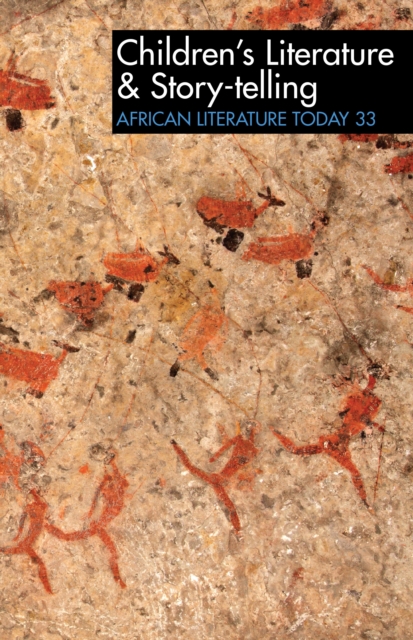
Children's literature & story-telling: African literature today 33
Africa's encounter with the West and its implications and consequences remain far-reaching and enduring in the craft and thrust of its creative writers. The contributors to ALT 33 analyse the connections between traditional stories and myths that have been told to children, as well as the work of contemporary creative writers who are writing for children in order that they understand this complex history. Some of these writers are developing traditional myths, folk tales, and legends and are writing them in new forms, while others focus on the encounter with the West that has dominated much modern African literature for adults. The previous neglect of the cultural significance, study, criticism and teaching of children's literature is addressed in this volume: How can the successes and/or failures of stories and story-telling for children in Africa be measured? Are there models to be followed and what makes them models? What is the relationship between the text and the illustration of children's books? What should guide the reader or critic of children's literature coming out of Africa - globalism, transculturality or internal regionalism? What problems confront teachers, students, publishers and promoters of children's books in Africa? Ernest Emenyonu is Professor of Africana Studies at the University of Michigan-Flint, USA; the editorial board is composed of scholars from US, UK and African universities. Reviews Editor: Obi Nwakanma HEBN: Nigeria
eBook
(Re)Making the Folk: Black Representation and the Folk in Early American Folklore Studies
This article details the origins of American folklore studies by examining how “the folk” were repeatedly equated to Black Americans and how folklore was used as a measure of African Americans’ post-emancipation “progress.” Attending to discussions of Black representation in the late nineteenth century, I explore how (1) African Americans were positioned as the folk and (2) how African Americans (re)positioned themselves in discourses of “Blackness” and “folkness.”
Journal Article