
Catalogue Search | MBRL


Are you sure you want to remove the book from the shelf?

{{itemTitle}}
22
result(s) for
"Folk literature, Arabic History and criticism."
Sort by:


Exploring Arab Folk Literature
The character and range of Arab folk literature are investigated by Pierre Cachia in this collection of essays. He looks at historical developments in the relationship between Arab folk literature and that of the elite, the gradual elaboration of certain genres, and the producers of folk literature.
eBook

The man of wiles in popular Arabic literature : a study of a medieval Arab hero
The Man of Wiles (otherwise known as the Master Thief, the Trickster or the Fool) appears in every hero cycle within classical Arabic literature - proof of this figure's popularity with the audiences of Arab story-tellers. He embodies views acceptable to an otherwise inarticulate part of the population, allowing Islam to be treated in a paradoxical and sometimes humorous light in contrast to conventional piety. And he shares with Odysseus not only his wiles but his function as 'the sacker of cities', redressing the idea that classical Arabic literature is unrelated to anything outside its own borders. The study of this popular form sets out in detail the recorded lives of these Men of Wiles for those to whom the original texts are not available. -- Jacket.
Book

Storytelling in Chefchaouen Northern Morocco
Storytelling in Chefchaouen Northern Morocco includes two sets of tales told by two different storytellers with an annotated study of the oral performance, transliterations and translations. The purpose is to preserve a part of the region's oral tradition of storytelling in the vernacular language in which it has been transmitted, presenting the original texts with parallel English translation. In addition, the cultural, literary, and linguistic background necessary for understanding this body of oral performance is given. A combination of disciplines (anthropology, philology, sociolinguistics, dialectology, comparative literature, ethnography, typology) is applied to the linguistic and literary features of the present corpus.
eBook
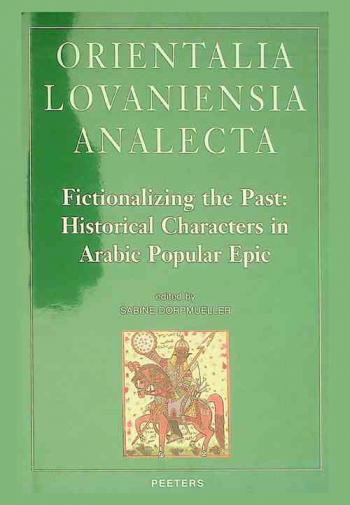
Fictionalizing the past : historical characters in Arabic popular epic : workshop held at the Netherlands-Flemish Institute in Cairo, 28th-29th of November 2007 : in honor of Remke Kruk
The present collection of articles deals with the relation between the Arabic popular epic and 'official' historiography. The Arabic popular epic can be considered as popular history since it represents a way in which a large, but mainly illiterate audience perceives, conceptualizes and commemorates history. Using methods based in literary criticism, modern research has come up with new and refreshing approaches to study the historicity of the heroic literature. The contributors to this volume are all experts in the field of the Arabic popular epic. They examine which narrative structures popular epics share with historiography and how historical characters and events are fictionalized in order to create the story. Each contribution deals with a different epic, including Sirat 'Antar, Sayf ibn Dhi Yazan, al-Iskandar, al-Amira Dhat al-Himma, al-Zahir Baybars, Bani Hilal, and epics in the Thousand and One Nights. One so far rather unknown epic, the Sirat al-Hakim bi-Amrillah, is discussed here in detail for the first time.
Book

Jewish Moroccan folk narratives from Israel
Jewish Moroccan Folk Narratives focuses on two central elements: textual research to examine the aesthetic qualities of the narrative, their division into genres, the various versions and their parallels, and acculturation in Israel, as well as contextual research to examine the performance art of the narrator and the role of the narrative as a communicative process in the narrating society. The collection includes twenty-one narratives by twelve storytellers; an account of the narrators' lives and a commentary have been applied to each. In contrast to most anthologies of Jewish folktales, the texts in this book were recorded in the natural context of narration and in the language of origin (Judaeo-Arabic), meeting the most vigorous standards of current folklore scholarship.
eBook

Jewish Moroccan Folk Narratives from Israel
Jewish Moroccan Folk Narratives focuses on two central elements: textual research to examine the aesthetic qualities of the narrative, their division into genres, the various versions and their parallels, and acculturation in Israel, as well as contextual research to examine the performance art of the narrator and the role of the narrative as a communicative process in the narrating society. The collection includes twenty-one narratives by twelve storytellers; an account of the narrators' lives and a commentary have been applied to each. In contrast to most anthologies of Jewish folktales, the texts in this book were recorded in the natural context of narration and in the language of origin (Judaeo-Arabic), meeting the most vigorous standards of current folklore scholarship.
eBook
