
Catalogue Search | MBRL


Are you sure you want to remove the book from the shelf?

{{itemTitle}}
498
result(s) for
"Folklore China"
Sort by:

The Chinese wonder book : a classic collection of Chinese tales
The Chinese Wonder Book contains some of the most beloved tales of China, including 'Why the Dog Hates the Cat, ' 'The Great Bell, ' 'The Strange Tale of Doctor Dog' and 'The Talking Fish.' Originally published in 1919, this book has served as an introduction to the folk tales of classical China for generations of readers. The full-color illustrations originally published in the book's first edition are included, along with a new foreword by Sylvia Li-chun Lin, introducing the book and the amazing culture of Chinese folktales to modern readers.
Book
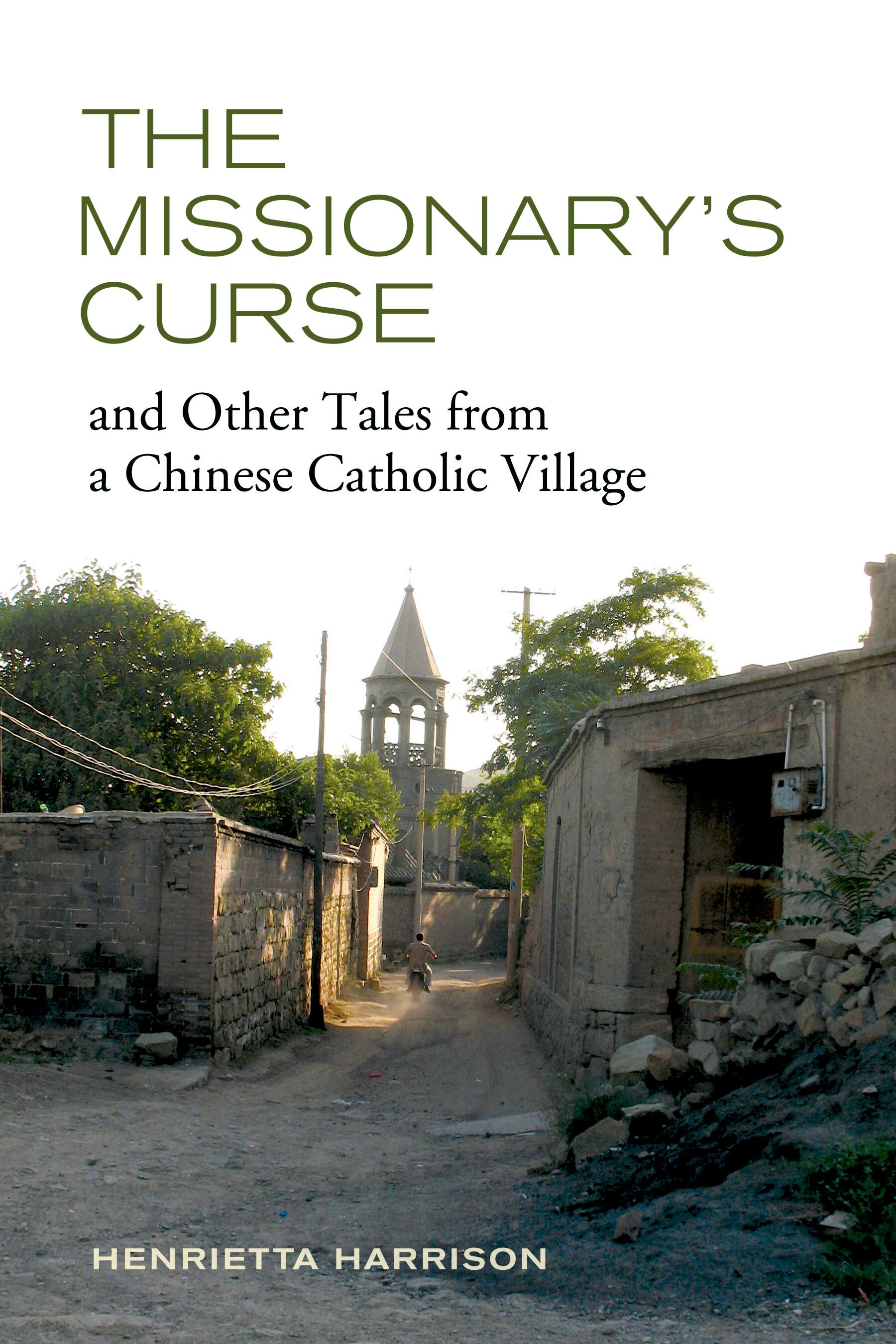
The missionary's curse and other tales from a Chinese Catholic village
The Missionary’s Curse tells the story of a Chinese village that has been Catholic since the seventeenth century, drawing direct connections between its history, the globalizing church, and the nation. Harrison recounts the popular folk tales of merchants and peasants who once adopted Catholic rituals and teachings for their own purposes, only to find themselves in conflict with the orthodoxy of Franciscan missionaries arriving from Italy. The village’s long religious history, combined with the similarities between Chinese folk religion and Italian Catholicism, forces us to rethink the extreme violence committed in the area during the Boxer Uprising. The author also follows nineteenth century Chinese priests who campaigned against missionary control, up through the founding of the official church by the Communist Party in the 1950s. Harrison’s in-depth study provides a rare insight into villager experiences during the Socialist Education Movement and Cultural Revolution, as well as the growth of Christianity in China in recent years. She makes the compelling argument that Catholic practice in the village, rather than adopting Chinese forms in a gradual process of acculturation, has in fact become increasingly similar to those of Catholics in other parts of the world.
eBook

The Water Dragon : a Chinese legend
A little boy, Ah Bao sets off in search of the Water Dragon, to save his village from a mysterious drought.
Book
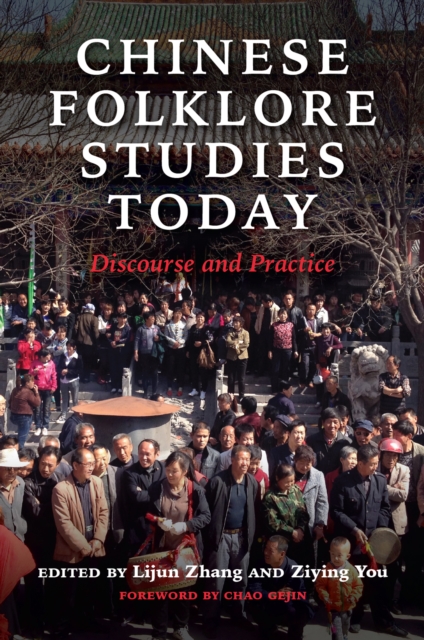
Chinese folklore studies today : discourse and practice
Chinese folklorists are well acquainted with the work of their English-language colleagues, but until recently the same could not be said about American scholars' knowledge of Chinese folkloristics. Chinese Folklore Studies Today aims to address this knowledge gap by illustrating the dynamics of contemporary folklore studies in China as seen through the eyes of the up-and-coming generation of scholars.
eBook

Chinese folklore studies today : discourse and practice
\"Folklorists are well acquainted with the work of their English-language colleagues, but until recently the same could not be said about American scholars' knowledge of Chinese folkloristics. Chinese Folklore Studies Today aims to address this knowledge gap by illustrating the dynamics of contemporary folklore studies in China as seen through the eyes of the up-and-coming generation of scholars\"--Provided by publisher.
Book

A Chinese Bestiary
A Chinese Bestiary presents a fascinating pageant of
mythical creatures from a unique and enduring cosmography written
in ancient China. The Guideways through Mountains and
Seas, compiled between the fourth and first centuries b.c.e.,
contains descriptions of hundreds of fantastic denizens of
mountains, rivers, islands, and seas, along with minerals, flora,
and medicine. The text also represents a wide range of beliefs held
by the ancient Chinese. Richard Strassberg brings the
Guideways to life for modern readers by weaving together
translations from the work itself with information from other texts
and recent archaeological finds to create a lavishly illustrated
guide to the imaginative world of early China. Unlike the
bestiaries of the late medieval period in Europe, the
Guideways was not interpreted allegorically; the strange
creatures described in it were regarded as actual entities found
throughout the landscape. The work was originally used as a sacred
geography, as a guidebook for travelers, and as a book of omens.
Today, it is regarded as the richest repository of ancient Chinese
mythology and shamanistic wisdom. The Guideways may have
been illustrated from the start, but the earliest surviving
illustrations are woodblock engravings from a rare 1597 edition.
Seventy-six of those plates are reproduced here for the first time,
and they provide a fine example of the Chinese engraver's art
during the late Ming dynasty. This beautiful volume, compiled by a
well-known specialist in the field, provides a fascinating window
on the thoughts and beliefs of an ancient people, and will delight
specialists and general readers alike.
eBook

Shen of the sea : Chinese stories for children
Sixteen original stories reflecting the spirit of Chinese life and thought.
Book

The Flood Myths of Early China
Early Chinese ideas about the construction of an ordered human space received narrative form in a set of stories dealing with the rescue of the world and its inhabitants from a universal flood. This book demonstrates how early Chinese stories of the re-creation of the world from a watery chaos provided principles underlying such fundamental units as the state, lineage, the married couple, and even the human body. These myths also supplied a charter for the major political and social institutions of Warring States (481–221 BC) and early imperial (220 BC–AD 220) China.
In some versions of the tales, the flood was triggered by rebellion, while other versions linked the taming of the flood with the creation of the institution of a lineage, and still others linked the taming to the process in which the divided principles of the masculine and the feminine were joined in the married couple to produce an ordered household. While availing themselves of earlier stories and of central religious rituals of the period, these myths transformed earlier divinities or animal spirits into rulers or ministers and provided both etiologies and legitimation for the emerging political and social institutions that culminated in the creation of a unitary empire.
eBook
The lost horse : a Chinese folktale
A retelling of the tale about a Chinese man who owned a marvelous horse and who believed that things were not always as bad, or as good, as they might seem.
Book
