
Catalogue Search | MBRL


Are you sure you want to remove the book from the shelf?

{{itemTitle}}
136
result(s) for
"Folklore Great Britain."
Sort by:

Between worlds : folktales of Britain & Ireland
\"Ancient, rich, and strange, these magical and eerie tales from across Britain and Ireland have been passed down from generation to generation. At once dark and funny, lyrical yet earthy, these stories have influenced our landscape and culture. This definitive collection, retold by master storyteller and poet Kevin Crossley-Holland, opens a doorway to a lost world and shows the enduring power of language and imagination.\"--Jacket flap.
Book

Strange and secret peoples : fairies and Victorian consciousness
Teeming with creatures, both real and imagined, this encyclopedic study in cultural history illuminates the hidden web of connections between the Victorian fascination with fairies and their lore and the dominant preoccupations of Victorian culture at large. Carole Silver here draws on sources ranging from the anthropological, folkloric, and occult to the legal, historical, and medical. She is the first to anatomize a world peopled by strange beings who have infiltrated both the literary and visual masterpieces and the minor works of the writers and painters of that era. Examining the period of 1798 to 1923, Strange and Secret Peoples focuses not only on such popular literary figures as Charles Dickens and William Butler Yeats, but on writers as diverse as Thomas Carlyle, Arthur Conan Doyle, and Charlotte Mew; on artists as varied as mad Richard Dadd, Aubrey Beardsley, and Sir Joseph Noel Paton; and on artifacts ranging from fossil skulls to photographs and vases. Silver demonstrates how beautiful and monstrous creatures--fairies and swan maidens, goblins and dwarfs, cretins and changelings, elementals and pygmies--simultaneously peopled the Victorian imagination and inhabited nineteenth-century science and belief. Her book reveals the astonishing complexity and fertility of the Victorian consciousness: its modernity and antiquity, its desire to naturalize the supernatural, its pervasive eroticism fused with sexual anxiety, and its drive for racial and imperial dominion.
eBook

No pie, no priest : a journey through the folk sports of Britain
A warm and witty insight into the folk sports of Britain that were left behind, but still survive.
Book

Imagining the Pagan Past
Imagining the Pagan Past explores stories of Britain's pagan history. These tales have been characterised by gods and fairies, folklore and magic. They have had an uncomfortable relationship with the scholarly world; often being seen as historically dubious, self-indulgent romance and, worse, encouraging tribal and nationalistic feelings or challenging church and state.
This book shows how important these stories are to the history of British culture, taking the reader on a lively tour from prehistory to the present. From the Middle Ages to the twenty-first century, Marion Gibson explores the ways in which British pagan gods and goddesses have been represented in poetry, novels, plays, chronicles, scientific and scholarly writing. From Geoffrey of Monmouth to Edmund Spenser, William Shakespeare to Seamus Heaney and H.G. Wells to Naomi Mitchison it explores Romano-British, Celtic and Anglo-Saxon deities and fictions. The result is a comprehensive picture of the ways in which writers have peopled the British pagan pantheons throughout history.
Imagining the Pagan Past will be essential reading for all those interested in the history of paganism.
eBook

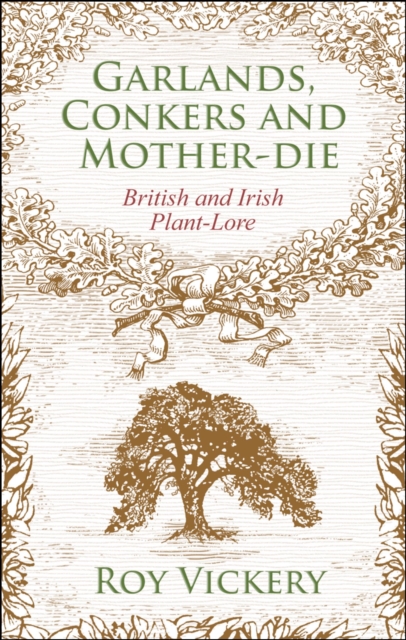
Garlands, Conkers and Mother-Die
Plants have had symbolic as well as practical meanings and uses since the beginning of human civilisation.This vivid account introduces readers to a rich variety of British and Irish plant folklore, drawing on Roy Vickery's own unsurpassed archives collated over forty years, and a wide range of historical and contemporary literature.
eBook

Storyland : a new mythology of Britain
Soaked in mist and old magic, 'Storyland' is a new illustrated mythology of Britain, set in its wildest landscapes. It begins between the Creation and Noah's Flood, follows the footsteps of the earliest generation of giants from an age when the children of Cain and the progeny of fallen angels walked the earth, to the founding of Britain, England, Wales and Scotland, the birth of Christ, the wars between Britons, Saxons and Vikings, and closes with the arrival of the Normans. These are retellings of medieval tales of legend, landscape and the yearning to belong, inhabited with characters now half-remembered: Brutus, Albina, Scota, Arthur and Bladud among them.
Book
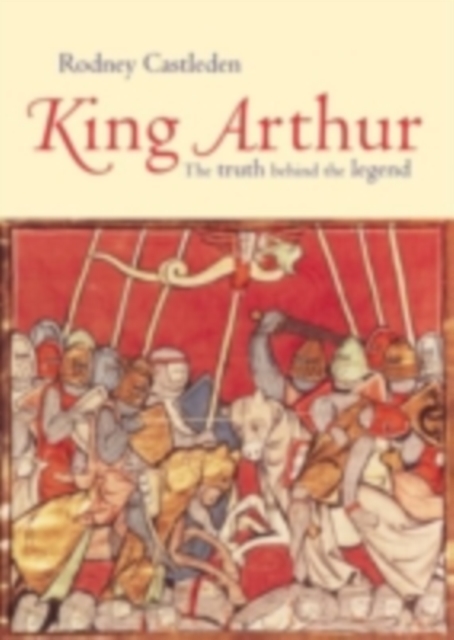
King Arthur
King Arthur is often written off as a medieval fantasy, the dream of those yearning for an age of strong, just rulers and a contented kingdom. Those who accept his existence at all generally discard the stories that surround him. This exciting new investigation argues not only that Arthur did exist, as a Dark Age chieftain, but that many of the romantic tales - of Merlin, Camelot and Excalibur - are rooted in truth.In his quest for the real King Arthur, Rodney Castleden uses up-to-date archaeological and documentary evidence to recreate the history and society of Dark Age Britain and its kings. He revives the possibility that Tintagel was an Arthurian legend, and proposes a radical new theory - that Arthur escaped alive from his final battle. A location is even suggested for perhaps the greatest mystery, the whereabouts of Arthur's grave.King Arthur: The Truth Behind the Legend offers a more complete picture of Arthur's Britain and his place in it than ever before. The book's bold approach and compelling arguments will be welcomed by all readers with an interest in Arthuriana.
eBook
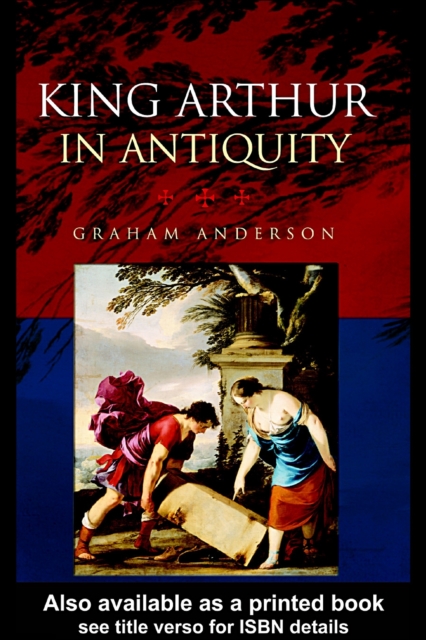
King Arthur in Antiquity
This original and compelling study argues against the traditional identification of Arthur as a king in Celtic Britain. Instead, Graham Anderson explores the evidence for two much older figures, known to classical writers as kings of Arcadia and Lydia, over a millenium before.
He shows how these kings can be clearly connected with traditional Arthurian characters and adventure, including an ancient Gawain, a Lady of Shallott, and a predecessor of Excalibur, and shows that the Arthurian universe found in Welsh tales and French romances is already anticipated in these earliest of Arthurian materials.
This radical reassessment of the Arthurian legends provides a new perspective on on age-old historical puzzle, and will provoke debate amongst Classical and Medieval scholars and Arthurian enthusiasts.
eBook