
Catalogue Search | MBRL


Are you sure you want to remove the book from the shelf?

{{itemTitle}}
569
result(s) for
"Folklore India"
Sort by:

Annapurna's bounty : Indian food legends retold
\"Feed your mind, body, heart, and soul with these reinvented food legends blessed by Annapurna, Indian Goddess of Nourishment. In this delicious collection, the stories explore food as ploy, bargain, symbolic communication, origin, profession, and bone of contention. Rediscover surprisingly relatable characters from history and legend. Stand by Parvati Bai, wife of the village headman, who must save her village from bandits. Witness the teasing friendship between Emperor Akbar and his problem-solving courtier, Birbal. Experience the anger and anguish of Goddess Parvati, who must put aside her quarrel with Lord Shiva to save a dying Earth. Follow the perilous journeys of Sambusak, an adventurer, and Arman, a refugee, from ancient Persia to India, over land and sea. Some of these stories leap into the present, connecting with twenty-first-century characters. Expertly blending ancient and modern, mystic and mundane, East and West, these delectable tales will banish negativity, to entertain and inspire in equal measure.\"-- Provided by publisher.
BOOK

In quest of Indian folktales : Pandit Ram Gharib Chaube and William Crooke
[A] rare piece of scholarly detective work. -- Margaret
Mills, Ohio State University In Quest of Indian Folktales
publishes for the first time a collection of northern Indian folktales from the late
19th century. Reputedly the work of William Crooke, a well-known folklorist and
British colonial official, the tales were actually collected, selected, and
translated by a certain Pandit Ram Gharib Chaube. In 1996, Sadhana Naithani
discovered this unpublished collection in the archive of the Folklore Society,
London. Since then, she has uncovered the identity of the mysterious Chaube and the
details of his collaboration with the famous folklorist. In an extensive
four-chapter introduction, Naithani describes Chaube's relationship to Crooke and
the essential role he played in Crooke's work, as both a native informant and a
trained scholar. By unearthing the fragmented story of Chaube's life, Naithani gives
voice to a new identity of an Indian folklore scholar in colonial India. The
publication of these tales and the discovery of Chaube's role in their collection
reveal the complexity of the colonial intellectual world and problematize our own
views of folklore in a postcolonial world.
eBook

The elephant's garden : a traditional Indian folktale
Jasmine's garden has the most delicious fruit in the village--but someone is eating all her beautiful apples and apricots, kiwis and kumquats, papayas and peaches. Determined to discover the thief's identity, Jasmine waits ... and waits. Little does she imagine that when he arrives, he'll lead her on a magical journey through the skies.
Book

I, Yantra
What does it mean to be human? I , Yantra examines ancient
Indian narratives about robots and mechanically constructed beings
to explore how their Hindu, Jain, and Buddhist authors approached
this question. Making translations of many of these texts available
in English for the first time, author Signe Cohen argues that they
shed considerable light on South Asian religious notions of
humanity, self, and agency. She also documents connections between
ancient and modern responses to the ethical problems of what
precisely constitutes a sentient being and what rights such a being
should have. Situated at the intersection of humanities and
bioethics, this cross-disciplinary study will be of interest to
scholars of South Asian languages and literature as well as
specialists in religion and technology.
eBook

Seven blind mice
In this retelling of the Indian fable entitled The blind men and the elephant, seven blind mice discover different parts of an elephant and argue about its appearance.
Book

Gender and Genre in the Folklore of Middle India
In Gender and Genre in the Folklore of Middle India, Joyce Burkhalter Flueckiger analyzes six representative Indian folklore genres from a single regional repertoire to show the influence of their intertextual relations on the composition and interpretation of artistic performance. Placing special emphasis on women’s rituals, she looks at the relationship between the framework and organization of indigenous genres and the reception of folklore performance. The regional repertoire under examination presents a strikingly female-centered world. Female performers and characters are active, articulate, and frequently challenge or defy expectations of gender. Men also confound traditional gender roles. Flueckiger includes the translations of two full performance texts of narratives sung by female and male storytellers respectively.
eBook
Birbal
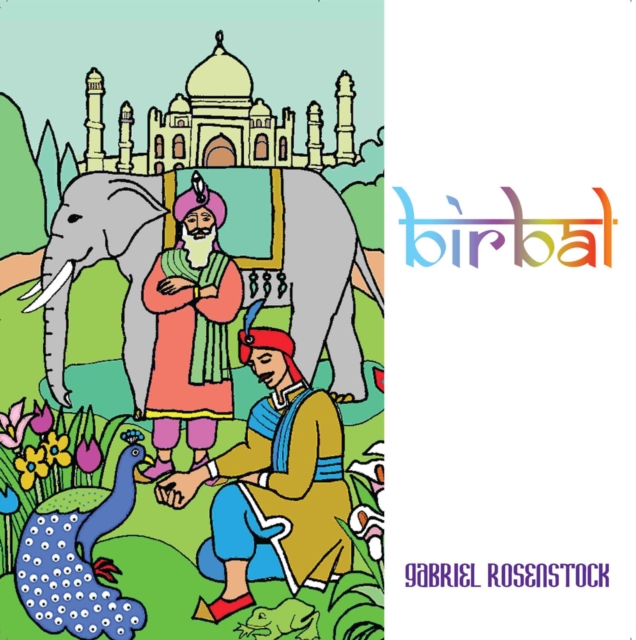
CErbh E Birbal? AmadAn cliste ba ea E agus cE gur mhair sE fadO tA siad fOs ag caint air - On Daingean go Darjeeling. ScEilInI gleoite faoi ainmhithe, faoi Ein agus faoi dhaoine. ScEilInI a ghealfaidh do chroI agus iad maisithe go haoibhinn ag Bob O Cathail.Who was Birbal? He was a clever fool, according to some, and although he lived a long long time ago, they're still talking about him, from Dingle to Darjeeling! Rosenstock previously delighted readers of Irish with retellings of tales concerning the holy fool Nasrudin. In this new book we encounter the loveable antics and sayings of the eponymous Birbal, one of the nine advisors of the 16th century Mughal emperor Akbar. A wonderful collection of beautiful traditional stories and proverbs from Indian folklore. Adapted from such sources as the Hitopadesha, Panchatantra and Jataka, the stories in this book are about all of life, with stories about animals, about birds and about people. Stories to lift the spirit, delightfully illustrated by Bob O Cathail.
eBook
The Speaking tree : celebrating the festivals of India
Selection by several authors previously published in the Speaking tree, column of the English daily, The Times of India.
Book
