
Catalogue Search | MBRL


Are you sure you want to remove the book from the shelf?

{{itemTitle}}
216
result(s) for
"Folklore Ireland."
Sort by:

Between worlds : folktales of Britain & Ireland
\"Ancient, rich, and strange, these magical and eerie tales from across Britain and Ireland have been passed down from generation to generation. At once dark and funny, lyrical yet earthy, these stories have influenced our landscape and culture. This definitive collection, retold by master storyteller and poet Kevin Crossley-Holland, opens a doorway to a lost world and shows the enduring power of language and imagination.\"--Jacket flap.
Book

Storytelling on the Northern Irish Border
More than quaint local color, folklore is a crucial part of life in Aghyaran, a mixed Catholic-Protestant border community in Northern Ireland. Neighbors socialize during wakes and ceilis-informal nighttime gatherings-without regard to religious, ethnic, or political affiliation. The witty, sometimes raucous stories swapped on these occasions offer a window into Aghyaran residents' views of self and other in the wake of decades of violent conflict. Through anecdotes about local characters, participants explore the nature of community and identity in ways that transcend Catholic or Protestant sectarian histories. Ray Cashman analyzes local character anecdotes in detail and argues that while politicians may take credit for the peace process in Northern Ireland, no political progress would be possible without ordinary people using shared resources of storytelling and socializing to imagine and maintain community.
eBook


Remembering the Year of the French
Remembering the Year of the French is a model of historical achievement, moving deftly between the study of historical events—the failed French invasion of the West of Ireland in 1798—and folkloric representationsof those events. Delving into the folk history found in Ireland’s rich oral traditions, Guy Beiner reveals alternate visions of the Irish past and brings into focus the vernacular histories, folk commemorative practices, and negotiations of memory that have gone largely unnoticed by historians. Beiner analyzes hundreds of hitherto unstudied historical, literary, and ethnographic sources. Though his focus is on 1798, his work is also a comprehensive study of Irish folk history and grass-roots social memory in Ireland. Investigating how communities in the West of Ireland remembered, well into the mid-twentieth century, an episode in the late eighteenth century, this is a “history from below” that gives serious attention to the perspectives of those who have been previously ignored or discounted. Beiner brilliantly captures the stories, ceremonies, and other popular traditions through which local communities narrated, remembered, and commemorated the past. Demonstrating the unique value of folklore as a historical source,
Remembering the Year of the French offers a fresh perspective on collective memory and modern Irish history.
Winner, Wayland Hand Competition for outstanding publication in folklore and history, American Folklore Society Finalist, award for the best book published about or growing out of public history, National Council on Public History Winner, Michaelis-Jena Ratcliff Prize for the best study of folklore or folk life in Great Britain and Ireland
“An important and beautifully produced work. Guy Beiner here shows himself to be a historian of unusual talent.”—Marianne Elliott,
Times Literary Supplement “Thoroughly researched and scholarly. . . . Beiner’s work is full of empathy and sympathy for the human remains, memorials, and commemorations of past lives and the multiple ways in which they actually continue to live.”—Stiofán Ó Cadhla,
Journal of British Studies “A major contribution to Irish historiography.”—Maureen Murphy,
Irish Literary Supplement \"A remarkable piece of scholarship . . . . Accessible, full of intriguing detail, and eminently teachable.”?—Ray Casman,
New Hibernia Review “The most important monograph on Irish history of the nineteenth and twentieth centuries to be published in recent years.”—Matthew Kelly,
English Historical Review “A strikingly ambitious work . . . . Elegantly constructed, lucidly written and inspired, and displaying an inexhaustible capacity for research”—Ciarán Brady,
History IRELAND “A closely argued, meticulously detailed and rich analysis . . . . providing such innovative treatment of a wide array of sources, his work will resonate with the concerns of many cultural and historical geographers working on social memory in quite different geographical settings and historical contexts.”—Yvonne Whelan,
Journal of Historical Geography
eBook

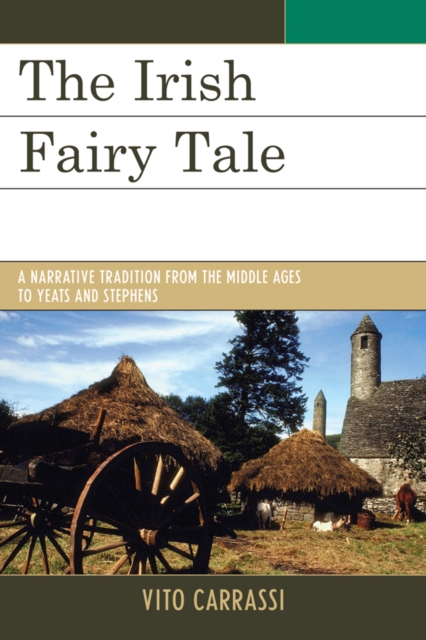
The Irish Fairy Tale
Beginning with a critical reappraisal of the notion of \"fairy tale\\u0022 and extending it to include categories and genres which are in common usage in folklore and in literary studies, this book throws light on the general processes involved in storytelling. It illuminates the fundamental ways in which a culture is formed, while highlighting important features of the Irish narrative tradition, in all its wealth and variety and in its connections with the mythical and historical events of Ireland. The Irish Fairy Tale argues that the fairy tale is a kind of \"neutral zone,\\u0022 a place of transition as well as a meeting place for popular beliefs and individual creativity, oral tradition and literary works, historical sources and imaginary reconstructions, and for contrasting and converging views of the world, which altogether allow for a deeper and more sophisticated understanding of reality. The book focuses on stories by Yeats and Stephens, whose approach to the subject marks the culmination of a long
tradition of attempts at linking past and present and of bridging the gap between what appear to be contradictory facets of a single culture. This leads to a comparative study of Joyce's Dubliners, which illustrates the universal and exemplary nature of the notion of fairy tale put forward in the work. [Publisher's text]
eBook

Leprechauns : the myths, legends, & lore
\"Leprechauns have been at the heart of Irish culture for years, capturing our hearts and minds alike--but how much do we really know about the leprechaun, anyway? Often depicted as a little bearded man who partakes in mischief, no one knows if he is a fallen angel, diminished god, or son of fairies? What does he do all day? And what's the story behind that hidden pot of gold? In Leprechauns, prominent folklorist Bob Curran looks at the origins of this hero of Irish lore. He explores the superstitions surrounding the leprechaun and his enduring place in popular culture, and turns the spotlight on the 'real' leprechaun--enigmatic, complex, and contradictory\"-- Provided by publisher.
Book
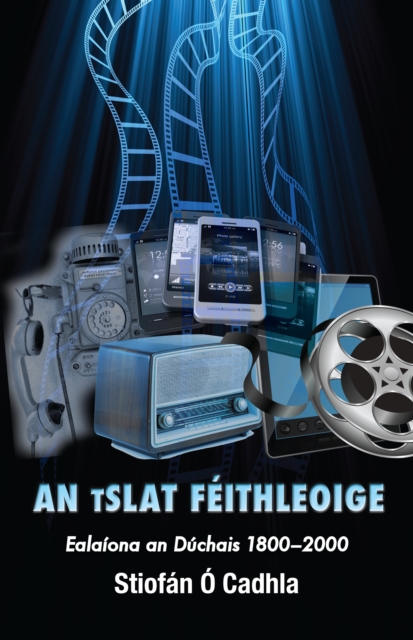
tSlat Feithleoige: Ealaiona an Duchais 1800-2000
Here, the author focuses on what he terms 'the vernacular arts' and examines their history, their function, and their continuing role in twenty-first century Ireland, in depth. This book won first prize in the prose category in the Oireachtas literary competitions in 2010.
eBook

Fairy tales of Ireland
A collection of Irish fairy tales, with a concentration on the fairies themselves, including \"The Stolen Child,\" \"The Witches' Excursion,\" and \"The Horned Women.\"
Book
