
Catalogue Search | MBRL


Are you sure you want to remove the book from the shelf?

{{itemTitle}}
67
result(s) for
"Folklore Peru."
Sort by:

Mesoamerican myths
The belief systems and myths of the early inhabitants of Mexico, Central America, and South America are explored.
Book

Intimate Enemies
In the aftermath of a civil war, former enemies are left living side by side-and often the enemy is a son-in-law, a godfather, an old schoolmate, or the community that lies just across the valley. Though the internal conflict in Peru at the end of the twentieth century was incited and organized by insurgent Senderistas, the violence and destruction were carried out not only by Peruvian armed forces but also by civilians. In the wake of war, any given Peruvian community may consist of ex-Senderistas, current sympathizers, widows, orphans, army veterans-a volatile social landscape. These survivors, though fully aware of the potential danger posed by their neighbors, must nonetheless endeavor to live and labor alongside their intimate enemies. Drawing on years of research with communities in the highlands of Ayacucho, Kimberly Theidon explores how Peruvians are rebuilding both individual lives and collective existence following twenty years of armed conflict.Intimate Enemiesrecounts the stories and dialogues of Peruvian peasants and Theidon's own experiences to encompass the broad and varied range of conciliatory practices: customary law before and after the war, the practice ofarrepentimiento(publicly confessing one's actions and requesting pardon from one's peers), a differentiation between forgiveness and reconciliation, and the importance of storytelling to make sense of the past and recreate moral order. The micropolitics of reconciliation in these communities present an example of postwar coexistence that deeply complicates the way we understand transitional justice, moral sensibilities, and social life in the aftermath of war. Any effort to understand postconflict reconstruction must be attuned to devastation as well as to human tenacity for life.
eBook
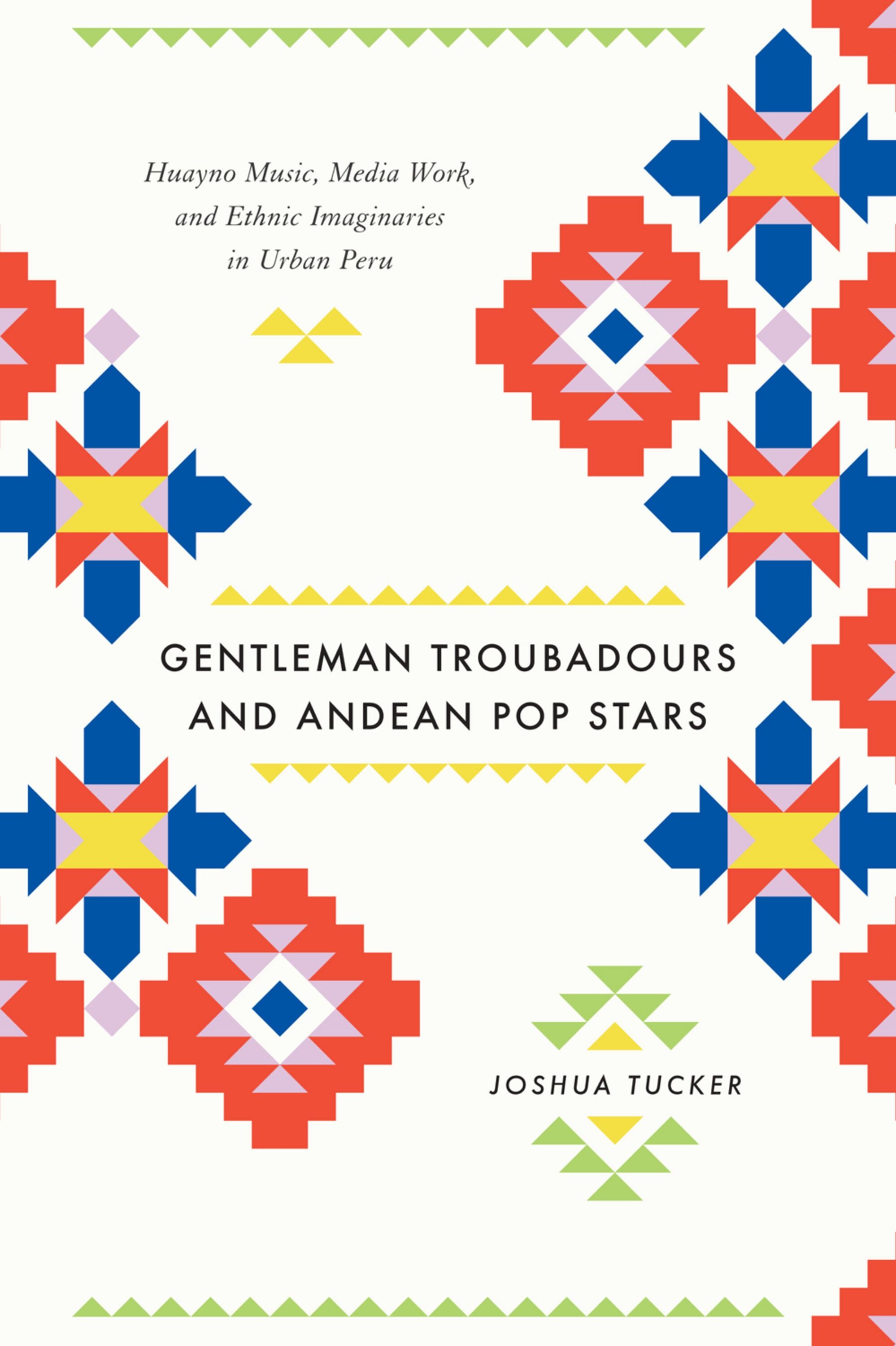
Gentleman troubadours and Andean pop stars : huayno music, media work, and ethnic imaginaries in urban Peru
Exploring Peru's lively music industry and the studio producers, radio DJs, and program directors that drive it, Gentleman Troubadours and Andean Pop Stars is a fascinating account of the deliberate development of artistic taste. Focusing on popular huayno music and the ways it has been promoted to Peru's emerging middle class, Joshua Tucker tells a complex story of identity making and the marketing forces entangled with it, providing crucial insights into the dynamics among art, class, and ethnicity that reach far beyond the Andes.
Tucker focuses on the music of Ayacucho, Peru, examining how media workers and intellectuals there transformed the city's huayno music into the country's most popular style. By marketing contemporary huayno against its traditional counterpart, these agents, Tucker argues, have paradoxically reinforced ethnic hierarchies at the same time that they have challenged them. Navigating between a burgeoning Andean bourgeoisie and a music industry eager to sell them symbols of newfound sophistication, Gentleman Troubadours and Andean Pop Stars is a deep account of the real people behind cultural change.
eBook

Upper Perené Arawak Narratives of History, Landscape, and Ritual
Published through the Recovering Languages and Literacies of the Americas initiative, supported by the Andrew W. Mellon Foundation.
The rich storytelling traditions of the Alto Perené Arawaks of eastern Peru are showcased in this bilingual collection of traditional narratives, ethnographic accounts, women's autobiographical stories, songs, chants, and ritual speeches. The Alto Perené speakers are located in the colonization frontier at the foot of the eastern Andes and the western fringe of the Amazonian jungle. Unfortunately, their language has a slim chance of surviving because only about three hundred fluent speakers remain. This volume collects and preserves the power and vitality of Alto Perené oral and linguistic traditions, as told by thirty members of the Native community.Upper Perené Arawak Narratives of History, Landscape, and Ritualcovers a range of themes in the Alto Perené oral tradition, through genres such as myths, folk tales, autobiographical accounts, and ethnographic texts about customs and rituals, as well as songs, chants, and oratory. Transcribed and translated by Elena Mihas, a specialist in Northern Kampa language varieties, and grounded in the actual performances of Alto Perené speakers, this collection makes these stories available in English for the first time. Each original text in Alto Perené is accompanied by an English translation, and each theme is introduced with an essay providing biographical, cultural, and linguistic information. This collection of oral literature is masterful and authoritative as well as entertaining and provocative, testifying to the power of Alto Perené storytelling.
eBook

The Ecology of the Spoken Word
The Ecology of the Spoken Word offers the first theoretical and experiential translation of Napo Runa mythology in English. Michael A. Uzendoski and Edith Felicia Calapucha-Tapuy present and analyze lowland Quichua speakers in the Napo province of Ecuador through narratives, songs, curing chants, and other oral performances, so readers may come to understand and appreciate Napo Runa aesthetic expression._x000B__x000B_Like many other indigenous peoples, the Napo Runa create meaning through language and other practices that do not correspond to the communicative or social assumptions of Western culture. Language itself is only a part of a communicative world that includes plants, animals, and the landscape. In the Napo Runa worldview, storytellers are shamans who use sound and form to create relationships with other people and beings from the natural and spirit worlds. Guiding readers into Napo Runa ways of thinking and being, Uzendoski and Calapucha-Tapuy weave exacting translations into an interpretive argument with theoretical implications for understanding oral traditions, literacy, new technologies, and language._x000B__x000B_Reinforcing the authors' argument that words are only a small part of storytelling reality, a companion website with photos, audio files, and videos of original performances offers readers an opportunity to more deeply understand the beauty of performance and complexity of sound in Native Amazonian verbal expression.
eBook

Strategic Skepticism: The Politics of Grassroots Participation in an Afro-Andean Nomination to the UNESCO Intangible Cultural Heritage Representative List
This article analyzes the grassroots participation politics in the nomination of a set of Afro-Andean musical and dance practices—atajo de negritos and pallitas—to the UNESCO Representative List of Intangible Cultural Heritage. These are performed during the Catholic celebration of Christmas in the Ica region in Peru. I suggest that the participation of grassroots practitioners in this case study featured a behavior pattern I label “strategic skepticism.” This behavior is a critical but passive form of grassroots engagement, alternative to both compliance and resistance, which allows a form of local agency that clashes with the neoliberal logics of the UNESCO Intangible Cultural Heritage process. The article, based on fieldwork conducted in the region of Ica in Peru between 2017 and 2018, includes perspectives from grassroots practitioners and state Intangible Cultural Heritage officials.
Journal Article

Cuir Devotion: A Conversation
After watching Enzo Vasquez Toral's Cuir Devotion at the Memphis Fringe Festival in 2019, I was curious about the research and performance methodologies that built this humorous and moving hybrid solo piece that features a queer take on a Catholic patron-saint fiesta called the Tunantada in the Peruvian Central Andes. Creator Vasquez Toral is a performance studies scholar who researches the interplay of colonial legacies, Indigenous ways of knowing, and contemporary queer/trans epistemologies within the Tunantada through conventional ethnographic, auto-ethnographic and performance ethnographic modes. What follows is a transcript of our conversation about the creation, development, and goals of Cuir Devotion featuring Vasquez Toral and a surprise guest.
Journal Article

State of play: The political ontology of sport in Amazonian Peru
Building on the importance of \"play\" in traditional sociality, organized team sports such as soccer are instrumental in promoting a new moral and political order among Urarina people of Peruvian Amazonia, one grounded in notions of roles, rules, and the abstract individual. As a vehicle of nationalist sentiment, highly amenable to ritualization and bureaucratization, sport is central to the process by which the state expands its territory and influence. Like warfare, but unifying rather than fragmenting in its effects, sport harnesses the energy and vitality of youth and co-opts them for other ends.
Journal Article

A Sensory Ecology of Medicinal Plant Therapy in Two Amazonian Societies
Sensory anthropology has explored sensation as a fruitful but poorly examined domain of cross-cultural research. Curiously, sensory anthropologists have mostly ignored scientific research into sensation, even that which addresses cross-cultural variation. A comparative study in two Amazonian societies (Matsigenka, Yora [Nahua]) documented the role of the senses in medicinal plant therapy and benefited greatly from theoretical insights gleaned from sensory science. The study reveals a complex interweaving of cultural and ecological factors in medicinal plant selection, with sensation standing at the culture--nature nexus linking medical ideas with medical materials. By synthesizing (rather than antagonizing) scientific and anthropological insights, sensation can be understood as a biocultural phenomenon rooted in human physiology yet constructed through individual experience and culture. Overcoming the limitations of a narrowly defined sensory anthropology, sensory ecology is here proposed as a new theoretical perspective for addressing human--environment interactions mediated by the senses.
Journal Article

Framing culture: VCD music videos and the politics of genre in the Peruvian Andes
Since the early 2000s, video compact discs (VCDs) have come to occupy a prominent position in the Andean musical world and making music videos has become an ordinary and expected activity for many traditional and popular musicians. While the widespread uptake of VCD technology itself occurred with little comment or controversy, the material affordances of this new technology have fuelled contestation about aesthetics, culture and identity. Focusing on the production of santiago music videos in Huancayo, Peru, this article investigates the impact of this technological shift on genre conventions and genre politics. The article examines how cultural producers have harnessed, resisted and debated the possibilities of VCD music videos, as well as how genres have been discursively (re)constructed in the process. The article argues that the possibilities afforded by new visual technologies and emerging markets have been a driving force behind recent processes of genre-fication, whether in the service of perpetuating tradition or being part of the next big thing.
Journal Article