
Catalogue Search | MBRL


Are you sure you want to remove the book from the shelf?

{{itemTitle}}
433
result(s) for
"Follies"
Sort by:

Island follies : romantic homes of the Bahamas : the tropical architecture of Henry Melich
\"Island Follies is the first book to explore the work of Henry Melich (1924-1999), a Czech-born architect who brought a beguiling form of neoclassicism to the Caribbean. While Melich built projects in the United States and England, he's best remembered for the romantic follies he designed in the 1960s and 1970s in sunny island retreats like Lyford Cay, Harbour Island, and Windermere Island in the Bahamas. Melich created a romantic sense of escape with a softly cushioned whimsy and discrete sense of tranquility. His signature motifs included faux marbled walls, seasoned wood, colonnades and tent-like interiors with striped ceilings that suited the playful mood of the moment, documented in Island Follies with the warm touch of Slim Aarons and with new photography of many previously unpublished interiors. Gardens with Bougainvillea-draped pergolas, ivy-clad alcoves, palm-lined allées are just some of the other features that extended the architecture into the tropical landscape. Island Follies showcases more than forty of Melich's island projects, capturing a lost world of glamor and faded glory certain to inspire lovers of interior design and island retreats alike\"-- Provided by publisher.
BOOK

Follies in America
Follies in America examines
historicized garden buildings, known as \"follies,\" from the
nation's founding through the American centennial celebration in
1876. In a period of increasing nationalism, follies-such
as temples, summerhouses, towers, and ruins-brought a range of
European architectural styles to the United States. By imprinting
the land with symbols of European culture, landscape gardeners
brought their idea of civilization to the American wilderness.
Kerry Dean Carso's interdisciplinary approach in Follies in
America examines both buildings and their counterparts in
literature and art, demonstrating that follies provide a window
into major themes in nineteenth-century American culture, including
tensions between Jeffersonian agrarianism and urban life, the
ascendancy of middle-class tourism, and gentility and social class
aspirations.
eBook

Visions of Arcadia : pavilions and follies of the ancien régime
Spanning 150 years and the reigns of four kings, the pleasure pavilions, garden follies, and châteaux of Ancien Régime France are fascinating for the stories that surround their creation as well as a visual feast and a delight. Typically the realm of scholars, the subject is given extraordinary life at the hands of the authors, through whose historically accurate, meticulously rendered watercolors the reader comes to see the sometimes grand, sometimes playful, always beautiful buildings, sculpture, and ornament as they were meant to be seen. Dams and Zega have devoted much of a lifetime to rediscovering and illuminating these great treasures of world heritage, and this volume is the fruit of more than thirty years of passionate investigation. Intensive original research and devoted exploration informs the work, capturing the genius of these buildings through the medium of watercolor, which the author-artists harness to render building materials and surfaces with sensitivity and great range. From the mannerist and early baroque guard pavilions at Blérancourt to the Château de Rosay, a fantasy realized in the form of an Anglo-Chinese folly park, this volume is a revelation, sure to captivate architects, historians, landscape designers, and garden lovers.
Book
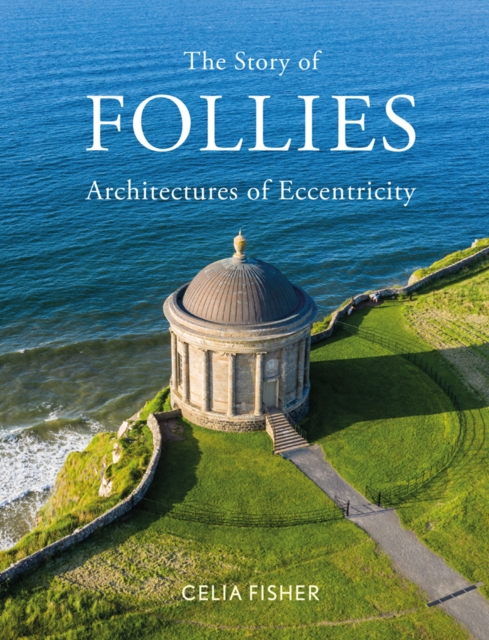
The Story of Follies
Are they frivolous or practical? Follies are buildings constructed primarily for decoration, but suggest another purpose through their appearance. In this superbly illustrated book Celia Fisher describes follies in their historical and architectural context, looks at their social and political significance and highlights their relevance today. She explores follies built in protest, follies in oriental and gothic styles, animal-related follies, waterside follies and grottoes, and, finally, follies in glass and steel. Featuring many fine illustrations, from historical paintings to contemporary photographs and prints, and taking in follies from Great Britain, Ireland and throughout Europe and beyond, this is an amusing and informative guide to fanciful, charming buildings.
eBook

A place of secrets : a novel
A successful auctioneer, Jude struggles to come to terms with the death of her husband. When she's asked to appraise a collection of scientific instruments belonging to Anthony Wickham, a lonely 18th-century astronomer, she leaps at the chance to escape London. As Jude untangles Wickham's tragic story, she discovers threatening links to the present.
Book
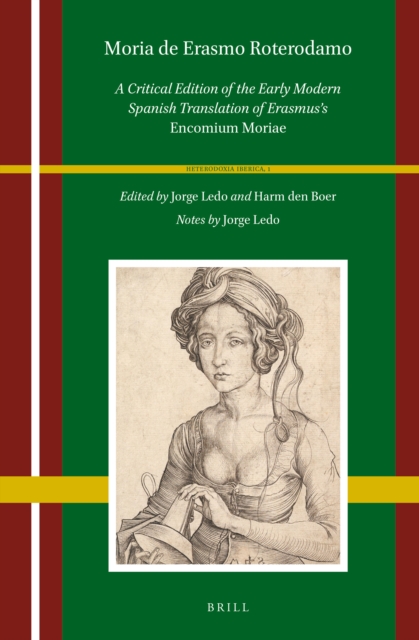
Moria de Erasmo Roterodamo
Moria de Erasmo Roterodamo is the first known complete translation of Erasmus's Encomium Moriae into Spanish, composed in the sixteenth-century and copied in a seventeenth-century manuscript preserved at Ets Haim/Livraria Montezinos (Amsterdam).
eBook

The Dutch Hermitage Folly (1760-1850) in a European context: Origins, Architecture, and Meaning of the Hermit’s Hut in the Landscape Garden
The phenomenon of a hermitage in a landscape garden has not yet been studied from a transnational historical perspective. In this article we present a European architectural history of the hermitage, paying special attention to Dutch hermitages mentioned in digitised newspapers and other historical sources. The long European history of the hermitage shows that this 18th-century landscape garden folly does not, as is often believed, have an exclusively English origin. The Dutch examples affirm this, although they depart from the standard hermitage narrative in generally being neither royal nor noble. Indeed, they were primarily an urban phenomenon, built predominantly by burghers near cities. As a result, the architecture of the hermit’s hut and its meaning in the landscape garden are different from those in other countries.
Journal Article

Marguerite of Navarre: a mystical fable
This essay proposes a reading of the feminine figure of folly in the works of Marguerite of Navarre (1492-1549), intended as a specific reception of the theme of the unintelligibility of God’s wisdom to humanity, the scandal of Christ’s cross in the eyes of worldly-wise, and the exaltation of the humble, the “nothing”, the rejected, the foolish (1 Cor 1:18–25; 3:19). The essay will focus on Marguerite’s sources, first and foremost her spiritual father, Guillaume Briçonnet, and the theological traditions that mediated this notion from late antiquity to the early modern era. In both Briçonnet and Marguerite, the gendered presupposition implying a closeness between femininity on the one hand, and, on the other hand, materiality and irrationality on the other plays in favor of this paradoxical reversal: gendered figures of folly, precisely because of their gender, can better represent the nothingness saved by grace. In doing this, their words intercept one of most famous characters of the literature of the century, Erasmus’ Madam Folly, a woman, an ambivalent and paradoxical prophetess of truths.
Journal Article

The Poetry of Folly
Prof. Armantrout here reflects on the various nuances and “notes” of the word “Folly.”This commentary includes four poems: “Unquote”; “On Growth”; “Where Will You Spend Eternity”; and “Notice.”
Journal Article

Folly
Presents his ongoing architectural and photographic project that combines 'biotecture' and ideas from ancient structures or observatories with a camera obscura. Details the research and experiments behind the project. Explains how a design for a small building in the woods became a large and unwieldly art project. Source: National Library of New Zealand Te Puna Matauranga o Aotearoa, licensed by the Department of Internal Affairs for re-use under the Creative Commons Attribution 3.0 New Zealand Licence.
Journal Article