
Catalogue Search | MBRL


Are you sure you want to remove the book from the shelf?

{{itemTitle}}
263
result(s) for
"Folly."
Sort by:

The praise of folly
\"Desiderius Erasmus (1466-1536) was a Dutch humanist, scholar, and social critic, and one of the most important figures of the Renaissance. The Praise of Folly is perhaps his best-known work. Originally written to amuse his friend Sir Thomas More, this satiric celebration of pleasure, youth, and intoxication irreverently pokes fun at the pieties of theologians and the foibles that make us all human, while ultimately reaffirming the value of Christian ideals. No other book displays quite so completely the transition from the medieval to the modern world, and Erasmus's wit, wisdom, and critical spirit have lost none of their timeliness today.\"--Publisher's description.
Book
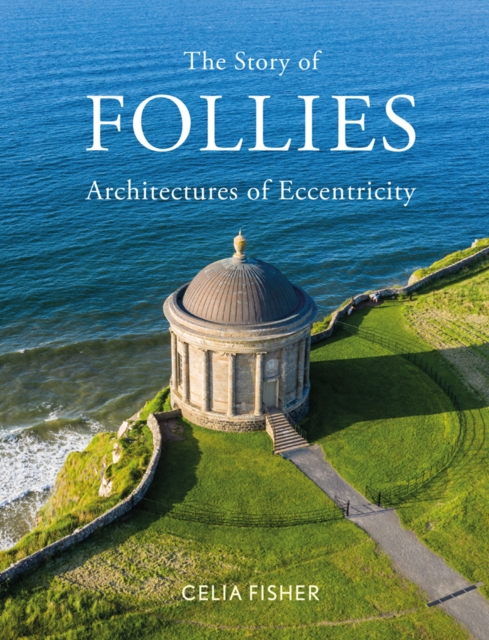
The Story of Follies
Are they frivolous or practical? Follies are buildings constructed primarily for decoration, but suggest another purpose through their appearance. In this superbly illustrated book Celia Fisher describes follies in their historical and architectural context, looks at their social and political significance and highlights their relevance today. She explores follies built in protest, follies in oriental and gothic styles, animal-related follies, waterside follies and grottoes, and, finally, follies in glass and steel. Featuring many fine illustrations, from historical paintings to contemporary photographs and prints, and taking in follies from Great Britain, Ireland and throughout Europe and beyond, this is an amusing and informative guide to fanciful, charming buildings.
eBook
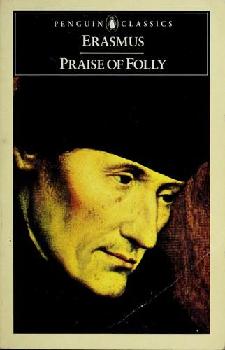
Praise of folly ; and, Letter to Martin Dorp, 1515
The classic work of the Renaissance humanist satirizes the organized Christian Church of the sixteenth century.

Follies in America
Follies in America examines
historicized garden buildings, known as \"follies,\" from the
nation's founding through the American centennial celebration in
1876. In a period of increasing nationalism, follies-such
as temples, summerhouses, towers, and ruins-brought a range of
European architectural styles to the United States. By imprinting
the land with symbols of European culture, landscape gardeners
brought their idea of civilization to the American wilderness.
Kerry Dean Carso's interdisciplinary approach in Follies in
America examines both buildings and their counterparts in
literature and art, demonstrating that follies provide a window
into major themes in nineteenth-century American culture, including
tensions between Jeffersonian agrarianism and urban life, the
ascendancy of middle-class tourism, and gentility and social class
aspirations.
eBook

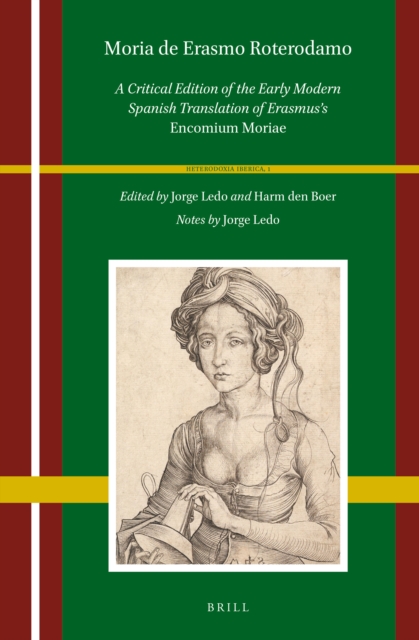
Moria de Erasmo Roterodamo
Moria de Erasmo Roterodamo is the first known complete translation of Erasmus's Encomium Moriae into Spanish, composed in the sixteenth-century and copied in a seventeenth-century manuscript preserved at Ets Haim/Livraria Montezinos (Amsterdam).
eBook

The strongest boy in the world
Kaito is stronger than all the other boys in his village. Because no one can beat him at wrestling, he sets off to the city to compete in the world-famous Sumo wrestling tournament. But on the way he meets a girl called Hana, who is even stronger. Hana offers to train Kaito - with amazing results.
Book

Marguerite of Navarre: a mystical fable
This essay proposes a reading of the feminine figure of folly in the works of Marguerite of Navarre (1492-1549), intended as a specific reception of the theme of the unintelligibility of God’s wisdom to humanity, the scandal of Christ’s cross in the eyes of worldly-wise, and the exaltation of the humble, the “nothing”, the rejected, the foolish (1 Cor 1:18–25; 3:19). The essay will focus on Marguerite’s sources, first and foremost her spiritual father, Guillaume Briçonnet, and the theological traditions that mediated this notion from late antiquity to the early modern era. In both Briçonnet and Marguerite, the gendered presupposition implying a closeness between femininity on the one hand, and, on the other hand, materiality and irrationality on the other plays in favor of this paradoxical reversal: gendered figures of folly, precisely because of their gender, can better represent the nothingness saved by grace. In doing this, their words intercept one of most famous characters of the literature of the century, Erasmus’ Madam Folly, a woman, an ambivalent and paradoxical prophetess of truths.
Journal Article

Wisdom and folly in Euripides
\"The volume throws fresh light on a major polarity in Euripidean drama, including its roots in the tradition and its reception in vase-painting and literature. Virtually all Euripidean characters are subject to folly and claim some measure of wisdom. Leading international scholars discuss the polarity and the plays' ambiguities from various angles and theoretical perspectives, offering trenchant insights into moral, social and historical issues.\"-- Provided by publisher
BOOK

The Poetry of Folly
Prof. Armantrout here reflects on the various nuances and “notes” of the word “Folly.”This commentary includes four poems: “Unquote”; “On Growth”; “Where Will You Spend Eternity”; and “Notice.”
Journal Article