
Catalogue Search | MBRL


Are you sure you want to remove the book from the shelf?

{{itemTitle}}
69
result(s) for
"Food Laboratory manuals"
Sort by:

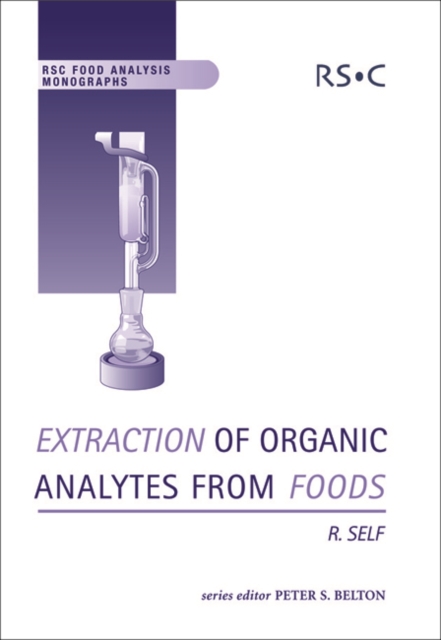
Extraction of organic analytes from foods
This book is designed as a laboratory manual of methods used for the preparation and extraction of organic chemical compounds from food sources. It offers ideas on how to facilitate progress towards the total automation of the assay, as well as proposing assays for unknowns by comparison with known methods.
Beginning with an introduction to extraction methodology, the book progresses through: Sample preparation, extraction techniques (partition, solvation, distillation, adsorption and diffusion), and applications. Subject indices for the applications are organized by commodity, method, chemical class and analyte, and provide useful examples of references from the literature to illustrate historical development of the techniques. Examples of methods that have been compared, combined or used in collaborative trials, have been correlated and used to form the beginnings of a database that can be expanded and updated to provide a laboratory reference source.
eBook

Molecular microbial diagnostic methods : pathways to implementation for the food and water industries
Molecular Microbial Diagnostic Methods: Pathways to Implementation for the Food and Water Industry was developed by recognized and experienced highlevel scientists.It's a comprehensive and detailed reference that uncovers industry needs for the use of molecular methods by providing a brief history of water and food analysis for the pathogens of.
eBook
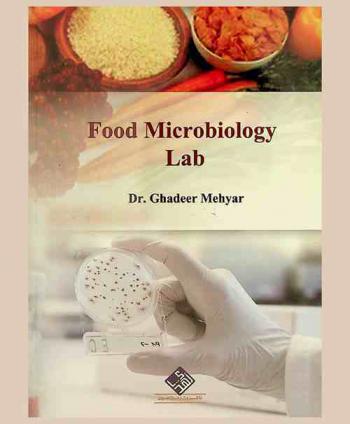

Sensory evaluation
This book is a practical guide to sensory evaluation methods and techniques in the food, cosmetic and household product industries. It explains the suitability of different testing methods for different situations and offers step-by-step instructions on how to perform the various types of tests. Covering a broad range of food and non-food product applications, the book is designed to be used as a practical reference in the testing environment; a training manual for new recruits into sensory science, and a course book for students undertaking industrial training or academic study.
eBook

Aggressive dereplication using UHPLC–DAD–QTOF: screening extracts for up to 3000 fungal secondary metabolites
In natural-product drug discovery, finding new compounds is the main task, and thus fast dereplication of known compounds is essential. This is usually performed by manual liquid chromatography-ultraviolet (LC-UV) or visible light-mass spectroscopy (Vis-MS) interpretation of detected peaks, often assisted by automated identification of previously identified compounds. We used a 15 min high-performance liquid chromatography–diode array detection (UHPLC–DAD)–high-resolution MS method (electrospray ionization (ESI)
+
or ESI
−
), followed by 10–60 s of automated data analysis for up to 3000 relevant elemental compositions. By overlaying automatically generated extracted-ion chromatograms from detected compounds on the base peak chromatogram, all major potentially novel peaks could be visualized. Peaks corresponding to compounds available as reference standards, previously identified compounds, and major contaminants from solvents, media, filters etc. were labeled to differentiate these from compounds only identified by elemental composition. This enabled fast manual evaluation of both known peaks and potential novel-compound peaks, by manual verification of: the adduct pattern, UV–Vis, retention time compared with log D, co-identified biosynthetic related compounds, and elution order. System performance, including adduct patterns, in-source fragmentation, and ion-cooler bias, was investigated on reference standards, and the overall method was used on extracts of
Aspergillus carbonarius
and
Penicillium melanoconidium
, revealing new nitrogen-containing biomarkers for both species.
Journal Article

Validation of Additional Approaches and Applications for Using the Continuous and Manual Sampling Devices for Raw Beef Trim
In this work, the goal was to determine the efficacy of MicroTally-based sampling in scenarios commonly encountered in the commercial beef processing industry, but outside of the parameters evaluated during the initial proof-of-concept work. The data were derived from 1,650 matched samples collected from 540 individual combo bins at six commercial beef processing plants, comparing MicroTally-based sampling (continuous and manual sampling devices [CSD and MSD]) to N60 Excision and/or N60 Plus methods. Mounting a 61-cm CSD cartridge to a 30-cm-wide conveyor provided sampling that is equivalent to N60 Excision and N60 Plus methods. Mounting a CSD to a chute instead of a conveyor was equivalent to the N60 Plus sampling method. The CSD was shown to be effective for sampling when used in conjunction with a \"swinging arm trim diverter\" and receiving product in batch mode as opposed to continuous flow. MSD sampling of oval combo bins with trim surface area (≈0.93 m2 [≈1,439 in2]) less than 1 m2 (1,600 in2) was shown to be equivalent to the N60 Plus sample collection method. Peracetic acid applied at the end of the trim conveyor did not negatively impact pathogen index target detection of the CSD even if the samples were shipped overnight before analysis. Pathogen index targets were demonstrated to be useful tools for validating methods designed to measure pathogen prevalence. The data presented herein support equivalency criteria of within 0.5 log CFU per sample for indicator organism counts. These data collectively support various alternative applications of MicroTally-based trim sampling and the application and interpretation of alternative methods for pathogen detection.
Journal Article

Cereal grains : laboratory reference and procedures manual
Facilitating the acquisition of practical knowledge and providing innovative ideas for further developments, this laboratory manual demonstrates the application of quality control measurements for grains, milled products, starches, and the wide array of finished products. Each section of the book contains a set of references so students may expand their knowledge, as well as questions to evaluate comprehension of the covered material. It includes a glossary of practical terms and a section of Imperial-to-metric measurement conversions pertaining to weight, volume, density, and other equivalences.
eBook
Assessment of Commercial DNA Cleanup Kits for Elimination of Real-Time PCR Inhibitors in the Detection of Cyclospora cayetanensis in Cilantro
Inhibited reactions have occasionally been observed when cilantro samples were processed for the detection of Cyclospora cayetanensis using quantitative real-time PCR (qPCR). Partial or total inhibition of PCR reactions, including qPCR, can occur, leading to decreased sensitivity or false-negative results. If inhibition occurs, this implies the need for additional purification or cleanup treatments of the extracted DNA to remove inhibitors prior to molecular detection. Our objective was to evaluate the performance of five commercial DNA cleanup kits (QIAquick purification kit from Qiagen [kit 1], OneStep PCR inhibitor removal by Zymo Research [kit 2], NucleoSpin genomic DNA cleanup XS from Macherey-Nagel [kit 3], DNA IQ system by Promega [kit 4], and DNeasy PowerPlant pro kit from Qiagen [5]) to minimize qPCR inhibition using the U.S. Food and Drug Administration-validated Bacteriological Analytical Manual (BAM) Chapter 19b method for detection of C. cayetanensis in cilantro samples containing soil. Each of the five commercial DNA cleanup kits evaluated was able to reduce the qPCR internal amplification control cycle threshold values to those considered to be normal for noninhibited samples, allowing unambiguous interpretation of results in cilantro samples seeded at both a high oocyst level (200 oocysts) and a low oocyst level (10 oocysts). Of the five kits compared, kits 1, 2, and 3 did not show significant differences in the detection of C. cayetanensis, while significantly higher cycle threshold values, indicating lower recovery of the target DNA, were observed from kits 4 and/or 5 in samples seeded with 200 and 10 oocysts (P < 0.05). This comparative study provides recommendations on the use of commercial cleanup kits which could be implemented when inhibition is observed in the detection of C. cayetanensis in cilantro samples using the BAM Chapter 19b method.
Journal Article