
Catalogue Search | MBRL


Are you sure you want to remove the book from the shelf?

{{itemTitle}}
112,628
result(s) for
"Food engineering"
Sort by:

Global food security and supply
\"With the global population projected to reach 9 billion by the year 2050, the need for nations to secure food supplies for their populations has never been more pressing. Finding better supply chain solutions is an essential part of achieving a secure and sustainable diet for a rapidly increasing population. We are now in a position, through methods including life cycle assessment (LCA), carbon footprinting and other tools, to accurately measure and assess our use - or misuse - of natural resources, including food. The impact of new technologies and management systems can therefore improve efficiencies and find new ways to reduce waste.Global Food Security and Supply provides robust, succinct information for people who want to understand how the global food system works. The book demonstrates the specific tools available for understanding how food supply works, addresses the challenges facing a secure and safe global food supply, and helps readers to appreciate how these challenges might be overcome.This book is a concise and accessible text that focuses on recent data and findings from a range of international collaborations and studies. The author provides both a snapshot of global food supply and security today, and a projection of where these issues may lead us in the future. This book will therefore be of particular interest to food policy leaders, commercial managers in the food industry, and researchers and students seeking a better understanding of a rapidly evolving topic\"-- Provided by publisher.
Book

Handbook of Food Powders - Processes and Properties
Many food ingredients are supplied in powdered form, as reducing water content increases shelf life and aids ease of storage, handling and transport. Powder technology is therefore of great importance to the food industry. This book explores a variety of processes that are involved in the production of food powders, the further processing of these powders and their functional properties. Part one introduces processing and handling technologies for food powders and includes chapters on spray, freeze and drum drying, powder mixing in the production of food powders and safety issues around food powder production processes. Part two focusses on powder properties including surface composition, rehydration and techniques to analyse the particle size of food powders. Finally, part three highlights speciality food powders and includes chapters on dairy powders, fruit and vegetable powders and coating foods with powders. This book is a standard reference for professionals in the food powder production and handling industries, development and quality control professionals in the food industry using powders in foods, and researchers, scientists and academics interested in the field.
eBook

Agricultural engineering and feeding the future
\"Agricultural engineers are in the front line in the challenge to provide a secure food supply for our world. This timely book explores how engineers design methods, as well as machinery for growing and harvesting crops, to make farming more efficient. Real-life examples help students understand key concepts related to this important profession. With an overview of the engineering design process, readers are encouraged to apply the same steps into their own agricultural engineering challenge.\"-- Provided by publisher.
Book

NIN-like protein 8 is a master regulator of nitrate-promoted seed germination in Arabidopsis
Seeds respond to multiple different environmental stimuli that regulate germination. Nitrate stimulates germination in many plants but how it does so remains unclear. Here we show that the Arabidopsis NIN-like protein 8 (NLP8) is essential for nitrate-promoted seed germination. Seed germination in nlp8 loss-of-function mutants does not respond to nitrate. NLP8 functions even in a nitrate reductase-deficient mutant background, and the requirement for NLP8 is conserved among Arabidopsis accessions. NLP8 reduces abscisic acid levels in a nitrate-dependent manner and directly binds to the promoter of CYP707A2, encoding an abscisic acid catabolic enzyme. Genetic analysis shows that NLP8-mediated promotion of seed germination by nitrate requires CYP707A2. Finally, we show that NLP8 localizes to nuclei and unlike NLP7, does not appear to be activated by nitrate-dependent nuclear retention of NLP7, suggesting that seeds have a unique mechanism for nitrate signalling.
Journal Article

Design and equipment for restaurants and foodservice : a management view
Shows the reader how to plan and develop a restaurant or foodservice space.
Book
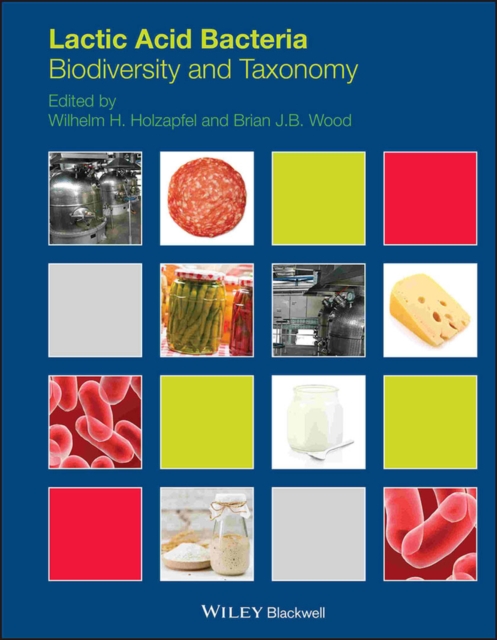
Lactic acid bacteria
Lactic Acid Bacteria Biodiversity and Taxonomy
Lactic Acid Bacteria
Biodiversity and Taxonomy
Edited by Wilhelm H. Holzapfel and Brian J.B. Wood
The lactic acid bacteria (LAB) are a group of related microorganisms that are enormously important in the food and beverage industries. Generally regarded as safe for human consumption (and, in the case of probiotics, positively beneficial to human health), the LAB have been used for centuries, and continue to be used worldwide on an industrial scale, in food fermentation processes, including yoghurt, cheeses, fermented meats and vegetables, where they ferment carbohydrates in the foods, producing lactic acid and creating an environment unsuitable for the survival of food spoilage organisms and pathogens. The shelf life of the product is thereby extended, but of course these foods are also enjoyed around the world for their organoleptic qualities. They are also important to the brewing and winemaking industries, where they are often undesirable intruders but can in specific cases have desirable benefits. The LAB are also used in producing silage and other agricultural animal feeds. Clinically, they can improve the digestive health of young animals, and also have human medical applications.
This book provides a much-needed and comprehensive account of the current knowledge of the LAB, covering the taxonomy and relevant biochemistry, physiology and molecular biology of these scientifically and commercially important microorganisms. It is directed to bringing together the current understanding concerning the organisms' remarkable diversity within a seemingly rather constrained compass. The genera now identified as proper members of the LAB are treated in dedicated chapters, and the species properly recognized as members of each genus are listed with detailed descriptions of their principal characteristics. Each genus and species is described using a standardized format, and the relative importance of each species in food, agricultural and medical applications is assessed. In addition, certain other bacterial groups (such as Bifidobacterium) often associated with the LAB are given in-depth coverage. The book will also contribute to a better understanding and appreciation of the role of LA B in the various ecosystems and ecological niches that they occupy. In summary, this volume gathers together information designed to enable the organisms' fullest industrial, nutritional and medical applications.
Lactic Acid Bacteria: Biodiversity and Taxonomy is an essential reference for research scientists, biochemists and microbiologists working in the food and fermentation industries and in research institutions. Advanced students of food science and technology will also find it an indispensable guide to the subject.
Also available from Wiley Blackwell
The Chemistry of Food
Jan Velisek
ISBN 978-1-118-38384-1
Progress in Food Preservation
Edited by Rajeev Bhat, Abd Karim Alias and Gopinadham Paliyath
ISBN 978-0-470-65585-6
eBook

HACCP : a food industry briefing
\"Readers of this accessible book - now in a revised and updated new edition - are taken on a conceptual journey which passes every milestone and important feature of the HACCP landscape at a pace which is comfortable and productive. The information and ideas contained in the book will enable food industry managers and executives to take their new-found knowledge into the workplace for use in the development and implementation of HACCP systems appropriate for their products and manufacturing processes.The material is structured so that the reader can quickly assimilate the essentials of the topic. Clearly presented, this HACCP briefing includes checklists, bullet points, flow charts, schematic diagrams for quick reference, and at the start of each section the authors have provided useful key points summary boxes. HACCP: a Food Industry Briefing is an introductory-level text for readers who are unfamiliar with the subject either because they have never come across it or because they need to be reminded. The book will also make a valuable addition to material used in staff training and is an excellent core text for HACCP courses\"-- Provided by publisher.
BOOK

Experimental–theoretical study of laccase as a detoxifier of aflatoxins
We investigate laccase-mediated detoxification of aflatoxins, fungal carcinogenic food contaminants. Our experimental comparison between two aflatoxins with similar structures (AFB
1
and AFG
2
) shows significant differences in laccase-mediated detoxification. A multi-scale modeling approach (Docking, Molecular Dynamics, and Density Functional Theory) identifies the highly substrate-specific changes required to improve laccase detoxifying performance. We employ a large-scale density functional theory-based approach, involving more than 7000 atoms, to identify the amino acid residues that determine the affinity of laccase for aflatoxins. From this study we conclude: (1) AFB
1
is more challenging to degrade, to the point of complete degradation stalling; (2) AFG
2
is easier to degrade by laccase due to its lack of side products and favorable binding dynamics; and (3) ample opportunities to optimize laccase for aflatoxin degradation exist, especially via mutations leading to π–π stacking. This study identifies a way to optimize laccase for aflatoxin bioremediation and, more generally, contributes to the research efforts aimed at rational enzyme optimization.
Journal Article

Cereal Grains for the Food and Beverage Industries
Cereals are a staple of the human diet and have a significant effect on health. As a result, they are of major significance to the food industry. This book provides a comprehensive overview of all of the important cereal and pseudo-cereal species, from their composition to their use in food products. The book reviews the major cereal species, starting with wheat and triticale before covering rye, barley and oats. It goes on to discuss other major species such as rice, maize, sorghum and millet, as well as pseudo-cereals such as buckwheat, quinoa and amaranth. This book is an essential reference for academic researchers interested in the area of cereal grains and products. It is also an invaluable reference for professionals in the food and beverage industry working with cereal products, including ingredient manufacturers, food technologists, nutritionists, as well as policy-makers and health care professionals.
eBook