
Catalogue Search | MBRL


Are you sure you want to remove the book from the shelf?

{{itemTitle}}
33,162
result(s) for
"Food habits"
Sort by:


Food Culture in Colonial Asia
Presenting a social history of colonial food practices in India, Malaysia and Singapore, this book discusses the contribution that Asian domestic servants made towards the development of this cuisine between 1858 and 1963. Domestic cookbooks, household management manuals, memoirs, diaries and travelogues are used to investigate the culinary practices in the colonial household, as well as in clubs, hill stations, hotels and restaurants.
Challenging accepted ideas about colonial cuisine, the book argues that a distinctive cuisine emerged as a result of negotiation and collaboration between the expatriate British and local people, and included dishes such as curries, mulligatawny, kedgeree, country captain and pish pash. The cuisine evolved over time, with the indigenous servants preparing both local and European foods. The book highlights both the role and representation of domestic servants in the colonies. It is an important contribution for students and scholars of food history and colonial history, as well as Asian Studies.
eBook

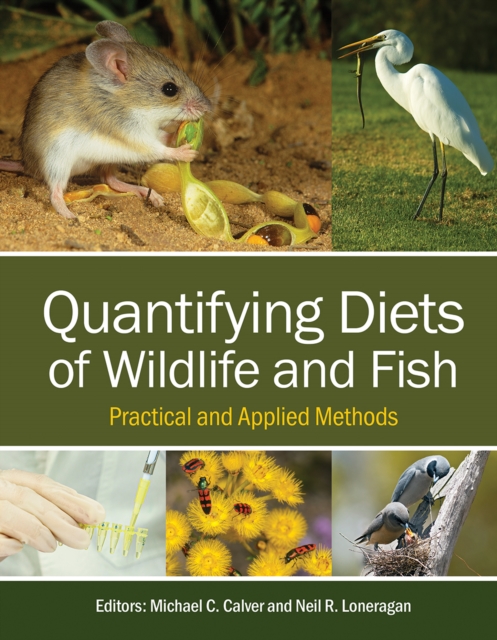
Quantifying Diets of Wildlife and Fish
Quantifying Diets of Wildlife and Fish presents different techniques available to study animal diets. Ecologists determine animal diets to build natural history knowledge, test hypotheses in ecological theory and make informed management decisions for important ecosystems. Many researchers use techniques traditionally applied to the animals they study, rather than techniques with the greatest potential for the aims of each project. In an effort to encourage researchers to consider new approaches, this book focuses on the techniques, rather than on particular groups of organisms or specific environments.With contributions from leading ecologists, chapters explore experimental design, observational techniques (including new technologies), stomach contents and faecal analysis, eDNA, tracers and stable isotopes. They also cover the latest multivariate methods of analyses suitable for describing animal diets and feeding relationships, as well as testing hypotheses relevant to ecological theory, environmental management and biological conservation. The expert knowledge provided will encourage readers to look beyond the boundaries of their specialties, assist in testing important hypotheses and provide insights into management problems. The examples in this book cover a range of vertebrates and invertebrates, as well as different environments, to open these methods up for novice ecologists and stimulate lateral thinking in more experienced researchers.
eBook

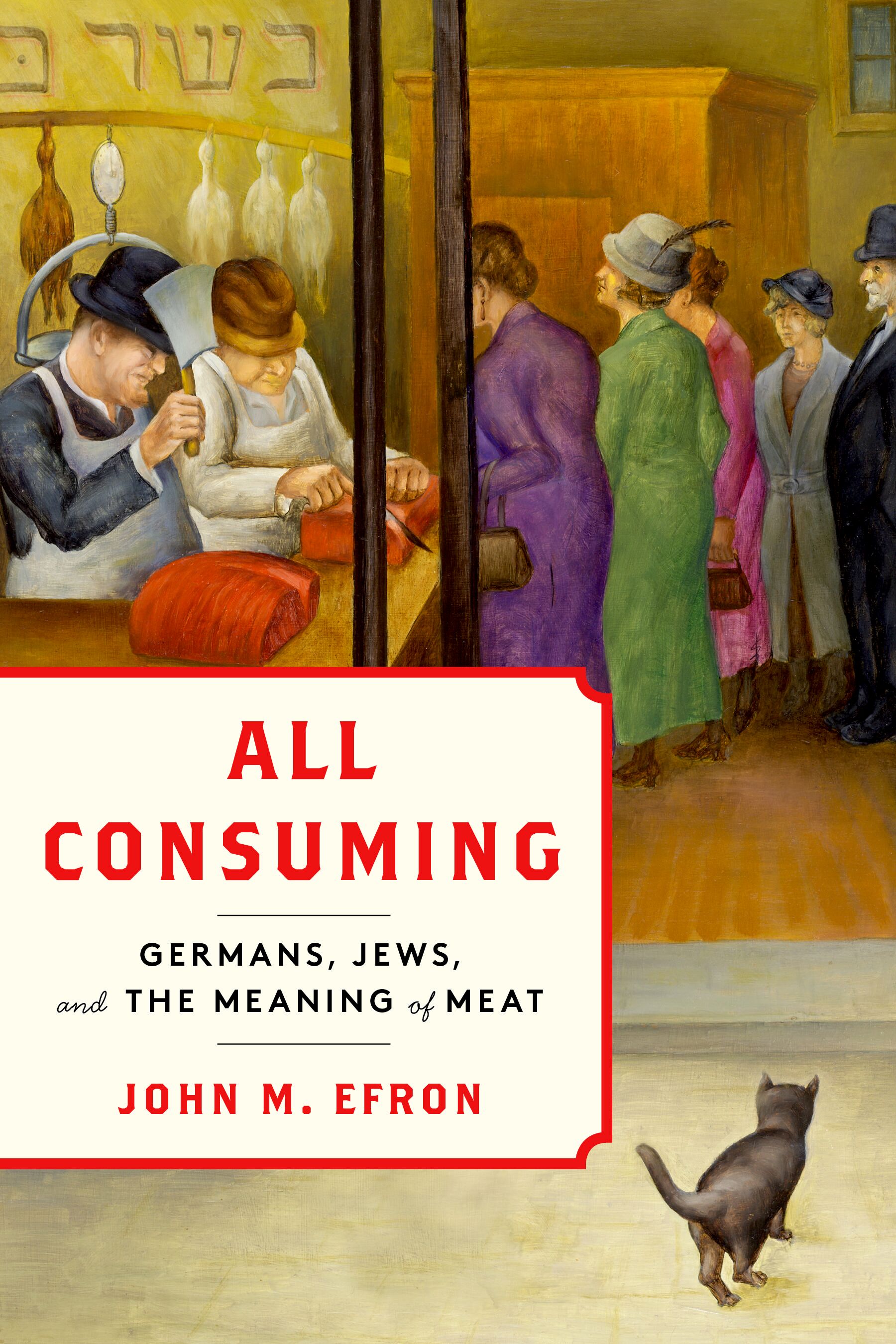
All Consuming
An engaging 700-year history of meat at the intersection of German and Jewish culture, uniquely illuminating the rich, fraught, and tragic history of German Jewry. In Judaism, meat is of paramount importance as it constitutes the very focal point of the dietary laws. With an intricate set of codified regulations concerning forbidden and permissible meats, highly prescribed methods of killing, and elaborate rules governing consumption, meat is one of the most visible, and gustatory, markers of Jewish distinctness and social separation. It is an object of tangible, touchable, and tastable difference like no other. In All Consuming, historian John M. Efron focuses on the contested culture of meat and its role in the formation of ethnic identities in Germany. To an extent not seen elsewhere in Europe, Germans have identified, thought about, studied, decried, and gladly eaten meat understood to be \"Jewish.\" Expressions of this engagement are found across the cultural landscape—in literature, sculpture, and visual arts—and are evident in legal codes and commercial enterprises. Likewise, Jews in Germany have vigorously defended their meats and the culture and rituals surrounding them by educating Germans and Jews alike about their meaning and relevance. Exploring a cultural history that extends some seven hundred years, from the Middle Ages to today, Efron goes beyond a discussion of dietary laws and ritual slaughter to take a broad view of what meat can tell us about German-Jewish identity and culinary culture, Jewish and Christian religious sensibilities, and religious freedom for minorities in Germany. In so doing, he provides a singular window into the rich, fraught, and ultimately tragic history of German Jewry.
eBook

Tasting history : explore the past through 4,000 years of recipes
\"What began as a passion project when Max Miller was furloughed during Covid-19 has become a viral YouTube sensation. The Tasting History with Max Miller channel has thrilled food enthusiasts and history buffs alike as Miller recreates a dish from the past, often using historical recipes from vintage texts, but updated for modern kitchens as he tells stories behind the cuisine and culture. From ancient Rome to Ming China to medieval Europe and beyond, Miller has collected the best-loved recipes from around the world and has shared them with his fans. Now, with beautiful photographs portraying the dishes and historical artwork throughout, Tasting History compiles over sixty dishes\"-- Provided by publisher
Book

Food Culture and Literary Imagination in Early Modern Italy
As the long sixteenth century came to a close, new positive ideas of gusto/ taste opened a rich counter vision of food and taste where material practice, sensory perceptions and imagination contended with traditional social values, morality, and dietetic/medical discourse. Exploring the complex and evocative ways the early modern Italian culture of food was imagined in the literature of the time, Food Culture and the Literary Imagination in Early Modern Italy reveals that while a moral and disciplinary vision tried to control the discourse on food and eating in medical and dietetic treatises of the sixteenth century and prescriptive literature, a wide range of literary works contributed to a revolution in eating and taste. In the process long held visions of food and eating, as related to social order and hierarchy, medicine, sexuality and gender, religion and morality, pleasure and the senses, were questioned, tested and overturned, and eating and its pleasures would never be the same.
eBook


Transcriptome sequencing and metabolome analysis of food habits domestication from live prey fish to artificial diets in mandarin fish (Siniperca chuatsi)
Background
As economical traits, food habits domestication can reduce production cost in aquaculture. However, the molecular mechanism underlying food habits domestication has remained elusive. Mandarin fish (
Siniperca chuatsi
) only feed on live prey fish and refuse artificial diets. In the present study, we domesticated mandarin fish to feed on artificial diets. The two groups were obtained, the fish did not eat artificial diets or ate artificial diets during all of the three domestication processes, named Group W or X, respectively.
Results
Using transcriptome and metabolome analysis, we investigated the differentially expressed genes and metabolites between the two groups, and found three common pathways related to food habit domestication, including retinol metabolism, glycerolipid metabolism, and biosynthesis of unsaturated fatty acids pathways. Furthermore, the western blotting and bisulfite sequencing PCR analysis were performed. The gene expression of
TFIIF
and histone methyltransferase
ezh1
were significantly increased and decreased in the fish of Group X, respectively. The total DNA methylation levels of
TFIIF
gene and tri-methylation of histone H3 at lysine 27 (H3K27me3) were significantly higher and lower in the fish of Group X, respectively.
Conclusion
It was speculated that mandarin fish which could feed on artificial diets, might be attributed to the lower expression of
ezh1
, resulting in the decreased level of H3K27me3 and increased level of DNA methylation of
TFIIF
gene. The high expression of
TFIIF
gene might up-regulate the expression of genes in retinol metabolism, glycerolipid metabolism and glycerophosphoric metabolism pathways. Our study indicated the relationship between the methylation of DNA and histone and food habits domestication, which might be a novel molecular mechanism of food habits domestication in animals.
Journal Article